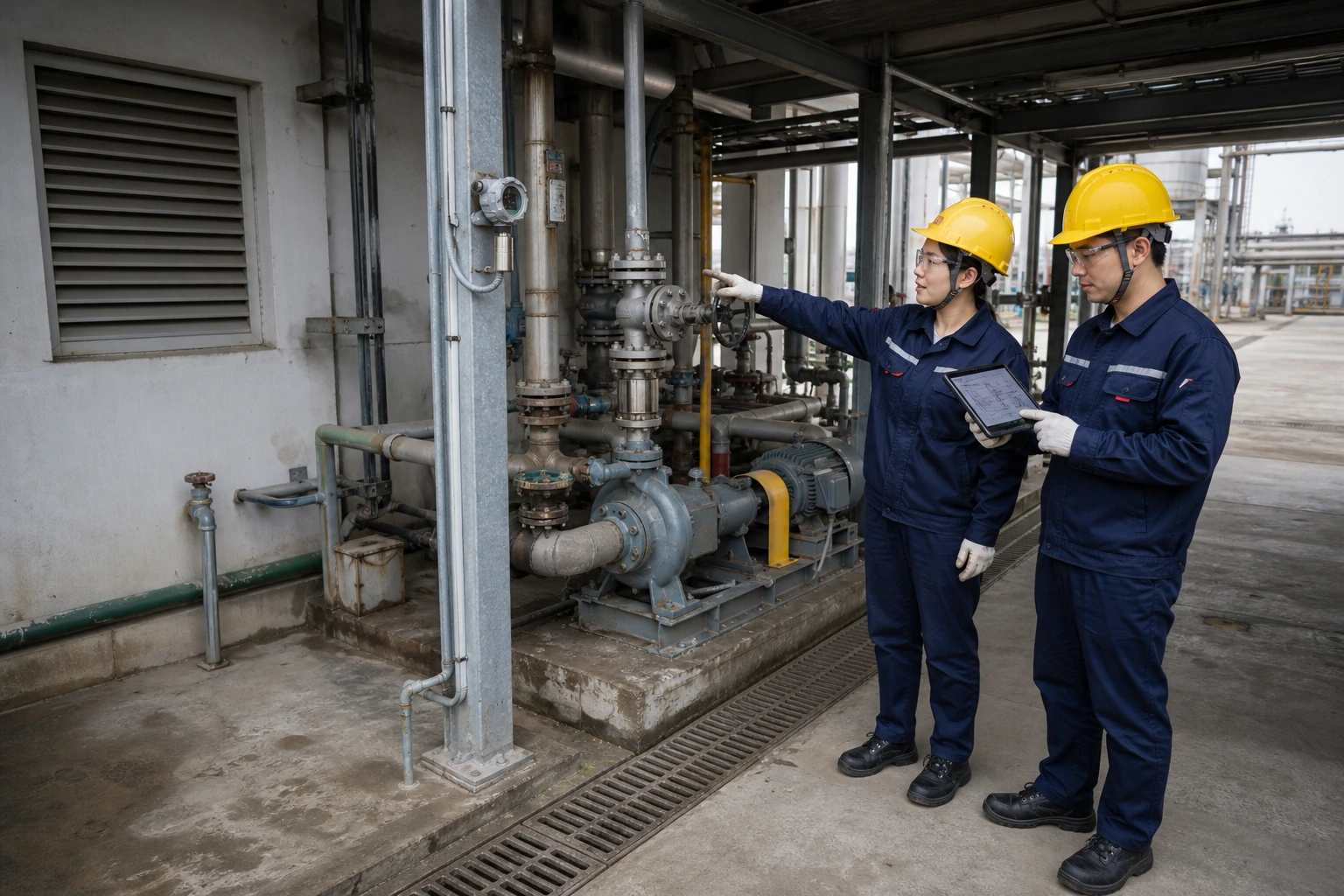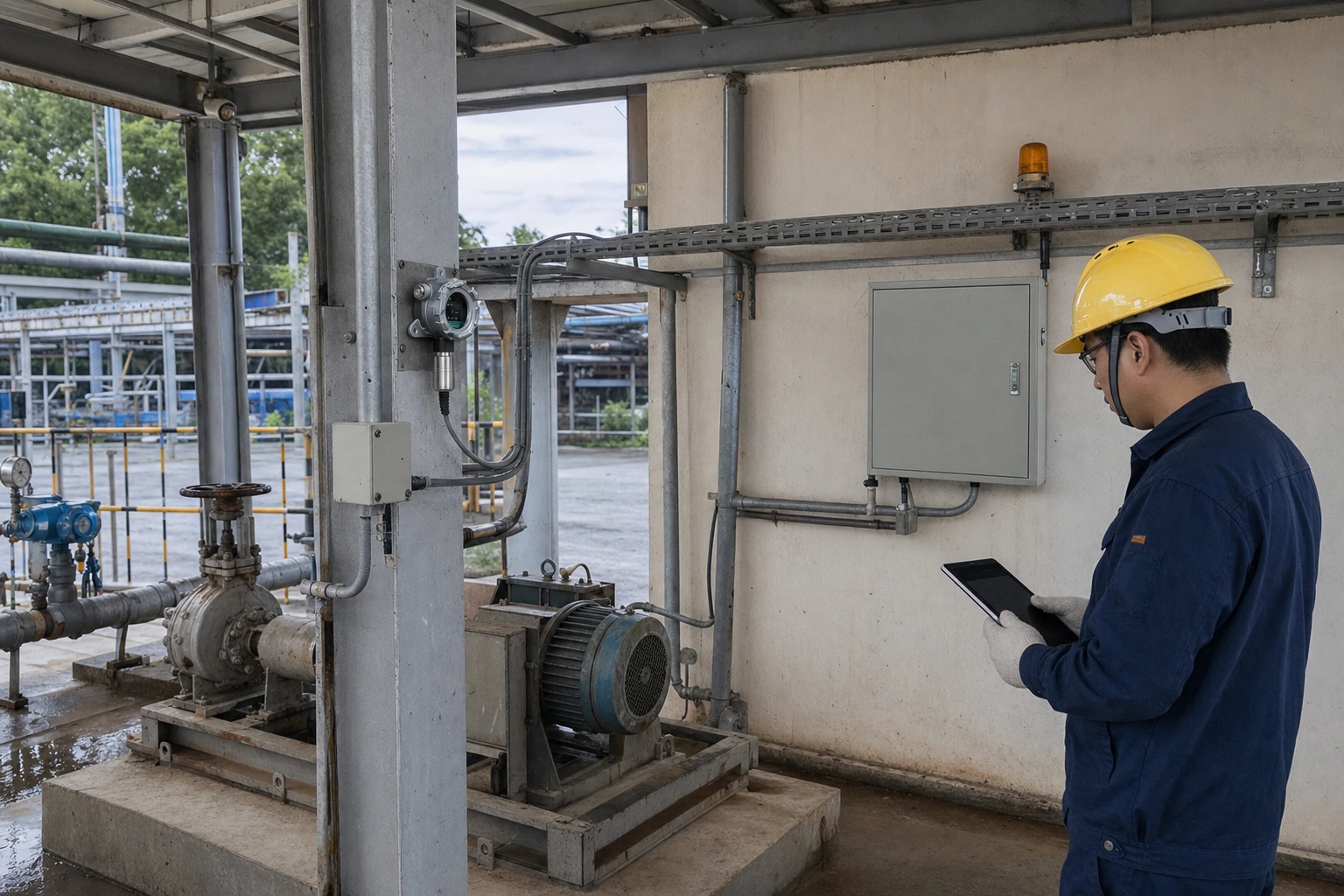
Anyone comparing instruments for workplace gas monitoring quickly runs into a mix of abbreviations on datasheets and alarm labels: % LEL, % VOL, ppm, mg/m3, TWA, STEL. These gas detection units are not interchangeable, and misreading them is one of the most common sources of confusion in safety projects. A combustible gas reading of 10 does not mean the same thing as a toxic gas reading of 10, and an exposure limit is not the same thing as an alarm setpoint. This guide explains what each unit actually measures, how occupational exposure concepts such as TWA and STEL relate to instrument readings, and how alarm levels are commonly structured in industrial gas detection systems.
Percent Volume and % LEL: Units for Combustible Gas
Combustible gas concentrations can be expressed in two related ways. Percent by volume (% VOL) states how much of the surrounding atmosphere is made up of the target gas. Percent LEL expresses the concentration as a fraction of the Lower Explosive Limit, which is the minimum concentration in air at which a gas can ignite. Above the Upper Explosive Limit (UEL), the mixture is too rich to burn.
Methane is a useful example. Its LEL is commonly cited at around 4.4 to 5 percent by volume, depending on the reference standard used. A detector reading of 50% LEL for methane therefore corresponds to roughly 2.2 to 2.5% VOL, which is still well below the concentration at which ignition becomes possible. This is the whole point of the % LEL scale: it gives operators a safety margin expressed in a consistent way across different gases, so that alarm thresholds can be set long before an atmosphere approaches its flammable range.
Fixed-point combustible gas detectors are typically scaled 0 to 100% LEL. Some applications, such as inerting or process monitoring, may instead call for % VOL instruments. When reviewing a datasheet, always confirm which of these two scales the instrument uses, because the numbers look similar while the meaning is very different.
ppm and mg/m3: Units for Toxic Gases
Toxic gases are hazardous at concentrations far below any flammable level, so they are measured in parts per million (ppm) or, for regulatory purposes, sometimes in milligrams per cubic meter (mg/m3). One ppm means one part of gas per million parts of air, and 1% VOL equals 10,000 ppm, which illustrates how much finer the toxic measurement scale is.
Conversion between ppm and mg/m3 depends on the molecular weight of the gas as well as temperature and pressure, which is why regulatory documents often list both values. For instrument selection the practical implication is simple: the measuring range must match the hazard. A sensor intended for hydrogen sulfide exposure monitoring will typically operate in a low ppm range, while a carbon monoxide sensor for a parking structure may use a wider range. Electrochemical sensors are commonly used for ppm-level toxic gas detection, and their target gas and range should be matched to the specific substance present in the process.
TWA, STEL and Ceiling: Understanding Exposure Limits
Occupational exposure limits describe how much of a substance a worker may be exposed to over defined periods. Three concepts appear repeatedly:
- TWA (Time-Weighted Average): the average concentration over a full work shift, normally eight hours. Short excursions above the TWA value can be acceptable if the shift average stays below the limit.
- STEL (Short-Term Exposure Limit): a higher concentration that must not be exceeded over a short reference period, commonly 15 minutes.
- Ceiling: a value that must not be exceeded at any time, even momentarily.
The numerical values of these limits vary by jurisdiction and by the body that publishes them, and they are revised over time. Carbon monoxide, for example, has published eight-hour limits that differ between European and North American frameworks. For this reason, alarm configuration for toxic gases should always be based on the exposure limits that legally apply at the installation site, confirmed against current local regulations rather than copied from a generic table.
Portable instruments often calculate TWA and STEL values internally from logged readings. Fixed detection systems, by contrast, are usually configured with instantaneous alarm setpoints chosen with the applicable exposure limits in mind.
How Alarm Levels Are Typically Structured
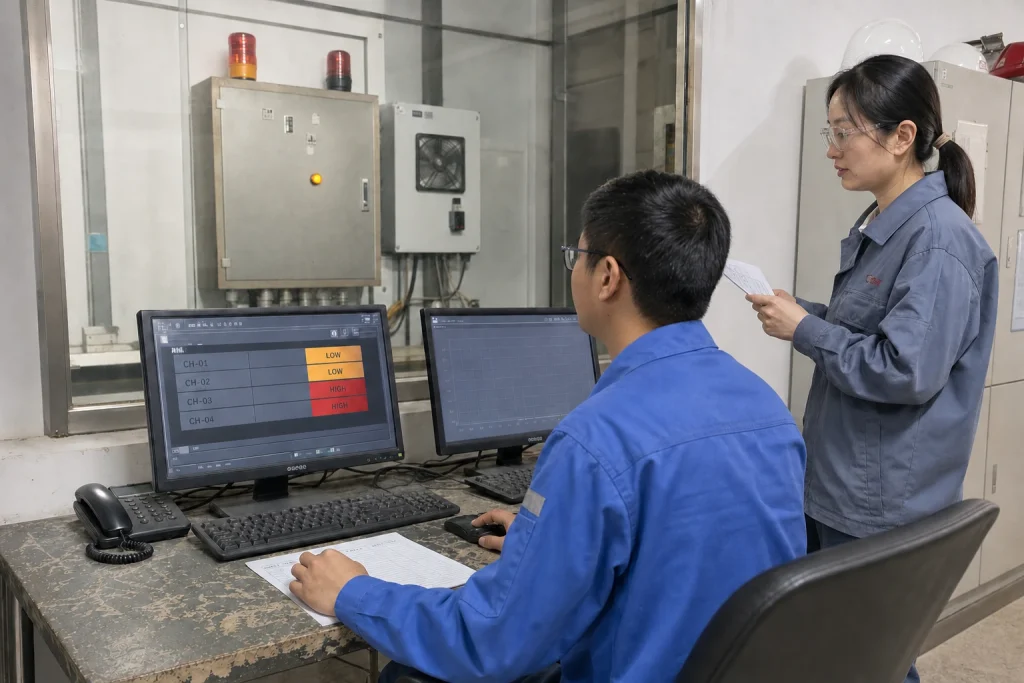
Industrial gas detection systems generally use a multi-stage alarm philosophy rather than a single trip point. A common arrangement includes a low alarm that provides early warning and prompts investigation, and a high alarm that triggers stronger responses such as evacuation, ventilation start-up or process shutdown. For combustible gases, first-stage alarms are commonly set in the region of 10 to 25% LEL, with second-stage alarms at a higher fraction of the LEL, although the exact values are a project-level decision driven by the site risk assessment and applicable codes.
The alarm logic itself is usually handled by a controller that receives signals from field detectors, drives relays for sirens, beacons and ventilation, and provides a central display for operators. Multi-channel gas alarm controllers allow one panel to supervise many detection points with individually configured setpoints per channel. The field devices feeding those channels can be selected from a range of fixed gas alarm detectors matched to the target gas, measuring unit and range required by the application.
When documenting a system, it is good practice to record for every point: the target gas, the measuring unit and range, each alarm setpoint with its unit, and the action linked to each alarm stage. Many commissioning problems trace back to a mismatch between the unit assumed by the designer and the unit actually configured in the instrument.
Why ASA
ASA supplies fixed gas detectors, dust monitors and alarm controllers for combustible and toxic gas applications across industrial sectors in Europe and the Middle East. Our product line covers % LEL, % VOL and ppm measuring formats, so detection points and controller channels can be specified consistently across a project. Our engineering team can review your gas list, proposed units and alarm philosophy and help align detector selection with your site requirements, with responsive support from inquiry through commissioning. To discuss measuring units, alarm levels or a complete system layout for your facility, contact the ASA team for a technical consultation.
Disclaimer: Product availability, specifications, measuring ranges, alarm configurations and certification coverage vary by model and region. The information in this article is provided for general reference only and does not constitute a performance guarantee, safety assurance or compliance statement. Always refer to the official product documentation and confirm suitability, certification status and local regulatory requirements with our team before selection, installation or use.