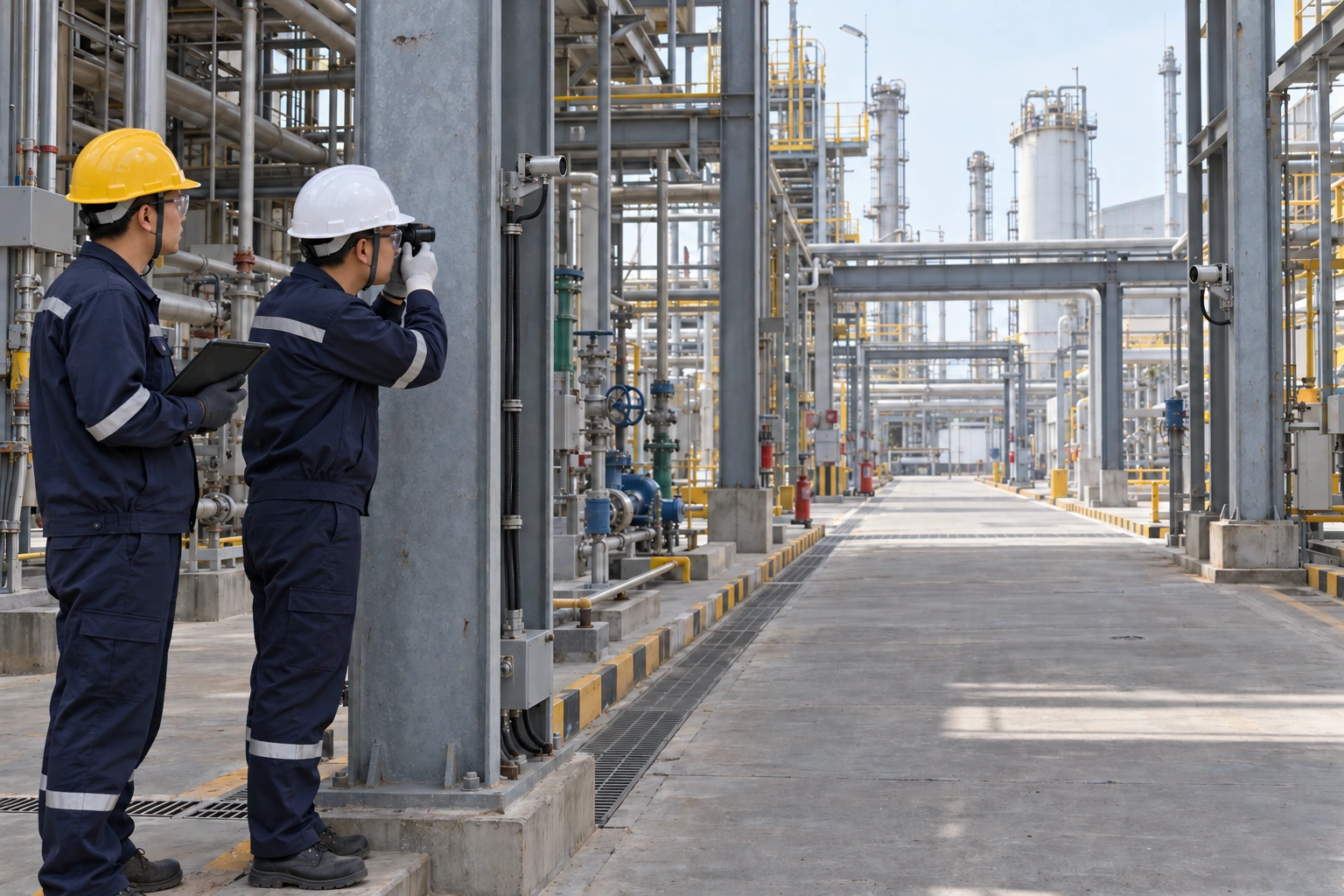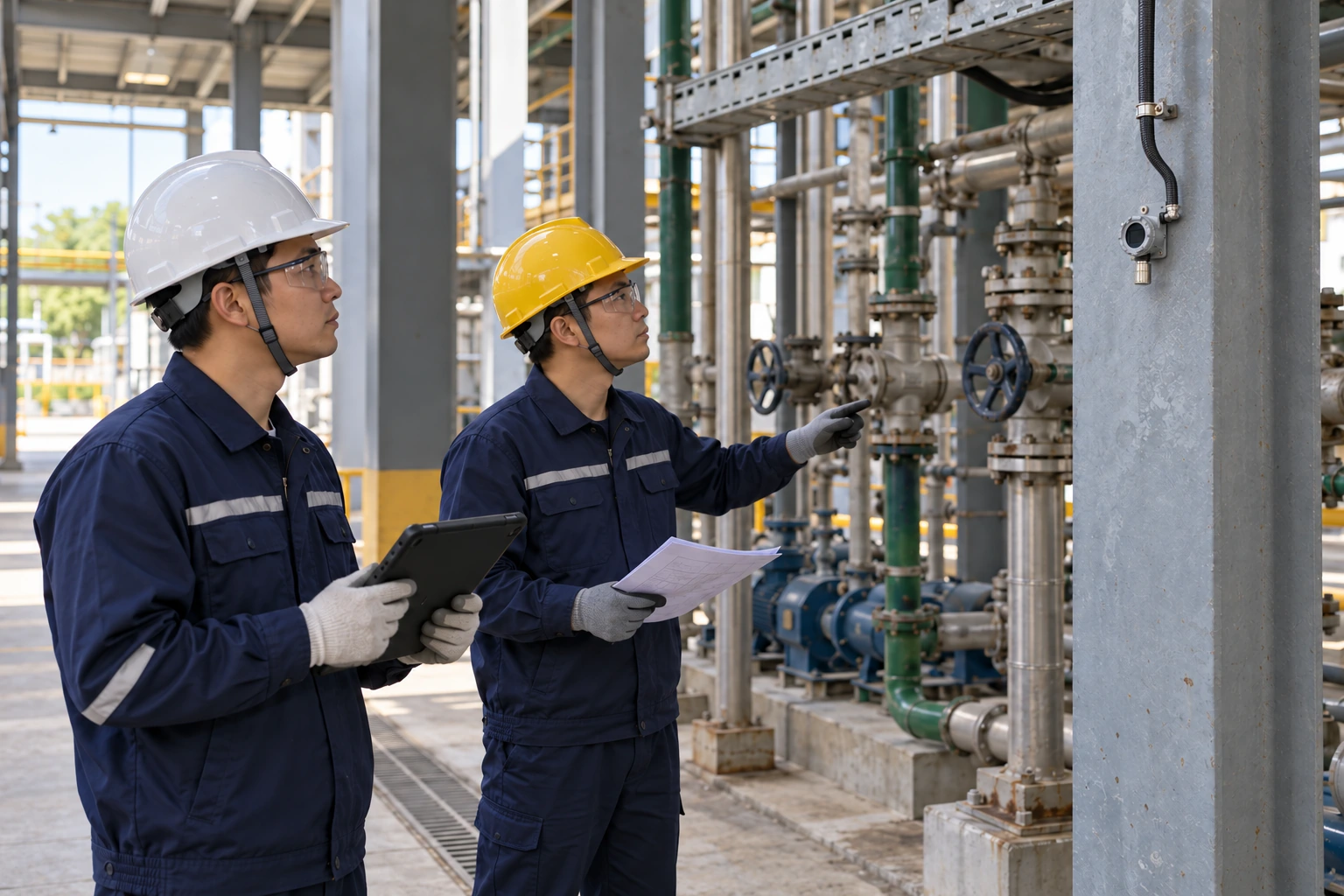
Most industrial sites do not have a single gas hazard – they have several. A confined space may be short of oxygen, a process area may release a toxic gas at low concentration, and a fuel handling zone may accumulate flammable vapor. Each calls for a different sensing principle, alarm philosophy and mounting position. This gas detector selection guide walks through the three main hazard classes – oxygen, toxic and combustible – and explains how safety engineers and procurement teams can build a detector mix that reflects the real risks on their site.
Three Hazard Classes, Three Different Questions
Oxygen (O2) monitoring is about the atmosphere itself. Normal air contains roughly 20.9% oxygen by volume. Many occupational guidelines treat atmospheres below 19.5% as oxygen deficient and above 23.5% as oxygen enriched. Deficiency is the more common concern in enclosed spaces, where inert gases or released CO2 can quietly displace breathable air; enrichment matters where oxygen is stored or used.
Toxic gases are measured at low concentrations, typically in parts per million (ppm), because harm to people can occur long before there is any flammability risk. Carbon monoxide (CO), hydrogen sulfide (H2S), ammonia (NH3) and many volatile organic compounds (VOCs) fall into this group. The relevant question is exposure against an occupational limit.
Combustible gases are measured against the lower explosive limit (LEL), expressed as a percentage of that limit. Methane, for example, has an LEL of about 5% by volume in air, so a reading of 20% LEL corresponds to roughly 1% methane. The question here is ignition, not exposure.
Because these questions differ, a single sensor type cannot answer all of them – which is why most site designs end up with a mix.
Sensing Technologies and What They Are Good At
- Electrochemical cells are the standard choice for oxygen and for most toxic gases such as CO, H2S and NH3. They are selective, sensitive at ppm levels and comparatively economical. Limitations include finite cell life and possible cross-interference from other gases.
- Catalytic bead (pellistor) sensors have long been used for combustible gases in %LEL. They respond to a broad range of flammable gases but require oxygen to operate and can be poisoned by substances such as silicones.
- Infrared (NDIR) sensors are widely used for CO2 and for hydrocarbons such as methane. They do not need oxygen and resist poisoning, though they do not detect hydrogen.
- Photoionization detectors (PID) are the usual tool for VOCs, giving a fast broad-band response at ppm levels. A PID indicates total ionizable compounds rather than a specific chemical.
Mapping Hazards to Areas: A Practical Approach
A sensible selection process starts with the site, not the catalogue:
- List every gas that can credibly be present in each area – process gases, by-products, fuels, refrigerants and purge gases.
- Classify each gas by hazard. Some gases fall into more than one class. Ammonia is toxic at low ppm and also flammable at high concentration; hydrogen sulfide is highly toxic and also combustible. For dual-hazard gases the toxic threshold is normally reached first, so a ppm-range detector is usually the primary choice.
- Consider gas density and airflow. Methane and hydrogen are lighter than air and collect near ceilings; CO2, H2S and most hydrocarbon vapors are heavier than air and pool near floors; CO and NH3 are close to air density and tend to follow ventilation patterns. Mounting height follows from this.
- Identify where people go. Oxygen monitoring is typically prioritized in enclosed or poorly ventilated spaces that workers enter – cold rooms, pits, laboratories using cryogens, plant rooms with inert gas lines.
- Decide how each alarm should be acted on. An oxygen alarm may call for evacuation and ventilation; a %LEL alarm near a boiler may need to shut a fuel valve; a toxic alarm may warn locally first and escalate at a second level.
The output is a list of detection points, each with a gas, a technology, a mounting position and an alarm response. That list should drive purchasing.
Typical Detector Mixes by Site Type
Every facility is different, but some patterns recur and can serve as a starting point.
Boiler houses and gas-fired plant rooms commonly pair a combustible gas detector at high level for methane with a CO detector at breathing height for incomplete combustion. A fixed methane CH4 gas alarm detector may be evaluated for the %LEL point, with the CO point covered by an electrochemical unit.
Cold storage, breweries and CO2 handling areas often prioritize CO2 and oxygen. CO2 is itself a hazard at percent-level concentrations and also displaces oxygen, so a CO2 detector alone or a CO2 plus O2 pair can be considered.
Wastewater, biogas and petrochemical sites frequently need H2S in ppm at low level, combustible gas in %LEL and, in enclosed structures, oxygen for entry. Where solvents are handled, a PID-based VOC point is commonly added.
Ammonia refrigeration plants generally rely on NH3 detectors in ppm within machinery rooms and near evaporators, with alarm levels set to prompt ventilation and evacuation. A dedicated ammonia NH3 gas detector can be considered for these locations.
These examples are not prescriptions, but they show that a realistic mix usually contains at least two of the three hazard classes, and often all three.
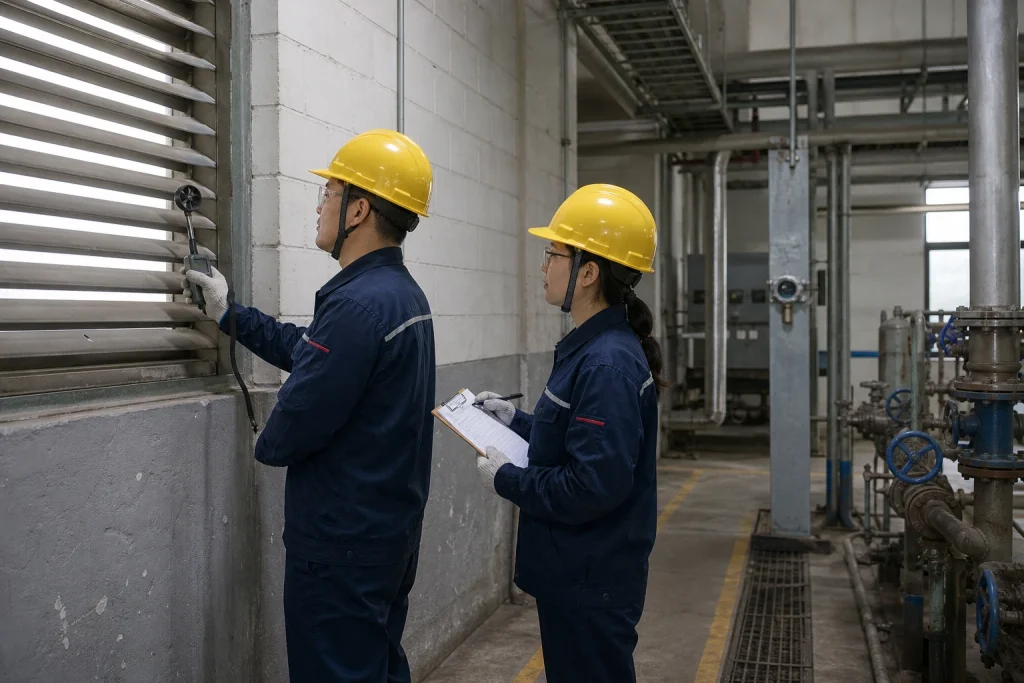
Bringing the Mix Together: Controllers and Alarm Logic
Once several detectors of different types are installed, the practical challenge becomes managing them as one system. A gas detection controller receives signals from the individual detectors, displays their readings, and drives common outputs such as sounders, beacons, ventilation contactors or shutdown relays. This allows detectors of different types to be supervised from a single panel with consistent alarm levels and a common fault indication.
When comparing controllers, buyers typically look at the number of channels available, the input types supported (4-20 mA is the most common for fixed detectors), the number and configuration of relay outputs, and whether readings can be passed on to a building management or SCADA system. Options in this category are listed on the gas alarm controllers product center. Note that controllers are normally intended for installation in non-hazardous (safe) areas such as control rooms, with only the field detectors placed in the monitored zone.
Two further points deserve attention. First, keep alarm logic coherent: an oxygen low alarm, a toxic ppm alarm and a %LEL alarm each need their own setpoints, but the response actions should form one clear plan. Second, plan maintenance from the start – calibration and sensor replacement intervals differ between electrochemical, catalytic, infrared and PID sensors, and a mixed system needs a schedule covering all of them.
Why ASA
ASA supplies fixed gas detectors across all three hazard classes – oxygen, toxic gases including CO, H2S, NH3 and VOCs, and combustible gases – together with dust alarm detectors and multi-channel gas detection controllers, so a complete site mix can be sourced from one supplier. Our engineering team is available to review a hazard list, discuss detector placement and alarm logic, and help match products to the application. For industrial buyers in Europe and the Middle East, we aim to respond quickly with clear documentation and practical support. To discuss the right detector mix for your site, contact the ASA team.
Disclaimer: Product availability, specifications, measuring ranges, alarm configurations and certification coverage vary by model and region. The information in this article is provided for general reference only and does not constitute a performance guarantee, safety assurance or compliance statement. Always refer to the official product documentation and confirm suitability, certification status and local regulatory requirements with our team before selection, installation or use.