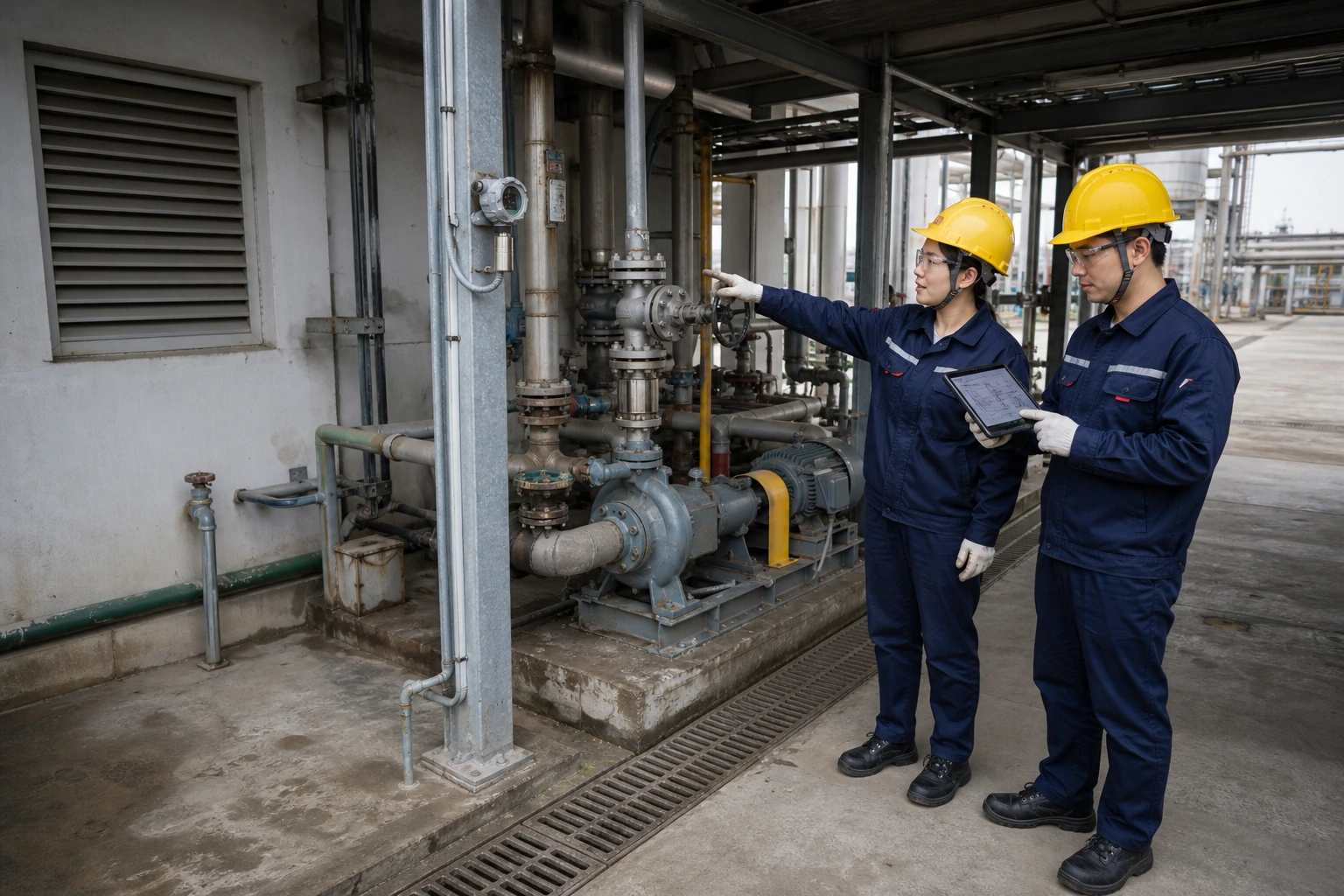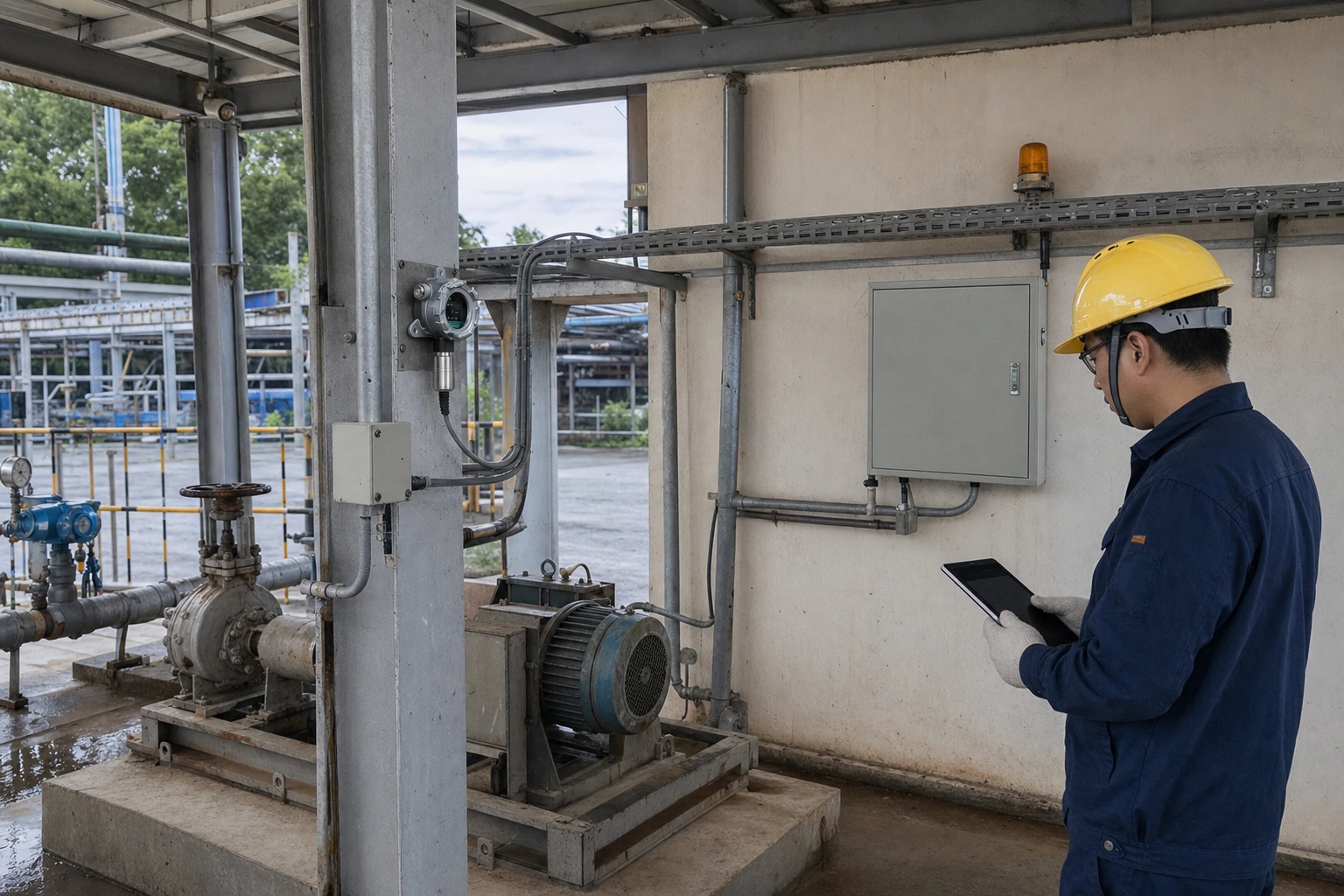
Selecting between a fixed vs portable gas detector is one of the first decisions a safety or procurement team faces when planning gas monitoring for an industrial site. The two device families are built around the same sensing principles, yet they answer different questions: a fixed system watches a defined location around the clock, while a portable instrument travels with the worker and reports conditions wherever that person happens to be. Neither option is universally better. The right choice depends on how your hazards are distributed, how people move through the site, and what your local regulations and internal safety procedures require. This guide compares the two approaches point by point and outlines how many operators combine them into one coherent protection strategy.
What Fixed Gas Detectors Do Best
A fixed gas detector is permanently mounted at a chosen point, wired to power, and typically connected to a gas alarm controller through a 4-20mA or RS485 signal. Because it never leaves its post, it provides continuous, unattended surveillance of a specific hazard zone: a pump seal, a storage tank farm, a compressor room, a battery charging area or a loading bay.
The strengths of fixed systems follow directly from that arrangement:
- Continuous coverage. The detector monitors its location 24 hours a day, including nights, weekends and any period when the area is unmanned. Leaks that develop while nobody is present can still trigger alarms.
- Automatic response. When connected to a controller, alarm relays can be used to start ventilation fans, close valves, sound sirens and activate beacons without human intervention.
- Site-wide visibility. Multi-channel controllers gather readings from many points into one panel, so operators and control rooms can see the gas situation across the whole facility at a glance.
- Defined alarm logic. Alarm setpoints, usually expressed as a fraction of the lower explosive limit (LEL) for flammable gases or in ppm for toxic gases, are engineered once and applied consistently.
The trade-offs are equally clear. A fixed detector is a point device: it only responds to gas that reaches its sensing element, so placement studies, sensor counts and installation costs all matter. Cabling, mounting and commissioning make the initial investment per point higher than the price of a handheld unit, and the system protects locations rather than individual people.
What Portable Gas Detectors Do Best
A portable gas detector is a battery-powered instrument worn or carried by a worker, commonly monitoring one gas or a combination such as combustible gas, oxygen, carbon monoxide (CO) and hydrogen sulfide (H2S) in a single multi-gas unit. Its defining advantage is that protection follows the person, not the plant layout.
Portables are commonly used for:
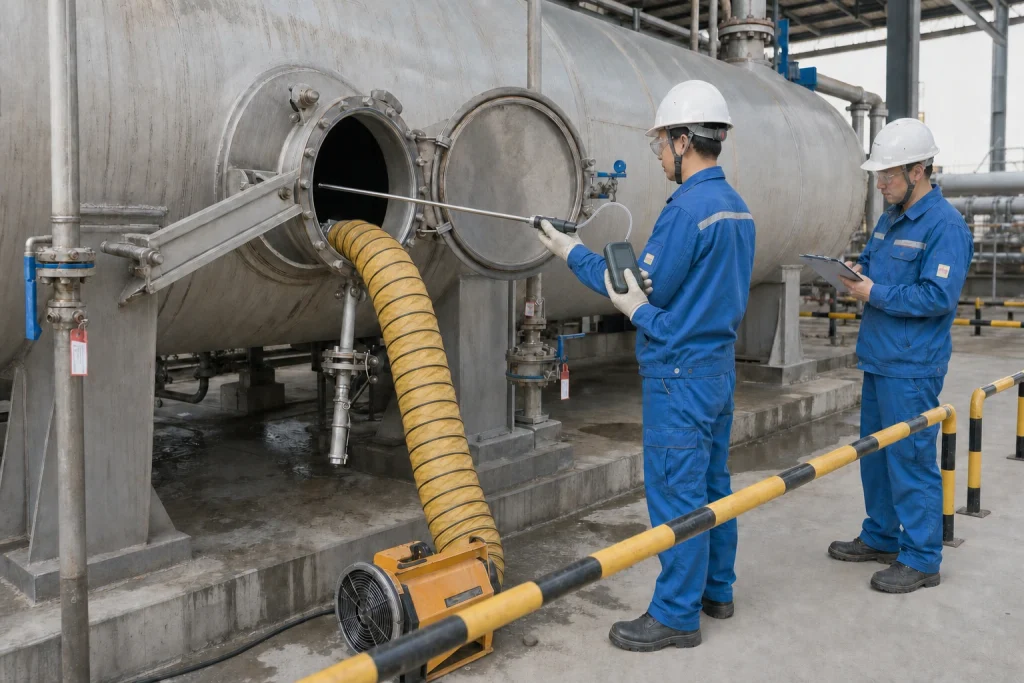
- Personal protection. The instrument samples the air in the worker’s own breathing zone, alarming locally with sound, vibration and light so the individual can withdraw immediately.
- Confined space entry. Pre-entry testing and continuous monitoring inside tanks, pits, sewers and vessels are classic portable applications, since fixed coverage inside such spaces is often impractical.
- Leak investigation and maintenance. Technicians can trace a suspected leak to its source, verify that an area is safe after an alarm, or check atmospheres around temporary work such as hot work or line breaking.
- Areas without fixed coverage. Remote wellheads, rooftops, temporary construction zones and infrequently visited rooms may be evaluated with portable instruments rather than permanent installations.
The limitations mirror the strengths. A portable only measures where its wearer goes, so an empty area is an unmonitored area. Readings depend on charged batteries, regular bump testing and calibration discipline, and the instrument cannot automatically start fans or shut down equipment the way a controller-driven fixed system can.
Fixed vs Portable: A Practical Comparison
When teams weigh the two options, the comparison usually comes down to a handful of questions:
- What are you protecting? Fixed systems protect places and processes; portables protect people. If a leak at an unmanned location could escalate before anyone notices, fixed monitoring is the natural answer. If workers enter changing or unpredictable atmospheres, portables are essential.
- Is the hazard location predictable? Known leak sources such as flanges, seals, valves and storage areas suit permanently placed sensors. Hazards that move with the work, as in maintenance or construction, suit instruments that move too.
- Is the area continuously occupied? Unmanned or rarely visited spaces gain little from portables that are never carried there, while continuously staffed workshops may justify both layers.
- Do you need automatic actions? Only a fixed system wired to a gas alarm controller can trigger ventilation, shutdowns and site-wide alarms on its own.
- What does your budget structure look like? Fixed systems concentrate cost in engineering and installation but then run for years at each point. Portables cost less per unit yet scale with headcount and require ongoing fleet management, charging and calibration consumables.
Regulatory drivers also differ. Confined space procedures in many jurisdictions effectively require portable testing before and during entry, while process safety practice and insurance requirements often point toward fixed detection for classified areas. Local codes should always be confirmed for each site.
Why Most Industrial Sites End Up Using Both
In practice, fixed and portable detection are complementary layers rather than competitors. A common pattern looks like this: fixed detectors supervise the known hazard points and feed a central controller that handles alarms and executive actions, while every worker who enters classified or confined areas carries a personal portable instrument as the last line of defense. The fixed layer catches leaks early and responds automatically; the portable layer protects individuals in the gaps between fixed points and during non-routine tasks.
A straightforward way to structure the decision for a specific site is to map the hazards first: list the gases present, their sources, and where people work relative to those sources. Locations with continuous hazard potential and automatic-response needs go on the fixed list, which can be built from the options in our fixed gas alarm detector range and coordinated through a suitable gas alarm controller. Tasks and areas where exposure depends on human activity go on the portable list. Reviewing typical layouts for your industry can also help; sector examples are collected on our applications pages.
Why ASA
ASA supplies both sides of this equation. Our product lines cover fixed gas detectors for combustible, toxic and oxygen monitoring, dust concentration monitors, and single-zone to multi-channel gas alarm controllers, giving B2B buyers in Europe and the Middle East a single point of contact for a layered detection strategy. Our engineering team can review your gas list, site drawings and occupancy patterns to suggest a sensible split between fixed points and portable coverage, and our sales engineers respond quickly with configuration and quotation support. To discuss which combination fits your site, contact the ASA team for a consultation.
Disclaimer: Product availability, specifications, measuring ranges, alarm configurations and certification coverage vary by model and region. The information in this article is provided for general reference only and does not constitute a performance guarantee, safety assurance or compliance statement. Always refer to the official product documentation and confirm suitability, certification status and local regulatory requirements with our team before selection, installation or use.