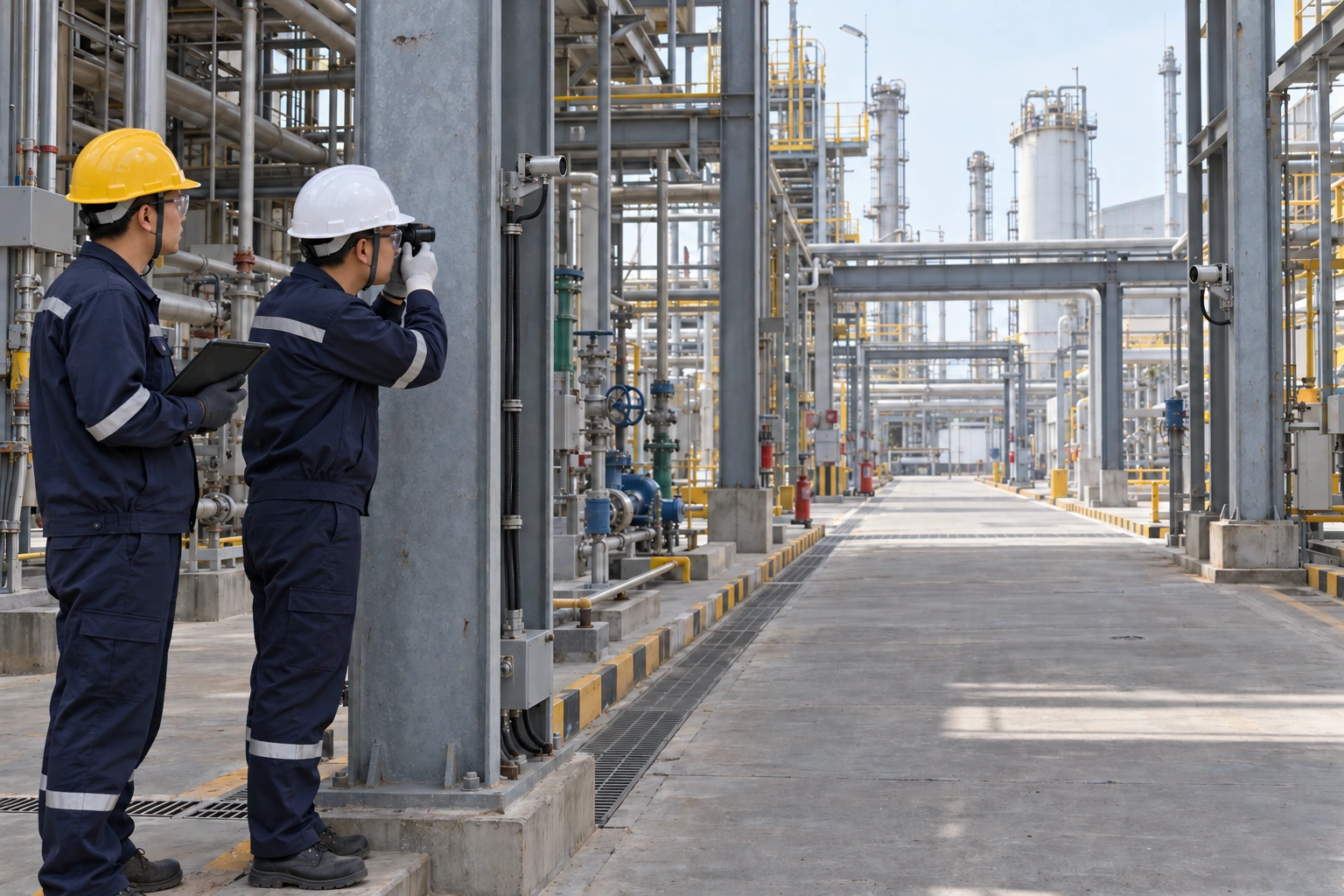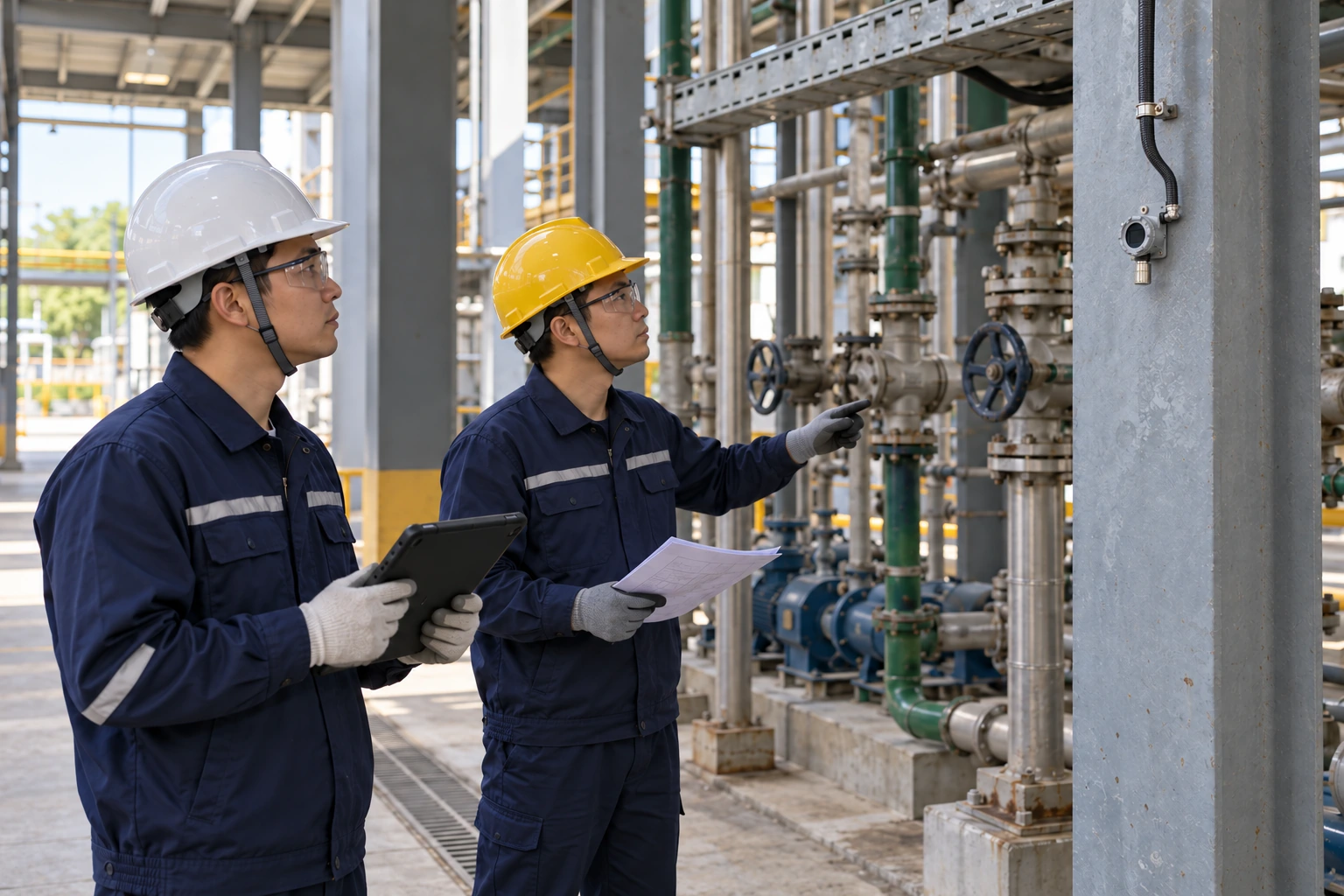
For plant managers, safety engineers and procurement teams, industrial gas safety europe is a topic that combines regulation, engineering and day-to-day discipline. European industrial facilities work with a wide range of gases: combustible fuels such as methane and LPG, toxic by-products such as carbon monoxide and hydrogen sulfide, and inert gases such as nitrogen that can quietly displace oxygen in enclosed rooms. Each of these hazards behaves differently, and each is addressed by a different combination of ventilation, detection and procedure. This article gives buyers and site teams a structured introduction: the main hazard types, the European regulatory context, how fixed detection fits in, and what a basic gas safety program looks like in practice.
The Three Main Gas Hazard Types
Most industrial gas incidents fall into one of three categories.
Flammable and explosive atmospheres. Combustible gases such as methane, propane and hydrogen become dangerous when their concentration in air enters the flammable range between the lower explosive limit (LEL) and the upper explosive limit (UEL). For methane, the LEL is approximately 4.4 percent by volume in air under European measurement conventions. Safety practice does not wait until the LEL is reached: alarm thresholds are commonly set at a fraction of the LEL, often in the range of 10 to 25 percent LEL, so that action is taken long before an ignitable mixture can form.
Toxic gas exposure. Gases such as carbon monoxide (CO), hydrogen sulfide (H2S), ammonia (NH3) and many volatile organic compounds harm workers at concentrations far below any explosive level. The EU has published indicative occupational exposure limit values for many of these substances; for example, the indicative 8-hour limit for carbon monoxide is 20 ppm, and for hydrogen sulfide it is 5 ppm. Member states transpose these values into national law, sometimes with stricter figures, so the national limit always needs to be checked for the site in question.
Oxygen deficiency and enrichment. Normal air contains 20.9 percent oxygen by volume. Inert gas purging, fermentation, rusting steel in closed tanks and nitrogen blanketing can all reduce oxygen to dangerous levels without any warning odor. A threshold of 19.5 percent is commonly used as the point below which an atmosphere is treated as oxygen deficient, while enrichment above roughly 23.5 percent sharply increases fire risk. Continuous monitoring with an instrument such as a fixed oxygen gas detector may be evaluated for plant rooms, storage areas and other spaces where inert gases are in use.
The European Regulatory Landscape at a Glance
Gas safety in European industry is shaped by a small set of well-known frameworks rather than a single law.
The ATEX workplace directive (1999/92/EC) requires employers to assess where explosive atmospheres may occur, classify those areas into zones, and take organizational and technical measures to protect workers. Its counterpart, the ATEX equipment directive (2014/34/EU), governs equipment intended for use inside those classified zones. Alongside ATEX, the general framework directive on occupational safety and health (89/391/EEC) obliges employers to evaluate all workplace risks, including toxic gas exposure, and successive directives have established indicative occupational exposure limit values that member states implement nationally.
For a buyer, the practical takeaway is twofold. First, hazard assessment and zone classification are the employer’s legal responsibility and come before any equipment selection. Second, equipment installed inside classified hazardous zones must carry protection credentials appropriate to the zone and the local regulatory regime, which is a matter to confirm in writing with the supplier for the specific model and destination country before purchase.
Fixed Gas Detection as a Continuous First Layer
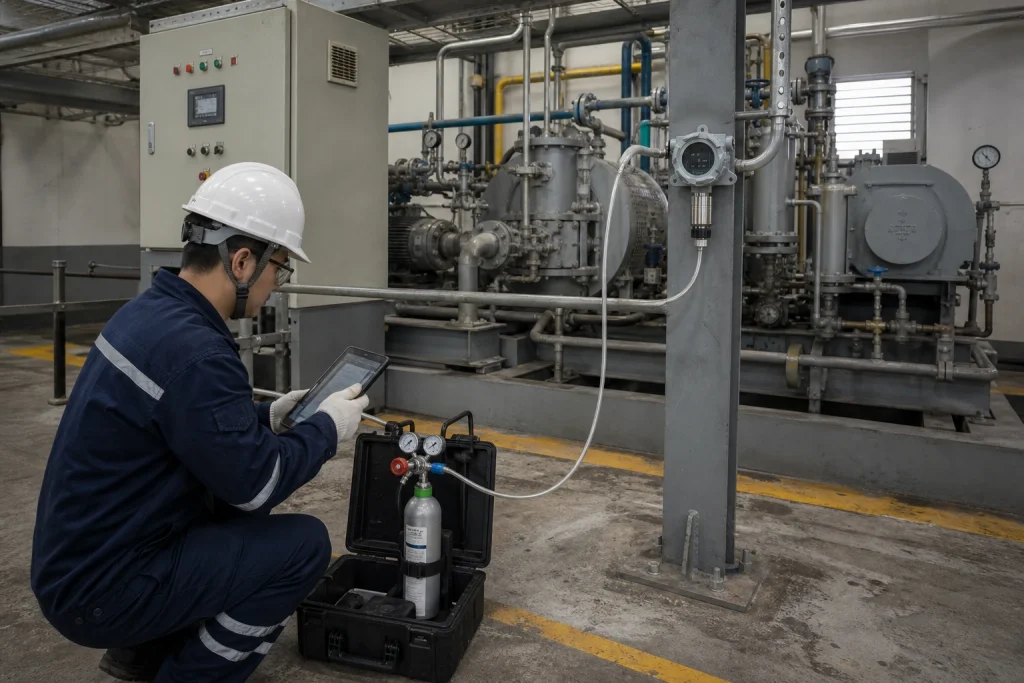
Ventilation, process containment and work procedures reduce the likelihood of a hazardous atmosphere, but they cannot confirm in real time that the air is safe. That is the role of fixed gas detection: transmitters mounted at selected points measure gas concentration continuously and report to a controller, which drives local alarms and can trigger ventilation fans, shutdown relays or plant-wide signaling.
Sensor placement follows gas behavior. Lighter-than-air gases such as methane and hydrogen accumulate at ceiling level, so detectors for these gases are mounted high; a methane gas alarm detector positioned near the ceiling above potential leak points is a typical arrangement in boiler houses and gas-fired plants. Heavier-than-air gases such as LPG and many solvent vapors sink, calling for low-level mounting. Gases with a density close to air, such as carbon monoxide, are generally monitored at breathing height in occupied areas.
Fixed systems are commonly complemented by portable detectors for confined space entry, maintenance rounds and incident response. The two approaches answer different questions: fixed detection watches known risk points around the clock, while portables protect individual workers wherever they go.
Alarm Levels and Exposure Limits in Practice
A recurring source of confusion for new buyers is the difference between measurement units and alarm philosophies. Combustible gas detectors typically read in percent LEL, a relative scale where 100 percent LEL is the lower explosive limit of the target gas. Toxic gas detectors read in ppm, an absolute concentration. Oxygen detectors read in percent volume.
Alarm setpoints are then chosen against these scales. For combustible gas, two-stage alarms are common: a low alarm at an early fraction of LEL prompting investigation and increased ventilation, and a high alarm triggering evacuation or shutdown logic. For toxic gases, setpoints are commonly aligned with the applicable occupational exposure limits so that alarms sound before legal limits are approached. The exact values are a site-level decision that should reflect the national limits, the zone classification and the process risk assessment; a reputable supplier can advise on common practice, but the site owner sets the final configuration.
Building a Basic Gas Safety Program
An effective program in a European facility usually rests on five elements. First, a documented hazard assessment identifying which gases can occur, where and in what quantities. Second, zone classification for explosive atmospheres where applicable. Third, engineered controls: ventilation, containment and a detection layout matched to gas density and airflow. Fourth, maintenance discipline: gas detectors are safety instruments and require periodic bump testing and calibration to remain trustworthy. Fifth, people: training, confined space entry procedures and clear alarm response plans.
Detection hardware is only one element of this chain, but it is the element that provides continuous, objective evidence about the atmosphere. Reviewing typical detector layouts for comparable sites is a useful starting point, and our application overview outlines how monitoring is commonly arranged across different industries.
Why ASA
ASA supplies fixed gas detectors, dust alarm detectors and gas alarm controllers covering combustible, toxic and oxygen monitoring needs across a broad range of industrial applications. Our engineering team supports customers in Europe and the Middle East with product selection guidance, layout suggestions and configuration advice, and our sales engineers respond quickly to technical questions during specification and after delivery. If you are defining requirements for a new project or upgrading an existing system, contact our team to discuss your application.
Disclaimer: Product availability, specifications, measuring ranges, alarm configurations and certification coverage vary by model and region. The information in this article is provided for general reference only and does not constitute a performance guarantee, safety assurance or compliance statement. Always refer to the official product documentation and confirm suitability, certification status and local regulatory requirements with our team before selection, installation or use.