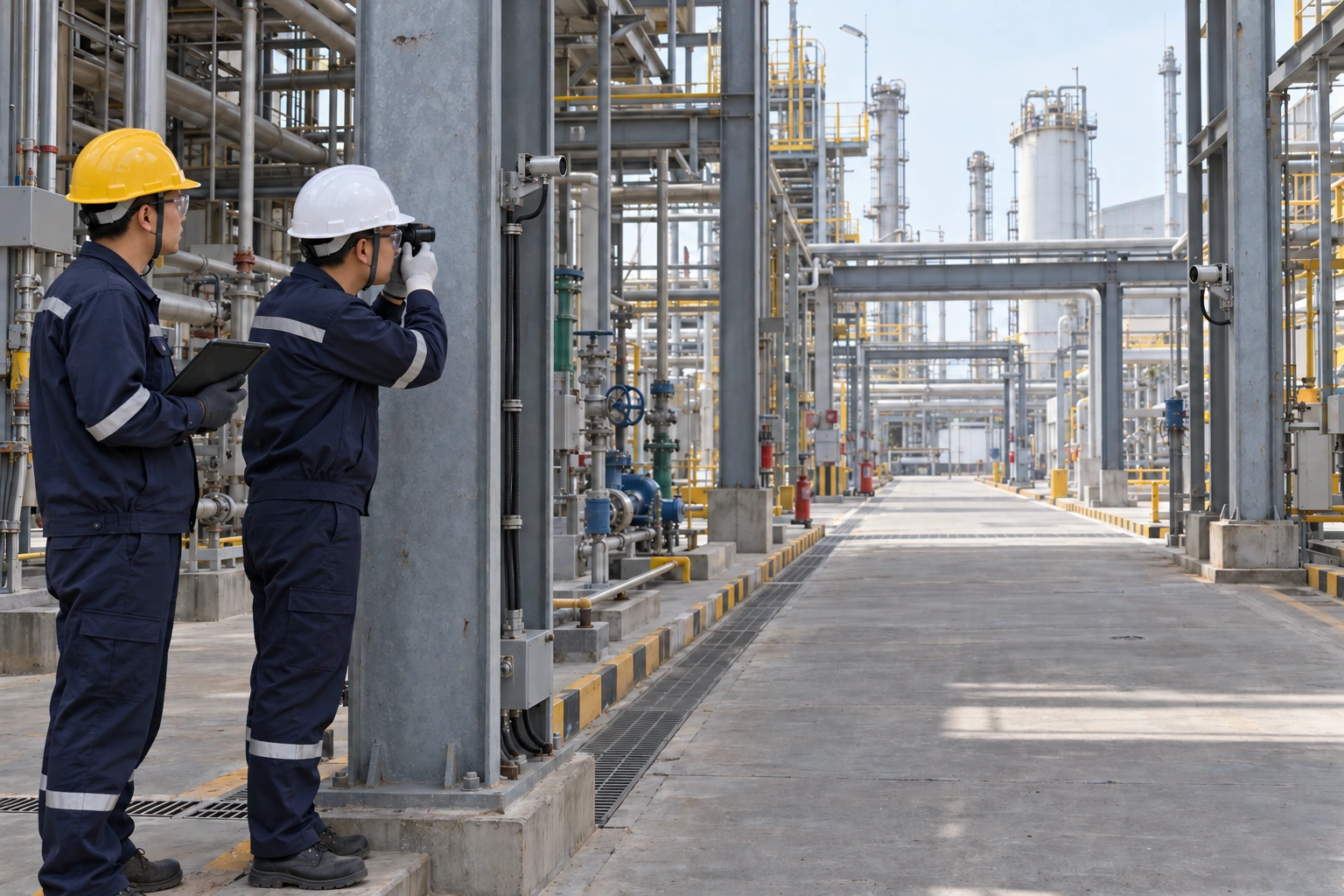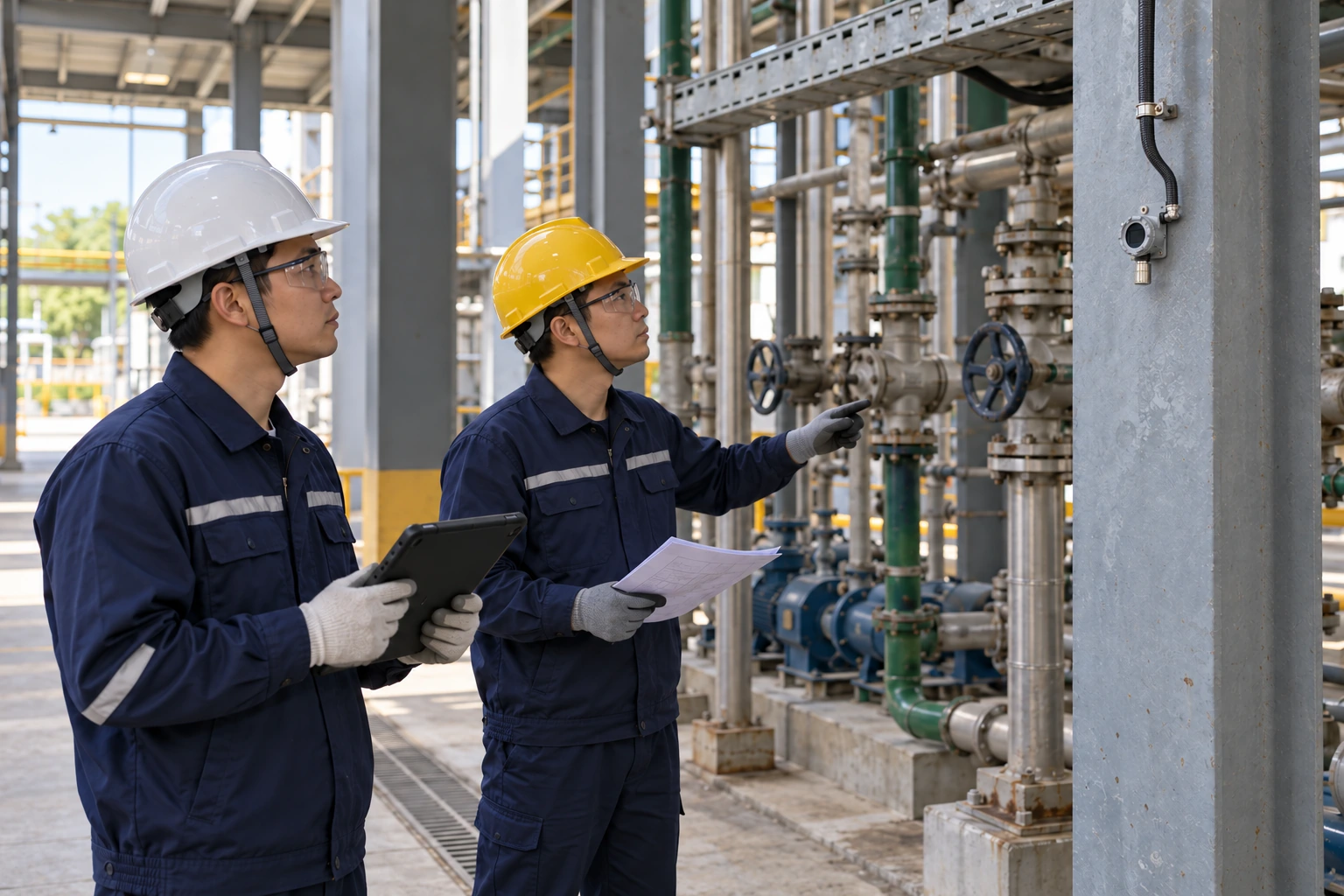
Sulfur hexafluoride (SF6) is the standard insulating and arc-quenching medium in gas-insulated switchgear (GIS), circuit breakers and many medium and high voltage substations. The gas performs extremely well as an electrical insulator, but any leak raises two distinct concerns: personnel safety inside enclosed switchgear rooms and the environmental cost of losing one of the most potent greenhouse gases known. For these reasons, a fixed SF6 gas detector, often working alongside oxygen depletion monitoring, is commonly considered part of the safety design for GIS halls, cable basements and substation buildings. This article explains why SF6 requires monitoring, where leaks tend to accumulate, which sensing approaches are available and how a fixed monitoring layout may be planned.
Why SF6 Requires Monitoring in Switchgear Rooms
Pure SF6 is colorless, odorless, non-flammable and chemically very stable. It is not classified as toxic in its pure form, and the widely referenced occupational exposure limit is 1000 ppm as an 8-hour time-weighted average. At first glance this makes it appear harmless, but two properties change the picture in practice.
First, SF6 is roughly five times denser than air. When it escapes from switchgear, it does not disperse upward like methane or hydrogen; it sinks and pools in the lowest parts of a building. In a poorly ventilated basement or trench, an accumulating layer of SF6 displaces breathable air from the bottom up. Because the gas cannot be seen or smelled, a worker entering such a space receives no natural warning of an oxygen-deficient atmosphere.
Second, when SF6 is exposed to electrical arcing or high temperature inside faulted equipment, it can form decomposition byproducts such as sulfur dioxide, hydrogen fluoride and various sulfur fluorides. These byproducts are toxic and irritant even at low concentrations, which is why maintenance teams treat gas compartments after internal faults with particular care.
There is also a strong environmental driver. SF6 has a global warming potential more than 20,000 times that of carbon dioxide over a 100-year horizon, and the EU F-Gas Regulation places strict obligations on leak prevention, reporting and the phase-down of SF6 in new switchgear. Continuous leak monitoring supports both compliance documentation and early repair decisions.
High Risk Areas in Substations and GIS Buildings
Because SF6 accumulates at low points, monitoring priorities follow the geometry of the building rather than the position of the equipment alone. Typical areas of concern include:
- GIS halls: large volumes of SF6 are contained in bus ducts, breaker compartments and instrument transformer enclosures. Flange joints, density monitor fittings and gas handling connections are common leak paths.
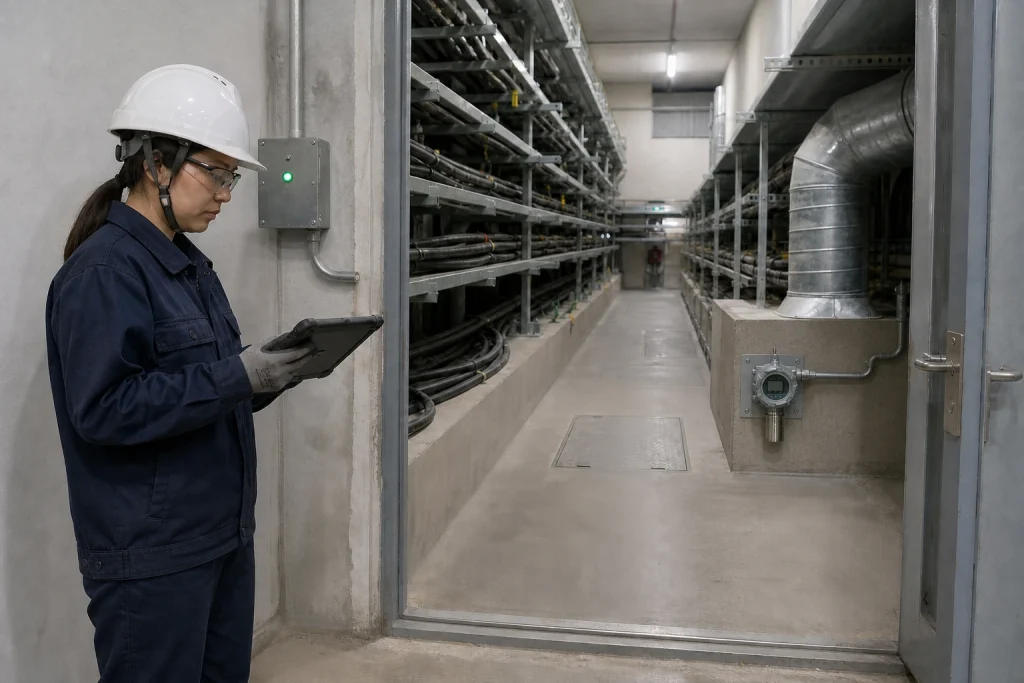
- Cable basements and trenches: these low-lying, poorly ventilated spaces sit directly beneath switchgear and collect any leaked gas. They are frequently treated as confined spaces for entry purposes.
- Gas handling and storage rooms: areas where SF6 cylinders, recovery carts and filling equipment are used introduce additional leak opportunities during transfer operations.
- Underground or indoor compact substations: limited air volume means even a modest leak can produce a meaningful oxygen deficit near floor level.
Risk assessments for these areas commonly combine fixed monitoring, ventilation interlocks and confined space entry procedures, including pre-entry atmosphere checks with portable instruments.
Detection Approaches: SF6 Sensing and Oxygen Depletion Monitoring
Two complementary measurement strategies are used in switchgear facilities.
Direct SF6 detection. Infrared-based sensing is the established method for SF6 because the molecule absorbs infrared light strongly and the technique is immune to the poisoning effects that limit some other sensor families. Fixed infrared monitors can be evaluated for continuous leak surveillance in GIS halls, while portable infrared or laser-based cameras are commonly used for pinpointing individual leak sources during maintenance campaigns.
Oxygen depletion monitoring. Since the practical hazard to personnel is displacement of breathable air, many operators install fixed oxygen monitors in basements, trenches and gas rooms. Ambient air contains about 20.9 percent oxygen by volume, and alarm setpoints around 19.5 percent are commonly used to trigger ventilation and warn personnel before conditions become dangerous. A fixed monitor such as the ASA fixed oxygen O2 gas detector may be evaluated for this role in low-lying areas of substation buildings.
The two approaches answer different questions. An SF6 reading tells you that equipment is losing insulating gas, which matters for asset management and environmental reporting even at concentrations far below any personnel hazard. An oxygen reading tells you whether the atmosphere in a specific space is safe to enter. Many facilities use both.
Planning a Fixed Monitoring Layout
Sensor placement should follow the behavior of the gas. Because SF6 is much heavier than air, detection points for SF6 and oxygen depletion are generally installed close to floor level and at the lowest points of the protected space: trench bottoms, basement floors, stair pits and sumps. Mounting heights of roughly 30 to 60 centimeters above the floor are a common starting point, refined by airflow studies or smoke tests where ventilation patterns are complex.
Individual detectors are usually wired back to a central alarm panel so that readings, alarm relays and ventilation control sit in one place. A multi-channel unit such as the AN-3100H gas detection controller, installed in a control room or other non-hazardous (safe) area, can be considered for collecting signals from oxygen and gas detectors across a substation building, driving audible and visual alarms and switching extraction fans when a low-oxygen condition is detected.
A practical layout review typically covers alarm setpoints and their relationship to ventilation start, the audibility of alarms at room entrances so that staff are warned before entering, routine bump testing and calibration intervals, and documentation of leak events to support F-Gas record keeping. Further examples of monitoring concepts for different facility types are collected on our applications overview.
Why ASA
ASA supplies fixed gas detectors, dust monitors and gas alarm controllers to industrial buyers across Europe and the Middle East. Our product line covers oxygen, toxic and combustible gas monitoring together with multi-channel controllers, allowing substation and switchgear projects to source detection points and alarm logic from a single supplier. Our engineering team supports detector selection, placement review and output integration questions, and we respond quickly to specification requests with clear documentation. If you are planning gas monitoring for a switchgear room, substation or GIS facility, contact our team to discuss your requirements.
Disclaimer: Product availability, specifications, measuring ranges, alarm configurations and certification coverage vary by model and region. The information in this article is provided for general reference only and does not constitute a performance guarantee, safety assurance or compliance statement. Always refer to the official product documentation and confirm suitability, certification status and local regulatory requirements with our team before selection, installation or use.