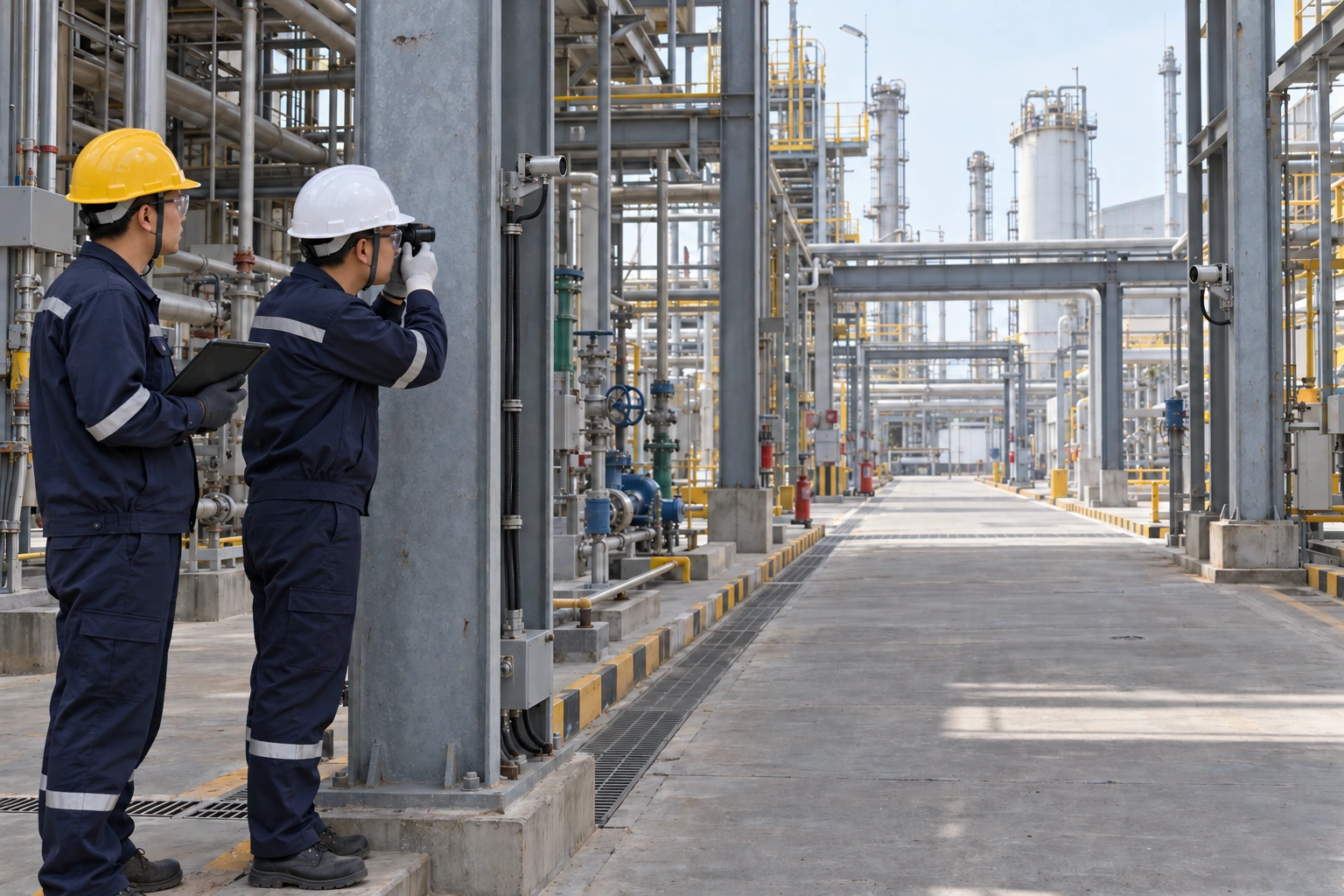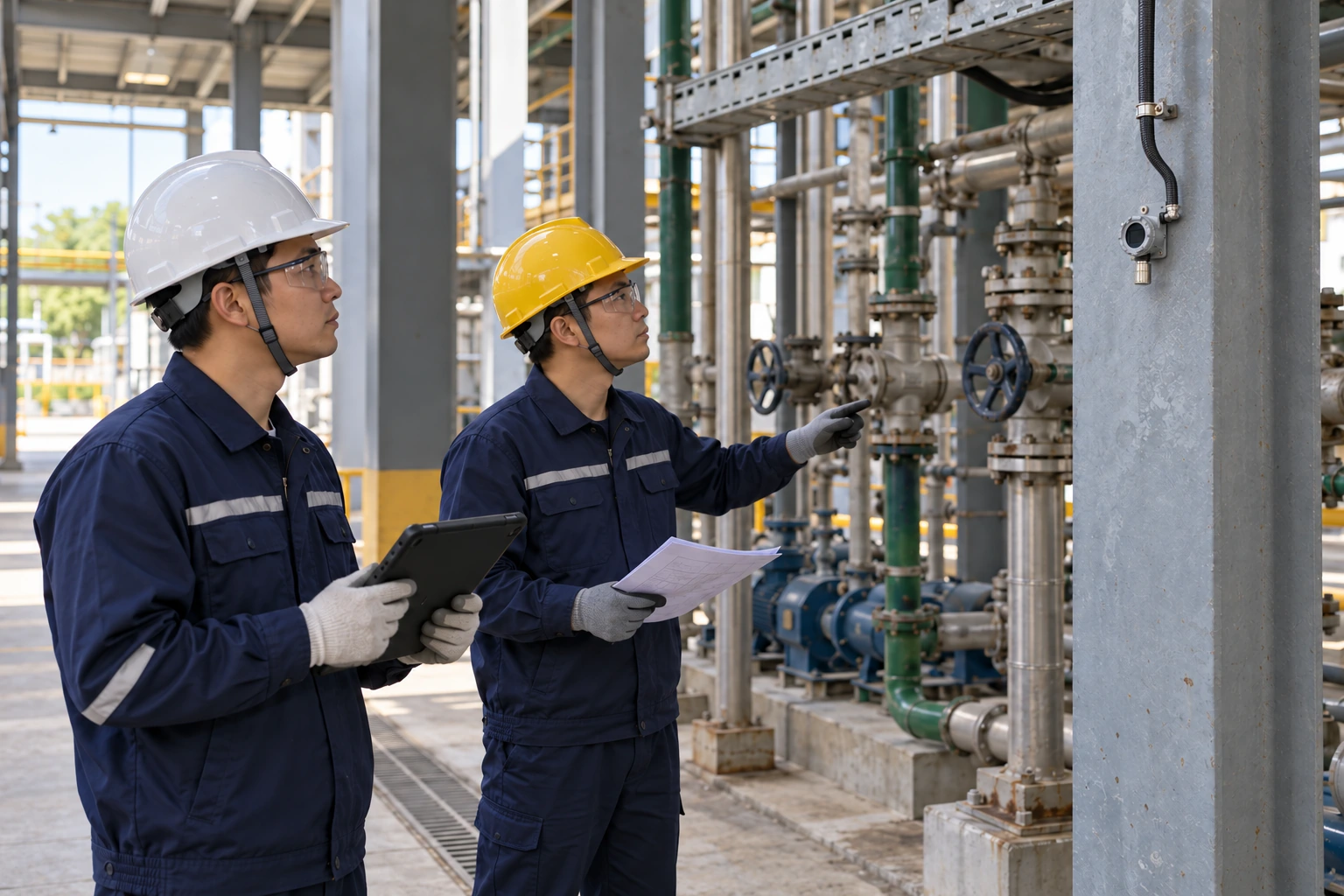
An oxygen deficiency monitor is one of the most important fixed safety instruments in facilities where nitrogen, argon, carbon dioxide or other inert gases are stored, piped or used, and in any plant with confined spaces that workers must enter. Unlike flammable or toxic gas hazards, oxygen depletion gives no warning at all: the displaced air looks, smells and feels exactly like normal air. A permanently installed monitor that measures the oxygen concentration around the clock, and drives alarms and ventilation before people are exposed, is therefore widely regarded as the baseline protection for these areas. This article explains where fixed oxygen deficiency monitoring is commonly applied, how the instruments work, and what to consider when planning sensor placement, alarm levels and system integration.
Why Oxygen Deficiency Is a Silent Hazard
Normal ambient air contains approximately 20.9 percent oxygen by volume. Many occupational safety frameworks, including OSHA in the United States, treat an atmosphere below 19.5 percent oxygen as oxygen deficient. The danger escalates quickly as the level falls: reduced concentrations are associated with impaired judgment and coordination, and severely depleted atmospheres can cause loss of consciousness within a short time. Because the human body has no reliable ability to sense low oxygen, a person may feel normal right up to the point of collapse.
The most common cause in industry is displacement by inert gas. Nitrogen used for blanketing, purging or laser cutting, argon used in welding and metallurgy, and carbon dioxide used in food processing or fire suppression are all colorless and odorless. A leaking valve, a purge vent discharging into an enclosed room, or a cryogenic liquid boiling off in a poorly ventilated space can lower the oxygen level well below safe limits without any visible sign.
Typical Applications: Confined Spaces and Inert Gas Areas
Fixed oxygen deficiency monitors may be evaluated for any location where inert gas can accumulate or where natural ventilation is limited. Typical examples include:
- Nitrogen generator rooms, bulk storage areas and cylinder stores
- Cryogenic liquid storage rooms handling liquid nitrogen, argon or CO2
- Laboratories, MRI suites and research areas using cryogens
- Welding bays, heat treatment shops and laser cutting cells using argon or nitrogen
- Breweries, wineries and food plants where CO2 is generated or injected
- Confined spaces such as tanks, pits, tunnels, basements and utility vaults that require pre-entry and continuous monitoring
For confined spaces, portable instruments are commonly used for pre-entry checks, while fixed monitors are often installed in spaces that are entered regularly or that have a known inert gas source nearby. The two approaches complement each other rather than compete. Site surveys across different industries are discussed further on our applications overview page.
How Fixed Oxygen Monitors Work
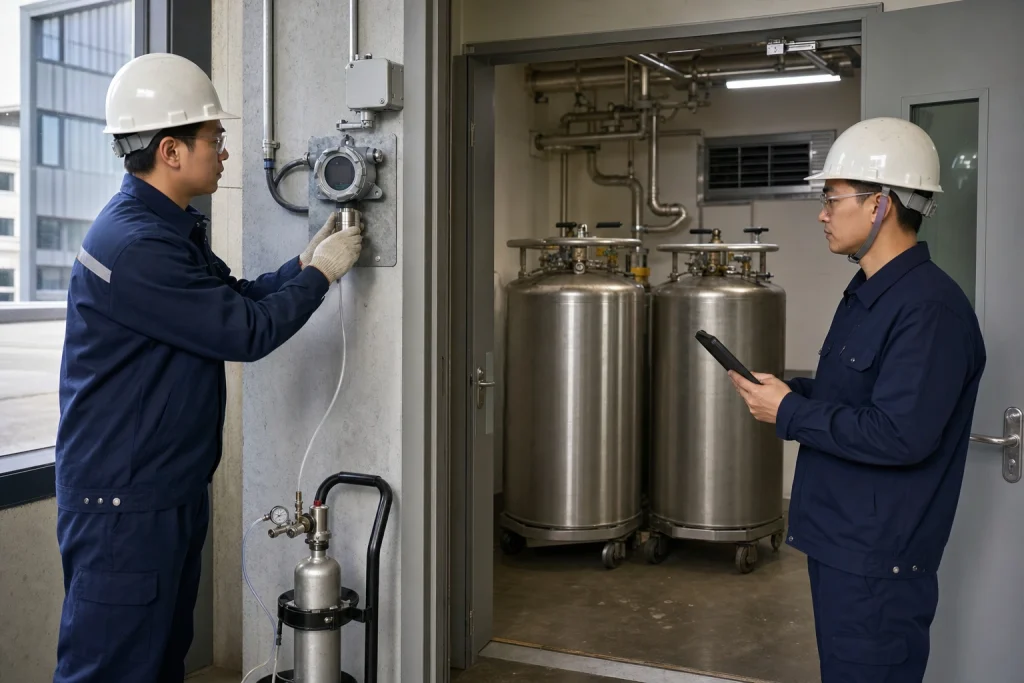
Most fixed oxygen deficiency monitors use an electrochemical sensing cell. The cell produces a current proportional to the oxygen concentration in the surrounding air, which the transmitter converts into a reading over a typical measuring range of 0 to 30 percent volume oxygen. Electrochemical oxygen cells are consumable components: their output declines gradually over a service life that is typically in the range of two to three years, depending on the cell type and operating environment, so periodic calibration and scheduled cell replacement are part of normal ownership.
A fixed transmitter such as the ASA fixed oxygen O2 gas detector (AN-O2-D) is designed for continuous duty in industrial conditions and connects to a remote controller or PLC using standard industrial signals. Where the monitored area is classified as a hazardous location for reasons unrelated to the oxygen hazard itself, the AN-O2-D carries the China Ex Certificate EETI24.0463X (Ex db IIC T6 Gb, IP65), valid to Jan 2030, which can be reviewed against the site classification during selection.
Placement and Alarm Level Considerations
Sensor placement should follow the behavior of the displacing gas rather than a fixed rule of thumb. Nitrogen is slightly lighter than air and tends to mix readily, so sensors are commonly mounted at breathing height, around 1.2 to 1.5 meters above the floor, in the area where people work. Argon and carbon dioxide are heavier than air and can pool in pits, sumps and low corners, which argues for additional low-level sensing points in those locations. Sensors should be positioned near known leak sources and along entry routes, while avoiding dead air pockets, direct ventilation outlets and locations exposed to washdown or mechanical damage.
Alarm setpoints are normally defined by the site safety authority within the applicable regulations. In practice, a first alarm at 19.5 percent volume oxygen and a second, more urgent alarm at a lower level such as 18 or 19 percent are commonly used configurations. The first alarm typically triggers increased ventilation and investigation, while the second alarm signals evacuation and entry prohibition. Some sites also configure a high-oxygen alarm, often around 23.5 percent, because oxygen enrichment sharply increases fire risk. All setpoints should be confirmed against local requirements before commissioning.
Integrating Monitors with Controllers and Ventilation
An oxygen monitor delivers full value only when its alarms reach people and systems that can act. Fixed transmitters typically provide a 4-20mA analog output or an RS485 digital connection to a central unit such as the AN-3100H gas detection controller, which is intended for installation in non-hazardous (safe) areas such as a control room. From the controller, relay outputs can be considered for driving local sounders and beacons, door interlocks, and automatic start of mechanical ventilation when the first alarm level is reached. Audible and visual alarms positioned outside the room entrance are a common design choice, so that workers are warned before they open the door to a depleted atmosphere.
Routine care completes the picture. Regular bump testing, calibration with certified gas, documented cell replacement and periodic review of alarm settings keep the system trustworthy over its service life, and are commonly required by site safety management procedures.
Why ASA
ASA supplies a full line of fixed gas detection equipment, including oxygen, toxic and combustible gas detectors, dust monitors and multi-channel alarm controllers, giving buyers a single source for complete monitoring systems. Our engineering team supports customers in Europe and the Middle East with sensor selection, placement advice and system configuration for confined space and inert gas applications, and responds quickly to technical and commercial inquiries. If you are specifying oxygen deficiency monitoring for a new facility or upgrading an existing installation, contact our team to discuss your requirements.
Disclaimer: Product availability, specifications, measuring ranges, alarm configurations and certification coverage vary by model and region. The information in this article is provided for general reference only and does not constitute a performance guarantee, safety assurance or compliance statement. Always refer to the official product documentation and confirm suitability, certification status and local regulatory requirements with our team before selection, installation or use.