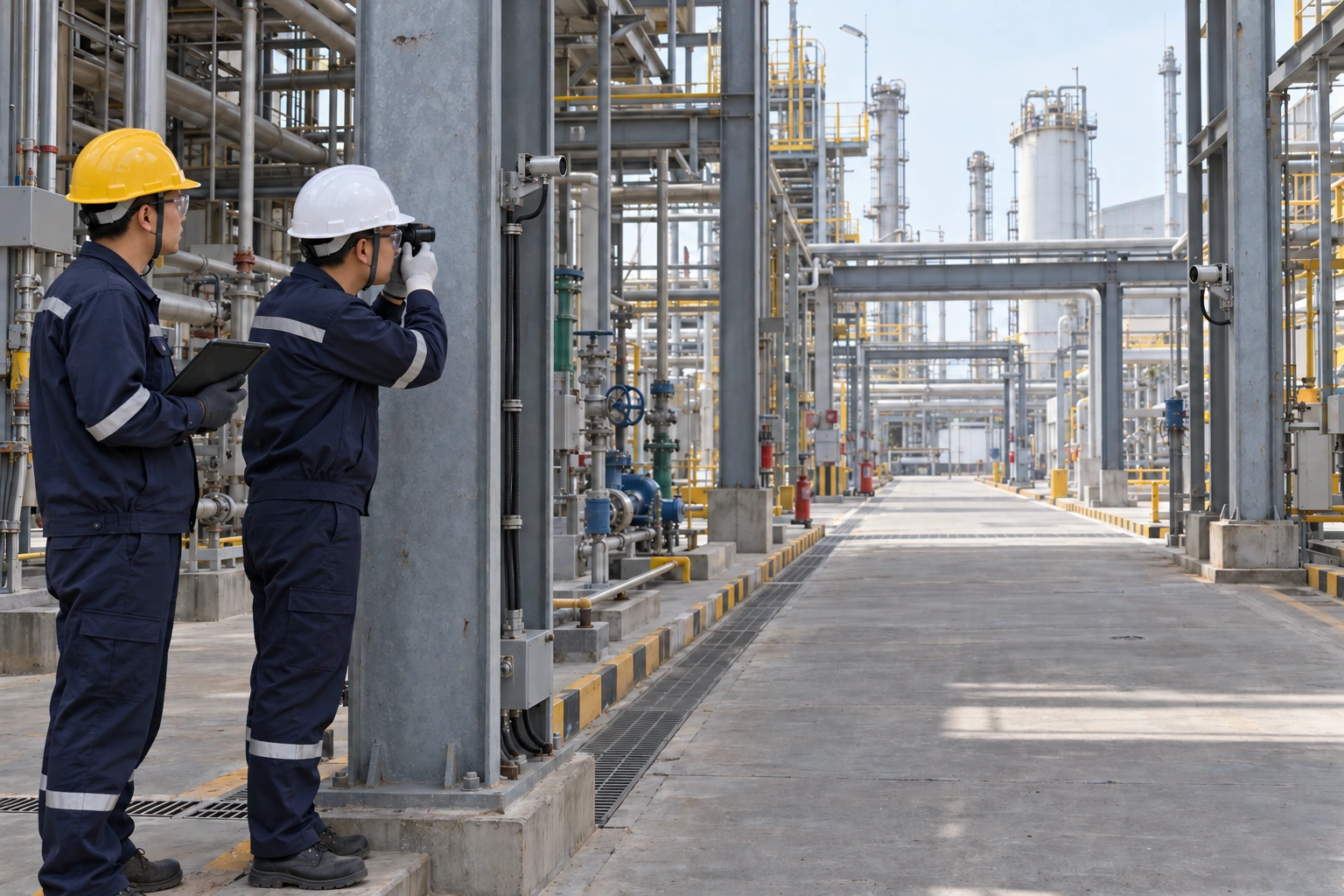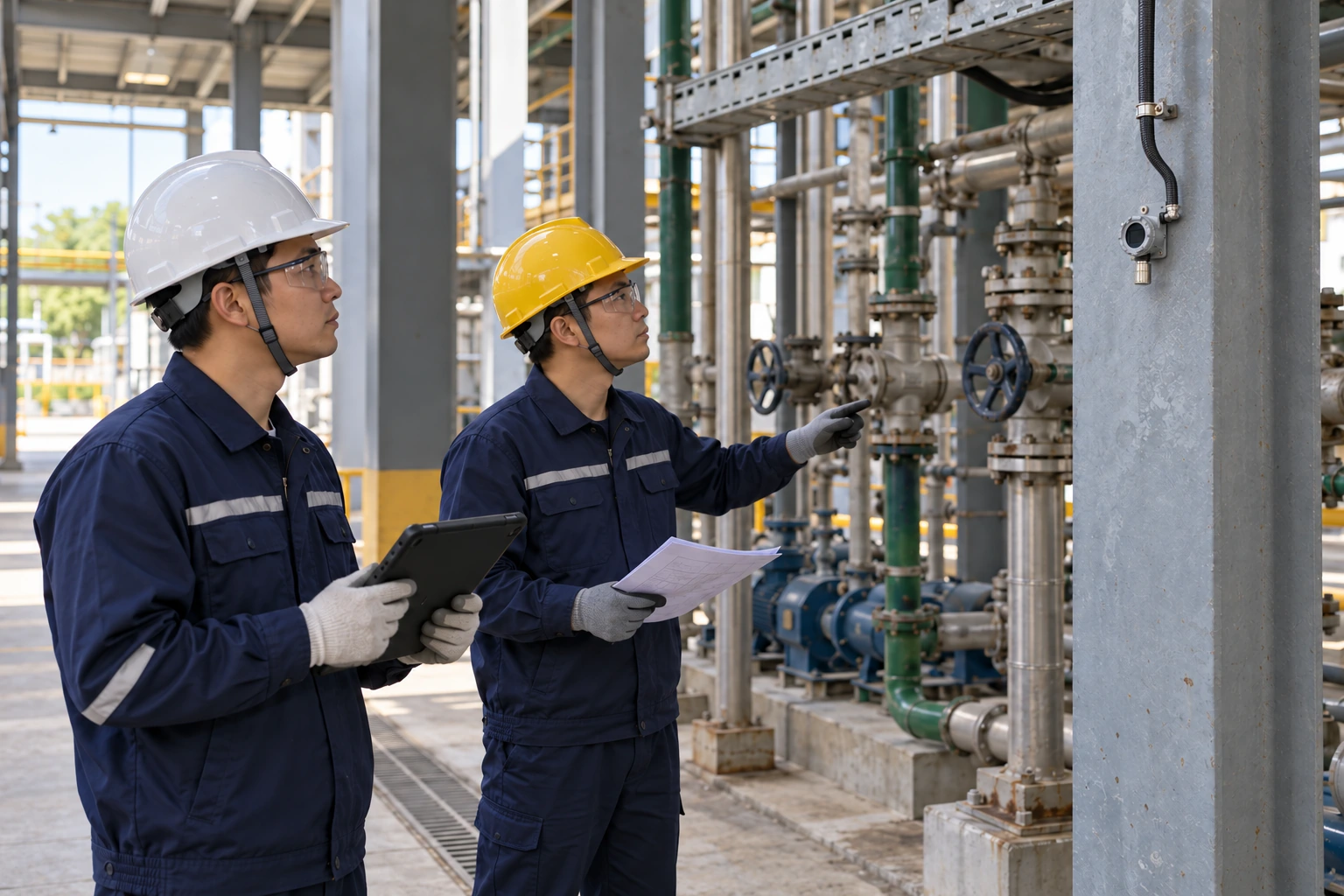
Oxygen deficiency is one of the most common and least visible hazards in industrial facilities, from confined spaces and cold storage rooms to laboratories that use inert gases such as nitrogen or argon. Because a drop in oxygen concentration cannot be seen or smelled, a fixed monitoring point is often the only reliable line of defense. If you are trying to choose oxygen monitor equipment for a plant, warehouse or process area, the decision usually comes down to three practical questions: what measuring range do you need, where should the alarm levels sit, and how long will the sensor last before it needs replacement. This guide walks through each of these points so that procurement and EHS teams can compare options with confidence.
Understand the Measuring Range and What Normal Air Looks Like
Normal ambient air contains approximately 20.9 percent oxygen by volume. A fixed oxygen monitor is there to detect deviations from this baseline in either direction: depletion, typically caused by inert gas displacement or consumption of oxygen by a process, and enrichment, which raises fire risk because materials ignite more easily and burn more intensely in oxygen-rich atmospheres.
For most workplace safety applications, instruments with a measuring range of 0 to 25 or 0 to 30 percent volume are commonly used, since this window covers both deficiency and moderate enrichment scenarios. When comparing models, look at how the range is specified and confirm with the supplier that it matches your scenario, especially if your process can push oxygen levels well above ambient. For general area monitoring in production halls, plant rooms and storage areas, a wall-mounted unit such as a fixed oxygen O2 gas detector can be considered as the standard building block of the system.
Setting Alarm Levels for Oxygen Deficiency and Enrichment
Alarm setpoints should follow the regulations and internal safety rules that apply at your site, but some reference values are widely recognized across the industry. In the United States, OSHA defines an oxygen-deficient atmosphere as one below 19.5 percent by volume and an oxygen-enriched atmosphere as one above 23.5 percent by volume, and many facilities around the world use these figures as a starting point for their own alarm philosophy.
A typical configuration uses two alarm stages. A first-stage alarm slightly below normal, for example around 19.5 percent, warns personnel to investigate and ventilate before conditions become dangerous. A second-stage alarm at a lower level triggers evacuation procedures or interlocks. On the enrichment side, an alarm near 23.5 percent can be considered where oxygen cylinders, oxygen-enriched processes or leaks from oxygen piping are credible risks. Whatever values you select, document the rationale, align them with local regulations in your market, and make sure operators are trained on what each alarm stage requires them to do.
Sensor Technology and Expected Sensor Life
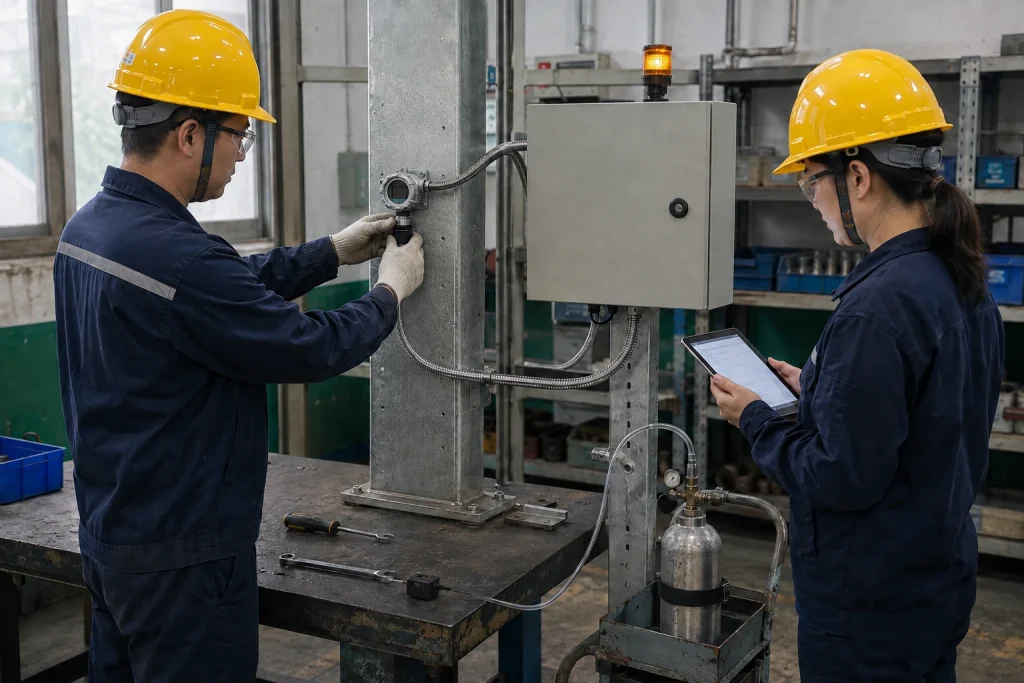
Most fixed oxygen monitors use electrochemical sensors. These cells generate a current proportional to the oxygen concentration and are valued for their accuracy at ambient levels, low power consumption and straightforward integration into transmitter housings. The trade-off is that electrochemical oxygen cells are consumable components: their electrolyte and electrodes deplete over time, and typical service life is in the range of one to three years depending on the sensor design, temperature and operating environment.
When you evaluate suppliers, ask three questions about sensor life. First, is the sensor field-replaceable, or does the whole transmitter need to be returned for service? A plug-in sensor module keeps maintenance fast and predictable. Second, what does the calibration schedule look like? Regular bump tests and calibrations, commonly performed at intervals defined by your safety management system, are the only way to confirm that an aging sensor still responds correctly. Third, how does the instrument behave at end of sensor life? A monitor that clearly signals a sensor fault is far safer than one that quietly drifts. Environmental factors matter as well: very dry or very hot locations tend to shorten electrochemical sensor life, so placement decisions and sensor budgeting should be considered together.
Installation, Placement and System Integration
Oxygen itself is slightly heavier than many common inert gases, but in practice oxygen deficiency hazards are driven by the displacing gas. Nitrogen has a density close to air and tends to mix throughout a room, while argon and carbon dioxide are heavier than air and accumulate in pits, basements and low points. Sensor placement should therefore follow the behavior of the displacing gas and the layout of the space: breathing-zone height is a common general-purpose choice, with additional low-level points where heavy gases can pool. Entrances to confined spaces, cold rooms and gas storage areas may be evaluated as priority locations.
Fixed detectors rarely work alone. In a typical architecture, multiple transmitters report to a central controller that handles alarm logic, relay outputs for ventilation fans or shutdown circuits, and connection to the plant control system. A multi-channel unit such as the AN-3100H gas detection controller, designed for installation in non-hazardous (safe) areas, can be considered as the hub of such a system, collecting signals from oxygen and other gas detection points across the site. Where detectors themselves must be mounted in classified hazardous zones, explosion protection becomes part of the selection. The AN-O2-D fixed oxygen detector holds China Ex Certificate EETI24.0463X (Ex db IIC T6 Gb, IP65), valid to Jan 2030, which buyers can review against their local acceptance requirements.
Why ASA
ASA supplies a full line of fixed gas detection equipment covering oxygen, toxic gases, combustible gases and dust monitoring, together with gas detection controllers that tie individual points into a complete alarm system. Our engineering team supports customers in Europe and the Middle East with product selection, alarm configuration guidance and documentation, and we are known for responsive communication from first inquiry through after-sales support. If you are specifying oxygen monitoring for a new project or upgrading an existing installation, contact the ASA team to discuss your application and receive a tailored recommendation.
Disclaimer: Product availability, specifications, measuring ranges, alarm configurations and certification coverage vary by model and region. The information in this article is provided for general reference only and does not constitute a performance guarantee, safety assurance or compliance statement. Always refer to the official product documentation and confirm suitability, certification status and local regulatory requirements with our team before selection, installation or use.