
Fixed gas detection equipment rarely lives in a clean, climate-controlled room. It is bolted to walls in wastewater plants, pump stations, cold stores, chemical process lines and mineral handling sheds, where moisture, airborne particulate and aggressive chemistry all work against long-term reliability. Effective harsh environment maintenance is what keeps these instruments trustworthy over years of service, rather than allowing slow drift, blocked sensors or hidden corrosion to erode the protection they are meant to provide. This guide outlines the practical steps a maintenance team can consider when detectors are exposed to humidity, dust and corrosive site conditions.
How Humidity Affects Gas Detector Performance
High and fluctuating humidity is one of the most common stressors for fixed detectors. Condensation can form on sensor membranes and internal surfaces when warm, moist air meets a cooler enclosure, particularly around shift changes or seasonal temperature swings. Electrochemical cells depend on a stable electrolyte, and prolonged exposure to very dry or very wet conditions may shift their baseline output. Catalytic and infrared sensing elements can also be affected when water films interfere with gas diffusion to the sensing surface.
Maintenance teams can reduce these risks by confirming that cable glands and enclosure seals remain intact, that breathable membranes or hydrophobic filters are clean and undamaged, and that units are mounted so water cannot pool on or run into the housing. During routine visits it is worth checking for internal moisture, salt deposits or discoloration, and recording ambient humidity alongside calibration data so that any correlation between wet periods and reading drift can be evaluated over time.
Managing Dust and Particulate Ingress
Dust is a persistent problem in cement, grain, wood, metal and mineral processing environments. A layer of fine particulate over a sensor inlet slows the movement of the target gas to the sensing element, which can lengthen response time and, in severe cases, mask a genuine hazard. Sinter discs, splash guards and dust filters are designed to protect the sensor, but they only work if they are inspected and replaced on a sensible interval.
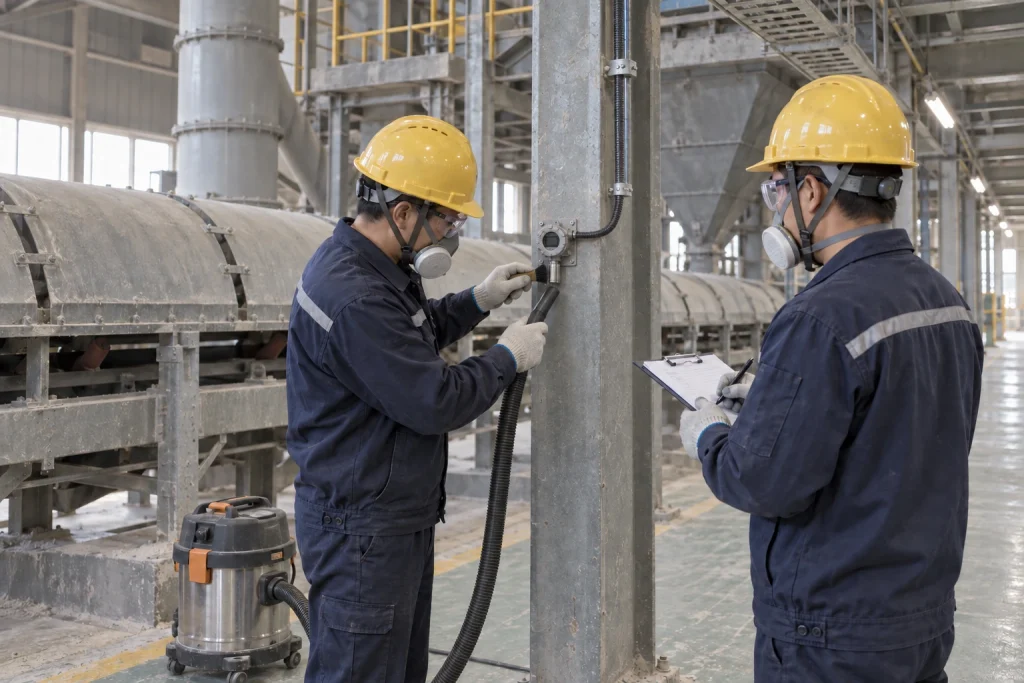
A practical approach is to gently clear accumulated dust from external filters with dry, low-pressure air rather than solvents or brushes that may force material inward. Filters and sinters should be treated as consumables and changed according to how quickly the site loads them, not only on a fixed calendar. Where combustible dust or flammable gas is present, detectors such as a methane CH4 combustible gas alarm detector may be considered as part of a wider monitoring layout, and their inlets deserve particular attention because a blocked path can quietly delay an alarm.
Corrosion and Sensor Longevity
Corrosive atmospheres, including those containing hydrogen sulfide, chlorine, ammonia or acidic vapors, attack both the sensor chemistry and the surrounding hardware. Terminals, screws, brackets and cable entries can degrade even when the sensor itself is still within its usable life, so corrosion inspection should cover the whole installation rather than the sensing cell alone. Signs to look for include green or white deposits on metal, softened or cracked seals, and increased contact resistance at terminals.
Because certain electrochemical sensors are consumed by continuous exposure to the gases they detect, their service life in an aggressive setting is commonly shorter than in a mild one. Tracking each sensor’s installation date, cumulative exposure and calibration history helps teams anticipate replacement before performance falls off. Detectors used for corrosive targets, such as a hydrogen sulfide H2S gas detector, benefit from disciplined record keeping so that end-of-life replacement is planned rather than reactive.
Building a Practical Maintenance Schedule
Harsh conditions call for shorter, evidence-based maintenance intervals rather than a single generic cycle. A workable schedule usually blends several activities at different frequencies: frequent visual checks for moisture, dust and corrosion; periodic bump testing to confirm the unit responds to gas and triggers its alarm path; and scheduled calibration with a certified test gas to correct drift. The exact intervals should be set from the manufacturer documentation, the site risk assessment and observed drift trends, then tightened wherever the environment proves especially demanding.
Good documentation ties the whole program together. Logging test gas concentrations, as-found and as-left readings, filter changes and environmental notes allows a team to demonstrate due diligence and to spot units that are aging faster than expected. When several parameters or areas are involved, reviewing the broader range of fixed gas alarm detectors can help standardize spares, filters and procedures across a site, which simplifies maintenance in the long run.
Why ASA
ASA focuses on fixed gas and dust detection for demanding industrial settings, with a product line that spans common toxic, combustible and oxygen monitoring needs. Our engineering team can support customers in matching detector configurations to real site conditions, advising on placement and maintenance practices, and responding quickly to technical questions during selection and after installation. Rather than promising outcomes, we aim to give buyers clear, honest information so they can plan robust monitoring for humid, dusty and corrosive environments. To discuss a specific application or maintenance challenge, please contact our team.
Disclaimer: Product availability, specifications, measuring ranges, alarm configurations and certification coverage vary by model and region. The information in this article is provided for general reference only and does not constitute a performance guarantee, safety assurance or compliance statement. Always refer to the official product documentation and confirm suitability, certification status and local regulatory requirements with our team before selection, installation or use.