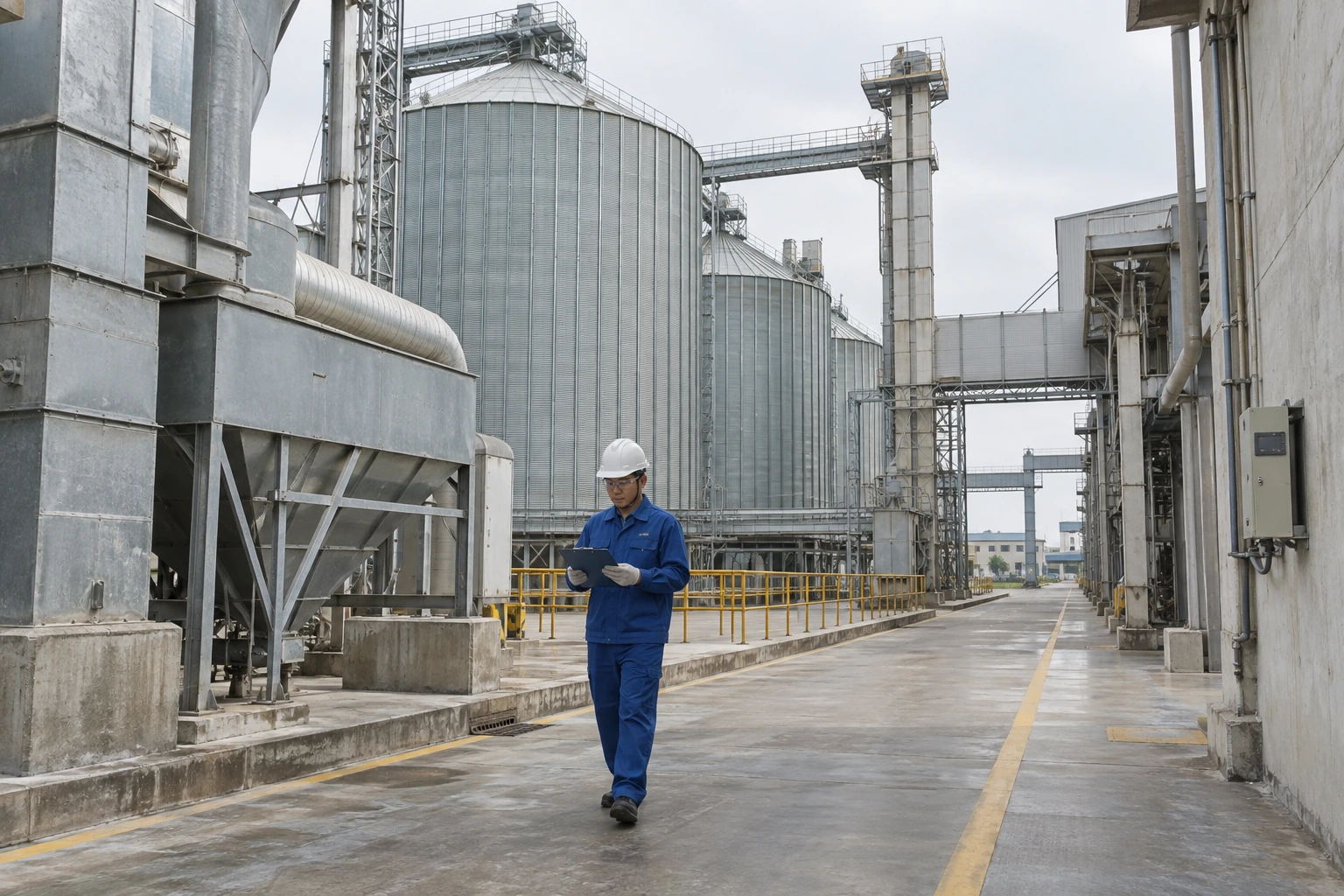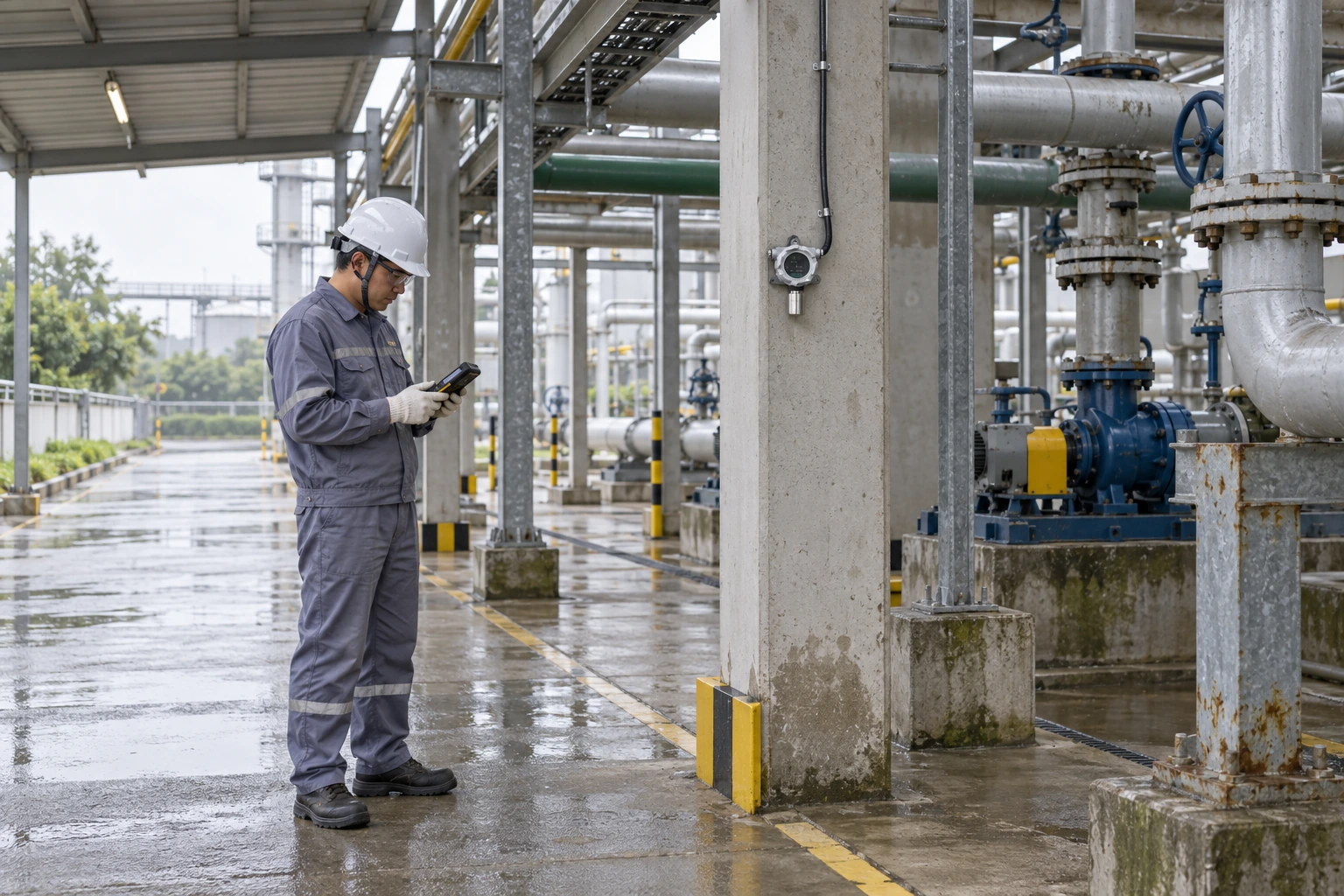
Grain handling is one of the oldest industries to learn, repeatedly and expensively, that an ordinary agricultural product can behave like a fuel. Grain dust monitoring has therefore moved from an optional housekeeping aid to a core part of process safety planning in silos, grain terminals and feed mills across Europe and the Middle East. The physics behind a grain dust explosion are well understood, but the conditions that produce one are easy to overlook in day-to-day operation: a slightly worn bearing, an unsealed transfer point, a dust layer on a roof beam that nobody has swept in a year. This article sets out the basics of why grain dust ignites, where the risk concentrates in a typical plant, and what a workable monitoring approach looks like.
Why Grain Dust Behaves Like a Fuel
Whole grain burns slowly. Grain reduced to fine particles does not, because grinding multiplies the surface area available for reaction while reducing the mass of each particle. Once that dust is suspended in air at sufficient concentration and an ignition source is present in a confined volume, combustion can propagate through the cloud fast enough to generate damaging pressure.
Safety literature normally describes this using the dust explosion pentagon: combustible dust, oxygen, an ignition source, dispersion of the dust into a cloud, and confinement of that cloud. Remove any one element and a deflagration cannot develop, which is why control strategies usually attack several at once rather than relying on a single barrier.
Two figures are widely cited. The particles of most concern are the fine fraction, generally taken as material passing a 420 micron sieve, since coarser fragments do not stay airborne long enough to sustain a flame front. And the minimum explosible concentration for typical agricultural dusts is usually reported in the region of tens of grams per cubic meter – a cloud dense enough that visibility is already seriously reduced. By the time a dust cloud looks alarming to a person standing in it, the explosible range has usually been reached.
The more common accident sequence, however, is the secondary explosion. A small primary event inside a bucket elevator or a mill shakes accumulated dust off beams, ledges and equipment housings, dispersing far more fuel into the building than the primary event ever contained. This is why housekeeping guidance so often focuses on settled layer thickness across a percentage of floor and elevated surface area, not on airborne readings alone.
Where the Risk Concentrates in Silos and Feed Mills
Risk is rarely distributed evenly across a site. In grain storage and processing, a handful of locations account for most recorded incidents:
- Bucket elevators. A tall, enclosed, dust-filled column with a moving belt, a drive pulley and misalignment potential. Belt slip and bearing failure are classic ignition sources.
- Transfer points and conveyor galleries. Every drop, chute and changeover generates airborne dust and deposits layers on surrounding structures.
- Hammer mills and grinders. Deliberate size reduction produces exactly the fine fraction of greatest concern, and tramp metal entering a mill is a recognised ignition risk.
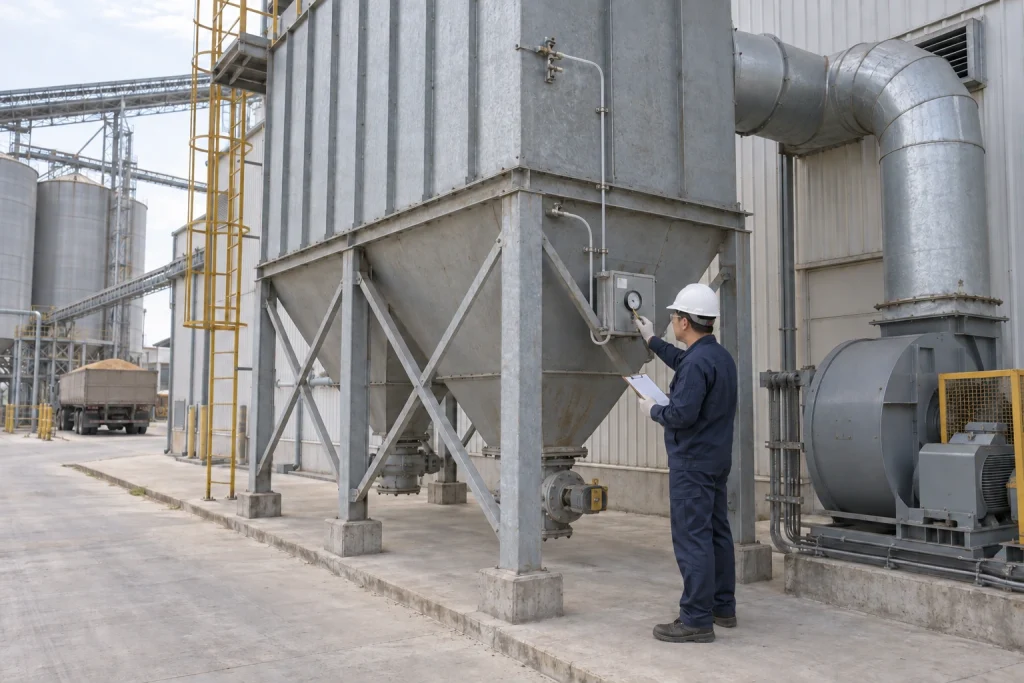
- Dust collection equipment. Filters and cyclones concentrate combustible material by design, which makes them a common location for explosion protection measures.
- Silo headspaces and dryers. Loading disperses dust into a confined volume, and dryers add a heat source to the same process stream.
Mapping these zones honestly, including elevated and hard-to-reach surfaces where dust settles, is the starting point for any detection layout. A site-specific hazardous area assessment by qualified personnel should always drive equipment selection for these locations.
Dust Is Not the Only Thing Worth Measuring
Effective monitoring in grain facilities usually combines dust measurement with gas detection, because stored grain is a biologically active material and several of its by-products are hazardous in their own right.
Carbon dioxide is the most useful early indicator of biological activity in storage. Respiration by grain, insects and moulds raises CO2 concentration in a silo headspace well before a temperature rise becomes obvious at the sensor probes, so CO2 trending can be considered as part of a spoilage and self-heating watch programme. A fixed CO2 detector for silo headspace monitoring may be evaluated for this role alongside conventional grain temperature cables.
Oxygen deficiency is the hazard most directly connected to people. Silos, pits, tunnels and enclosed conveyor galleries are confined spaces in which respiration, fumigation or inerting can displace breathable air. Fixed or portable oxygen monitoring for confined space entry is commonly used as part of a permit-to-work system, and it should never be replaced by assumptions about ventilation.
Carbon monoxide is worth tracking where smouldering is plausible, for instance around dryers or in bins with a suspected hot spot, since CO typically appears in the early stages of low-temperature combustion. Facilities that fumigate should treat fumigant monitoring as a separate specialist topic governed by the product label and local regulation.
Planning a Practical Monitoring Layout
A workable system tends to share the same characteristics regardless of plant size. Detectors are positioned according to where the release or accumulation actually occurs rather than where cabling is convenient, with sensor placement reflecting whether the target gas is lighter or heavier than air. Signals are brought back to a central gas detection controller, which for a plant of this type is normally installed in a non-hazardous (safe) area such as a control room or MCC room, where alarms can be seen and acted upon.
Alarm levels should be set in two stages where possible: an early warning that triggers investigation and housekeeping, and a higher level tied to a defined response such as shutdown, evacuation or restricted entry. The maintenance plan matters just as much. Sensors in dusty environments face filter blinding, abrasion and moisture, so documented calibration intervals, adequate ingress protection and realistic sensor replacement budgeting are what keep a system trustworthy in year three rather than only in week one.
Monitoring supports but never replaces mechanical and procedural controls: extraction at source, sealed transfer points, bearing and belt condition monitoring, tramp metal removal, ignition source control and an enforced housekeeping schedule. Sites building out this layer often start from a review of available dust alarm detector options before narrowing down to specific measurement points.
Why ASA
ASA supplies fixed gas and dust detection equipment for industrial sites, covering oxygen, carbon dioxide, carbon monoxide, ammonia, hydrogen sulphide, VOC and combustible gas measurement together with dust alarm detectors and gas alarm controllers. That breadth means a grain handling site can usually address several monitoring needs through one supplier and a consistent controller platform.
Our engineering team supports customers through detector selection, measuring point planning and integration questions, and we keep quotation and lead time responses fast enough to fit real project schedules. If you are scoping a monitoring package for a silo complex, grain terminal or feed mill, talk to our team about your application and we will help you match detectors to the points that matter.
Disclaimer: Product availability, specifications, measuring ranges, alarm configurations and certification coverage vary by model and region. The information in this article is provided for general reference only and does not constitute a performance guarantee, safety assurance or compliance statement. Always refer to the official product documentation and confirm suitability, certification status and local regulatory requirements with our team before selection, installation or use.