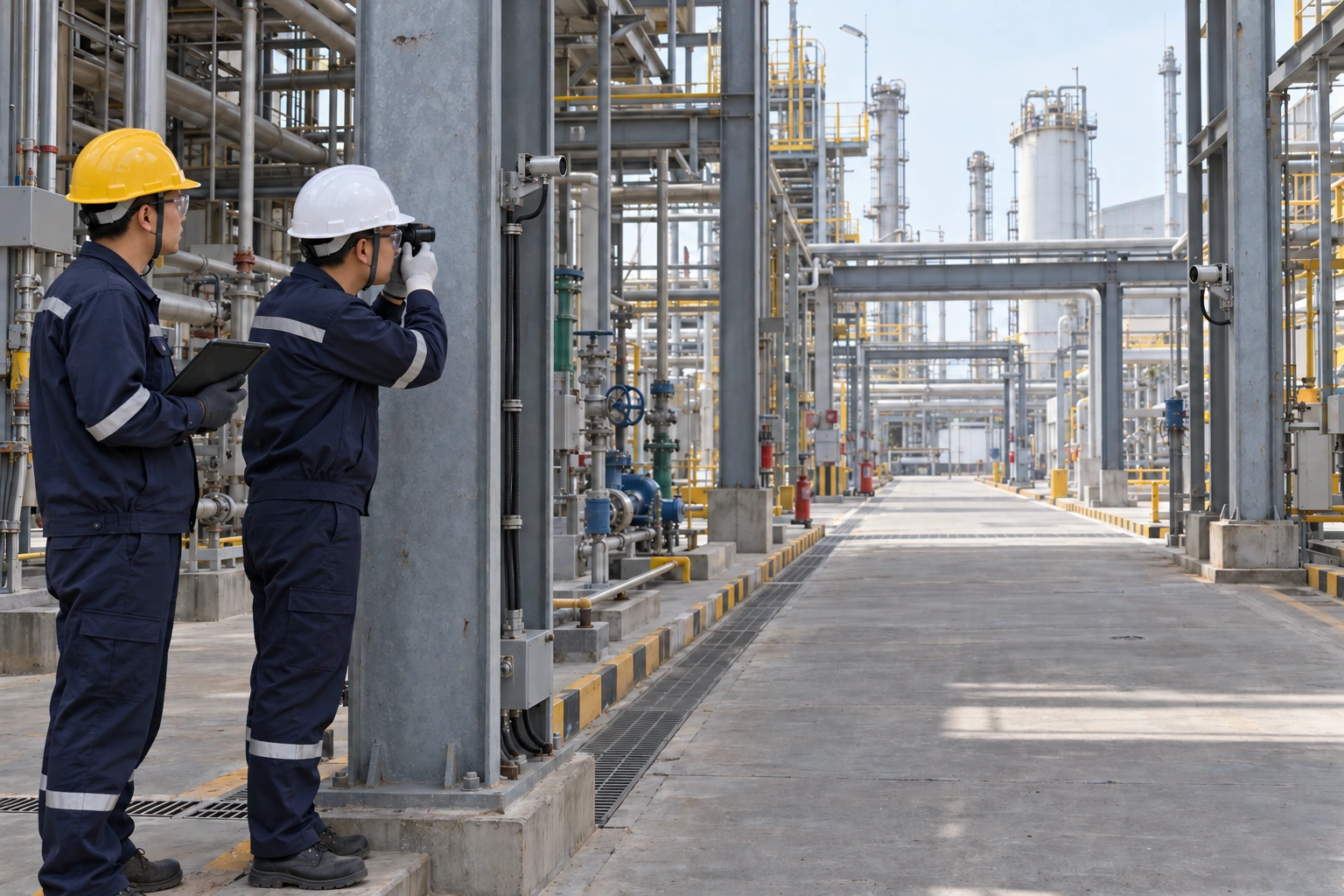
Choosing between a heat vs smoke detector is one of the first decisions in any industrial fire detection layout, and it is rarely a question of which technology is “better”. Each responds to a different product of combustion, each has environments where it performs well, and each has places where it will either stay silent too long or alarm too often. For plant engineers, safety managers and procurement teams, the practical question is which detector to specify in which area, and what the detector will not see.
How Heat and Smoke Detectors Work
A smoke detector responds to particles released by a fire. The most common type in industrial and commercial buildings is the optical (photoelectric) detector, which senses light scattered by smoke particles entering its chamber. Ionisation detectors, which react to changes in a small ionised current, have historically been used for fast flaming fires, but they are now much less common in many markets. Aspirating systems draw air through sampling pipes to a central detector, and beam detectors project light across large open spaces such as warehouses.
A heat detector responds to temperature. Fixed-temperature detectors alarm when the surrounding air reaches a set threshold. Rate-of-rise detectors alarm when temperature climbs faster than a set rate, which can give earlier warning of a fast-developing fire. Many devices combine both principles, and linear heat detection cable is commonly used along conveyors, cable trays and tunnels where a point detector would be impractical.
The key difference is timing. Smoke is usually present before significant heat builds up at ceiling level, so smoke detection generally gives earlier warning of a smouldering or slowly developing fire. Heat detection responds later but is far more tolerant of dusty, humid or smoky process environments.
Matching Detector Type to Plant Area
Where Smoke Detectors Are the Better Fit
Smoke detection is commonly used where early warning matters more than anything else and the air is reasonably clean. Typical plant areas include:
- Control rooms, electrical rooms and switchgear rooms, where overheating cables and electronics tend to smoulder before they flame.
- Server rooms and instrument rooms, often with aspirating systems for very early detection.
- Offices, corridors, escape routes and other occupied areas within the site.
- Clean storage areas and warehouses holding combustible packaging, where beam detectors can cover high ceilings.
In these spaces, the extra minutes of warning from smoke detection can make the difference between a local incident and a site-wide shutdown.
Where Heat Detectors Are the Better Fit
Smoke detectors struggle in environments where particles, vapour or aerosols are part of normal operation. Dust, steam, cooking fumes, exhaust from forklifts or combustion engines, and process aerosols can all trigger unwanted alarms. Repeated false alarms are not just a nuisance: they erode trust in the system and can lead operators to isolate detectors, which is a serious safety risk.
Heat detection can be considered in areas such as:
- Boiler rooms, furnace areas and kitchens, where heat, steam or fumes are routine.
- Dusty production areas, such as grain handling, woodworking, textiles or powder processing.
- Loading bays and vehicle areas with engine exhaust.
- Paint booths, washdown areas and locations with high humidity or condensation.
- Unheated or outdoor-exposed spaces where temperature swings and moisture affect optical chambers.
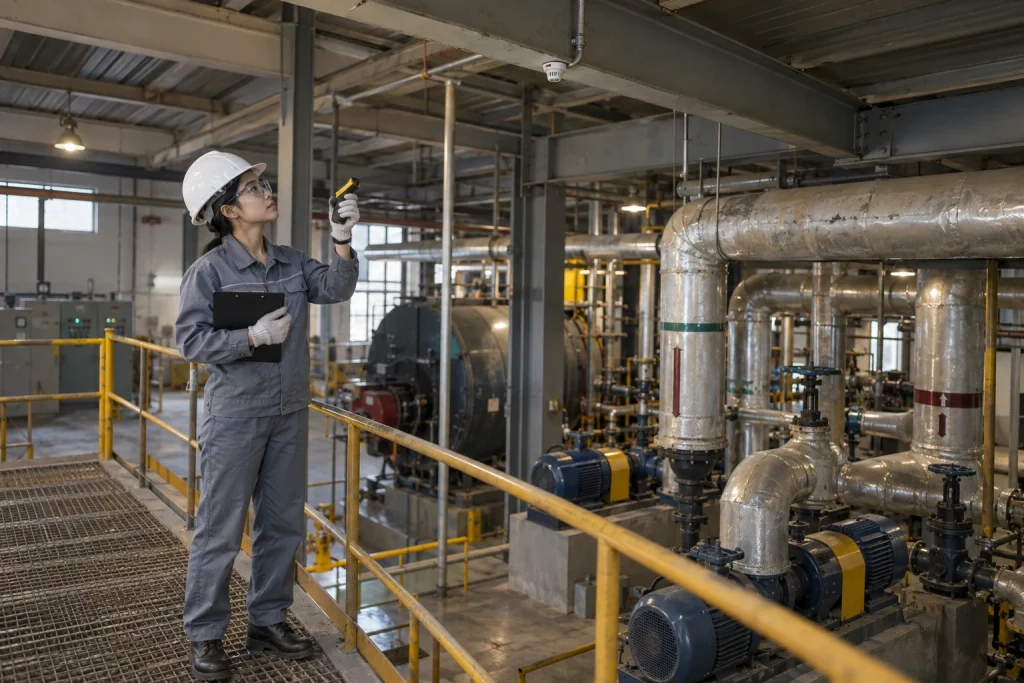
For point monitoring of a specific enclosure, cabinet or piece of equipment, a dedicated temperature alarm is commonly used to flag abnormal heat build-up before it develops into a fire. When selecting heat detection, the alarm threshold should be set with enough margin above the normal maximum ambient temperature of the area to avoid nuisance alarms, while staying low enough to give useful warning.
A Practical Selection Approach
Most plants end up with a mix of both technologies. A simple way to decide area by area is to ask four questions:
- What is likely to burn, and how? Cables, electronics and packaging tend to smoulder first, which favours smoke detection. Flammable liquids tend to flame quickly with high heat output, where rate-of-rise heat detection or flame detection may be evaluated.
- What is in the air during normal operation? If dust, steam, fumes or exhaust are routine, a smoke detector is likely to cause false alarms, and heat detection is usually the safer choice.
- How much warning time is needed? Occupied areas, escape routes and high-value equipment rooms generally justify the earlier warning of smoke detection.
- How high is the ceiling and how is the air moving? High ceilings and strong ventilation dilute smoke and delay heat reaching point detectors. Beam, aspirating or linear heat detection may be more appropriate in those spaces.
The final layout, detector spacing and alarm logic should always follow the applicable local fire codes and be confirmed by a qualified fire protection engineer. Local regulations in Europe and the Middle East differ in detail, and insurers may add their own requirements.
What Neither Detector Sees: The Role of Gas Detection
Both heat and smoke detectors are fire detectors. They respond once combustion has started. In many industrial plants, the greater hazard is a flammable or toxic gas release that has not yet ignited, or that will never ignite but can still harm people.
A methane leak in a boiler house, a solvent vapour build-up in a coating line, an ammonia release in a refrigeration plant or carbon monoxide from incomplete combustion will not be detected by a heat or smoke detector until a fire or explosion has already occurred, if at all. Fixed gas detection is designed to cover this gap by alarming on concentration, typically as a percentage of the lower explosive limit (%LEL) for combustible gases or in ppm for toxic gases, so that ventilation, shutdown or evacuation can be triggered before ignition.
For this reason, fire detection and gas detection are commonly specified together in higher-risk areas. A plant review that covers the fire detection layout is a good moment to check whether combustible and toxic gas risks are also covered, using suitable gas alarm detectors connected to a central controller.
Why ASA
ASA focuses on monitoring equipment for hazardous and harmful gases in industrial environments. Our product line covers fixed gas detectors for combustible, toxic and oxygen monitoring, dust alarm detectors, temperature alarms and gas alarm controllers, which allows plants to build a coordinated detection system from one supplier. Our engineering team can help you review your application, discuss detector placement principles and match product options to your site conditions, and we aim to respond quickly to technical and commercial enquiries from buyers in Europe and the Middle East.
If you are planning a new plant, upgrading an existing site or reviewing gaps in your detection coverage, contact the ASA team to discuss your requirements.
Disclaimer: Product availability, specifications, measuring ranges, alarm configurations and certification coverage vary by model and region. The information in this article is provided for general reference only and does not constitute a performance guarantee, safety assurance or compliance statement. Always refer to the official product documentation and confirm suitability, certification status and local regulatory requirements with our team before selection, installation or use.