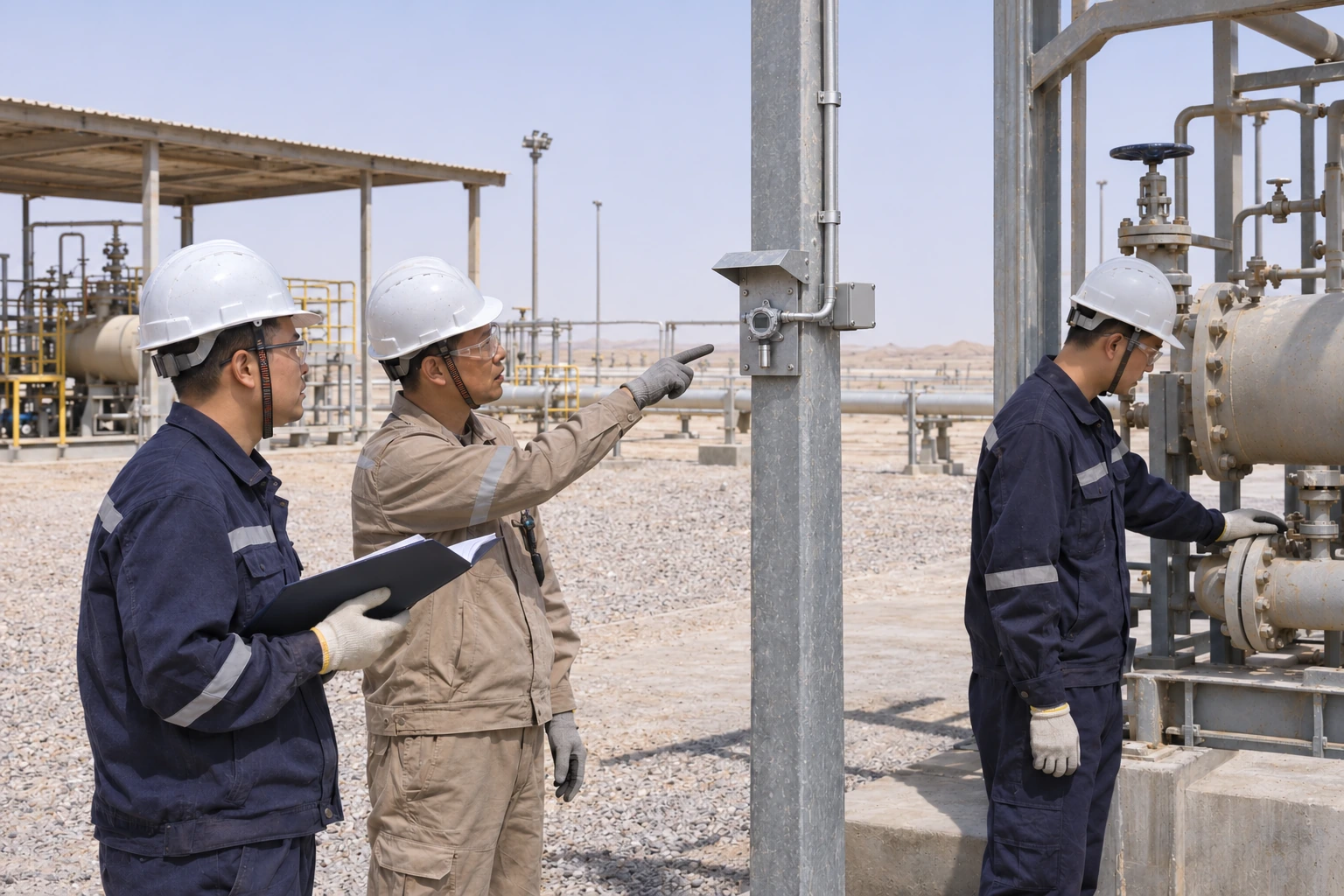
An iraq oilfield gas detector tender should translate the project’s gas hazards, operating conditions and maintenance arrangements into requirements that bidders can answer with evidence. Buyers preparing packages for Iraq or Kuwait need a clear basis for comparing equipment, installation scope and ongoing support. This article provides a technical procurement framework, rather than a statement of either country’s mandatory requirements. The operator’s specifications, project documents and applicable local requirements should determine the final acceptance criteria.
Define the Detection Duty Before Requesting Prices
Start with the process hazard assessment and a list of locations requiring evaluation. Separate wellhead areas, processing equipment, compressor installations, storage areas and enclosed utility spaces where relevant to the project. Each location should have a stated monitoring objective. A request for a generic gas detector leaves bidders to make assumptions about the target gas, measurement purpose and installation arrangement.
Distinguish combustible gas monitoring from toxic gas and oxygen monitoring. Methane and other hydrocarbons may be relevant to a combustible gas duty, while hydrogen sulfide may require separate assessment where the process contains it. Oxygen monitoring addresses a different hazard and should follow the assessed conditions of the space. One measurement cannot automatically substitute for another.
For a methane monitoring package, the ASA Methane CH4 Gas Alarm Detector may be evaluated against the project specification. Where hydrogen sulfide monitoring is identified, the Hydrogen Sulfide H2S Gas Detector can be considered for technical review. These are starting points for model evaluation; the tender should require documentation for the exact offered configuration.
Include an instrument schedule with the tag number, location, target gas, requested measurement unit and proposed monitoring function. State which values the buyer has fixed and which the supplier must propose. Keep unresolved assumptions visible in a clarification register so they do not silently become contractual requirements.
Document Site Conditions and Installation Constraints
For an Iraq or Kuwait project, obtain the actual site environmental design basis rather than relying on a regional description such as desert service. Ask the project team to identify ambient conditions, direct sunlight exposure, dust, moisture, washdown practices and potentially corrosive surroundings. Require bidders to explain how their offered equipment and accessories address those conditions, supported by the relevant documentation.
Specify the installation arrangement sufficiently for suppliers to price the same scope. Mounting structures, cable entries, junction boxes, sunshades and weather accessories can affect both cost and maintainability. Any accessory around a sensing inlet should be reviewed for its effect on gas access. Equipment should remain accessible for inspection and maintenance without creating an unplanned access problem.
Detector locations need an engineering basis. Release points, ventilation, obstructions and weather conditions can influence whether gas reaches a sensor. A drawing showing detector positions is therefore more useful when accompanied by the assumptions behind the layout. The UK Health and Safety Executive discusses positioning and weather-related detection limitations in its guidance on leak and gas detector systems; this is general technical context, not an Iraq or Kuwait tender rule.
Ask for a list of installation exclusions alongside the equipment offer. Civil work, field cabling, mounting hardware and site access arrangements should each have an identified owner. Resolving these boundaries before award helps prevent an apparently complete detector package from arriving without essential installation items.
Make Interfaces and Alarm Responsibilities Explicit
A detector specification should describe how information moves from the field device to the receiving system. Identify the required signal or communication interface, the receiving equipment and responsibility for checking compatibility. Where a supplier proposes an alternative, require a written explanation of the additional hardware, configuration or engineering work involved.
Request project-specific drawings covering wiring, power supply arrangements and terminal connections. Ask the responsible engineer to verify the electrical design for the proposed cable lengths and connected loads. Marketing descriptions alone do not establish that a detector, controller and site system will work together in the intended configuration.
Separate gas alarm behavior from equipment fault behavior in the technical questionnaire. Buyers should ask how the proposed system identifies abnormal gas readings, loss of power, communication failure and maintenance states where applicable. Alarm thresholds and resulting actions should come from the approved project philosophy and be reviewed by the responsible safety and controls personnel.
Use a cause-and-effect schedule to define operator notification and any specified control actions. Assign responsibility for programming, reviewing and testing each function. A detector quotation should not be interpreted as a complete design for plant shutdown or emergency response.
Evaluate Evidence, Acceptance Tests and Lifecycle Scope
Structure the technical bid comparison around documented answers. For each requirement, record the supplier’s response, supporting document reference, deviation and clarification status. Keep technical acceptance separate from price comparison until significant gaps are resolved. A lower purchase price may represent a narrower scope rather than an equivalent offer.
Ask bidders to submit the model datasheet, installation instructions, maintenance guidance, drawings and proposed spare parts list. Where the project requires evidence of suitability or regulatory acceptance, request the applicable documents and have the responsible reviewer check their scope against the exact equipment offered. Avoid treating a company-level brochure as proof for every model or configuration.
Define acceptance activities before placing the order. The agreed plan may include document review, equipment identification, configuration checks, signal verification and demonstration of specified alarms and faults. State which checks occur before shipment and which require installed equipment at site, with responsibilities and acceptance records agreed in advance.
Include calibration materials, maintenance tools, training and replacement parts in the commercial comparison where needed. Request recommended service arrangements and identify who will perform them. Delivery commitments should distinguish equipment dispatch, site installation and commissioning completion, since these are separate milestones with different dependencies.
Why ASA
ASA offers gas detectors, dust alarm detectors and gas alarm controllers that buyers may evaluate for industrial monitoring projects. Procurement teams can use this product coverage to organize a focused technical discussion around the required detection duties and system scope. Share the instrument schedule, site design basis and interface requirements so that model suitability, engineering support needs and documentation can be discussed against the actual tender.
For an Iraq or Kuwait oilfield enquiry, contact ASA with your tender requirements to discuss available options, outstanding technical questions and the response schedule your procurement process needs.
Disclaimer: Product availability, specifications, measuring ranges, alarm configurations and certification coverage vary by model and region. The information in this article is provided for general reference only and does not constitute a performance guarantee, safety assurance or compliance statement. Always refer to the official product documentation and confirm suitability, certification status and local regulatory requirements with our team before selection, installation or use.