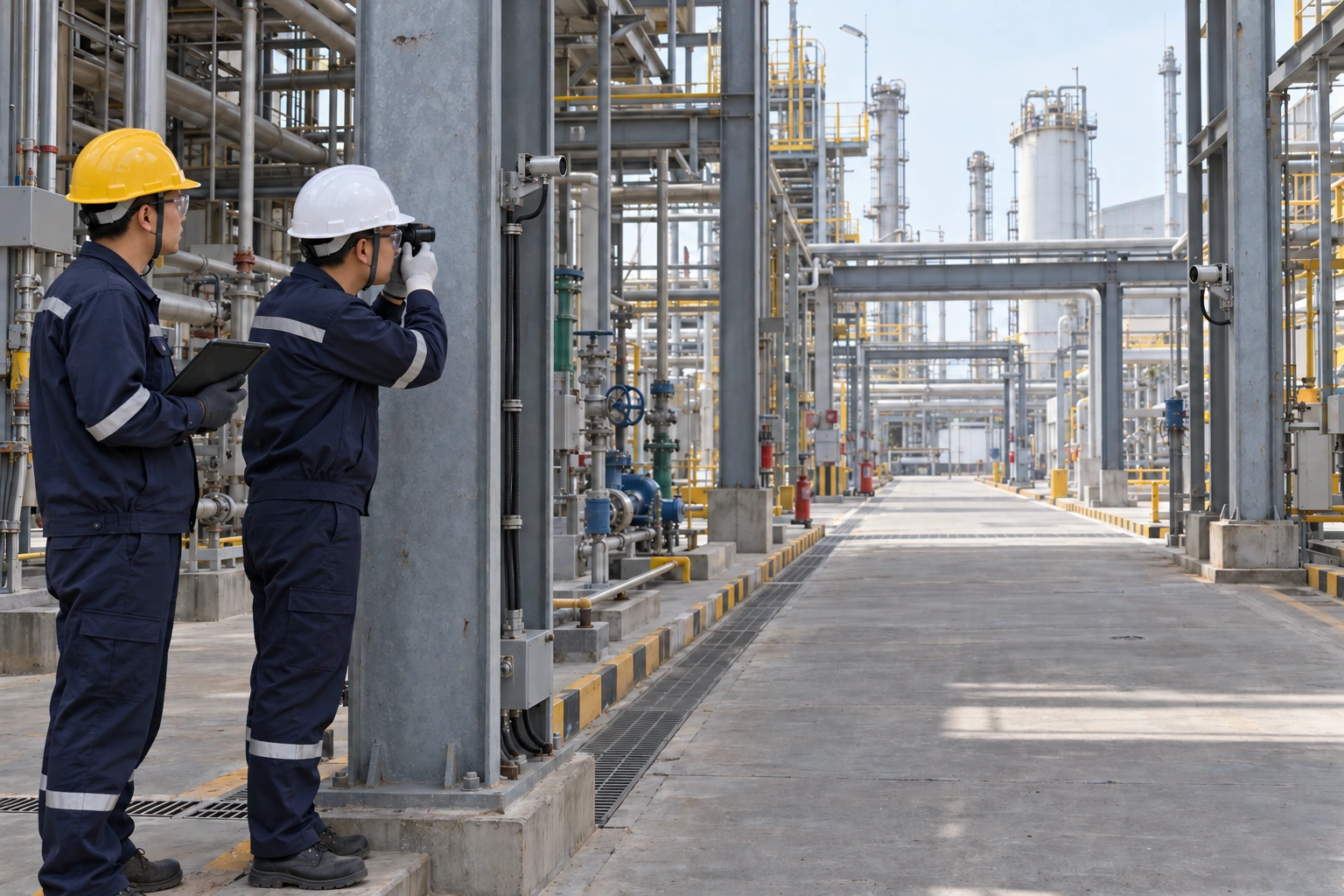
Effective hydrogen leak detection starts with understanding how hydrogen moves through an electrolyzer or fuel cell facility. For industrial buyers, the task is to connect credible release scenarios with suitable sensors, practical installation positions, and a defined response. A detector purchase alone does not establish that relationship. Whether the project is a containerized electrolyzer, a stationary fuel cell room, or a hydrogen supply enclosure, the specification should explain what must be monitored and how an alarm will be handled.
Define the Monitoring Task Around the Process
Hydrogen is much lighter than air, but an enclosure can restrict its dispersal. It also ignites readily and has a broad flammable concentration range. These properties make ventilation and leak detection important parts of facility design, as explained in the US Department of Energy’s hydrogen safety guidance. They do not establish a universal detector layout: equipment geometry and operating conditions still require assessment.
Start the review at the equipment boundaries. Identify hydrogen production or supply equipment, connections, valves, pressure regulation points, and enclosed spaces around the installation. Ask the equipment supplier which operating states need consideration, including startup, normal operation, shutdown, and maintenance. Document where hydrogen could escape into occupied or enclosed areas and which people or equipment could be affected.
Keep ambient leak detection separate from process monitoring. An area detector measures gas reaching its sensing location; it does not establish gas purity or reveal every internal process fault. Electrolyzer gas crossover, for example, requires the manufacturer’s process safeguards. The DOE-hosted presentation on large-scale electrolyzer safety discusses crossover monitoring alongside external leak detection and ventilation. A procurement specification should identify these separate responsibilities and avoid leaving gaps between the equipment package and the building systems.
Evaluate Placement Against Airflow and Enclosures
Hydrogen’s buoyancy makes upper enclosure areas relevant to a placement review. However, simply mounting a detector at the highest available point may leave other release paths unmonitored. Beams, roof pockets, equipment covers, partitions, and ventilation openings can change where gas travels. A sensing position should be justified against the anticipated release and airflow, rather than selected only because cable routing is convenient.
Request a layout showing potential release points, ventilation inlets and outlets, equipment access, and proposed sensing locations. Review local equipment housings as well as the surrounding room. Gas escaping within a cabinet may follow a different path from a release at an exposed supply connection. Where the arrangement is complex, a competent engineer may need dispersion analysis or another documented assessment to support placement.
Include changes in ventilation status in that review. Normal extraction, a stopped fan, an open service door, or an altered equipment cover may affect detection coverage. Outdoor installations also need assessment of wind and sheltered spaces. Keep maintenance access practical so technicians can inspect and test the installed detector according to its instructions. There is no single mounting height or spacing that this general article can prescribe for every facility.
Specify Hydrogen Suitability and System Interfaces
Ask for explicit documentation that the proposed detector measures hydrogen in the intended environment. A general combustible gas label, or documentation for another gas, does not establish suitability. The supplier should identify the target gas, sensing method, calibration requirements, environmental limitations, and known interfering conditions. Evaluate the complete offered configuration, including any accessories that affect gas access or maintenance.
Compare proposals using the same monitoring objective. Confirm the measurement units, required operating conditions, alarm configuration options, and fault indications. Any proposed measuring range or response specification should come from the model documentation and be reviewed against the project requirements. Buyers should also ask how the instrument behaves during startup, a sensor fault, loss of power, and maintenance, because these states influence how the receiving system interprets its signal.
For European and Middle Eastern projects, have the responsible project team define the applicable installation and documentation requirements before ordering. A product description cannot substitute for that review. ASA’s gas alarm detector category may be used as a starting point for a product discussion; hydrogen suitability and the required project documentation must be confirmed for the specific proposed model.
Plan Alarm Response, Commissioning, and Maintenance
Define alarm actions before completing the equipment schedule. The project team should document who receives an alarm, what operators must do, and which automatic actions are required by the engineered safety design. Potential actions may include warnings, hydrogen supply isolation, or a controlled equipment shutdown. Their selection and sequence must account for the equipment manufacturer’s requirements and the facility risk assessment. Alarm thresholds should likewise be established through that process.
Use a cause-and-effect schedule to connect each signal with its intended response. Include detector faults, communication loss where applicable, and ventilation status. Confirm which functions belong to the equipment package and which belong to the facility controls. Assign responsibility for integration and acceptance testing so that a working detector is not mistaken for a fully commissioned protective system.
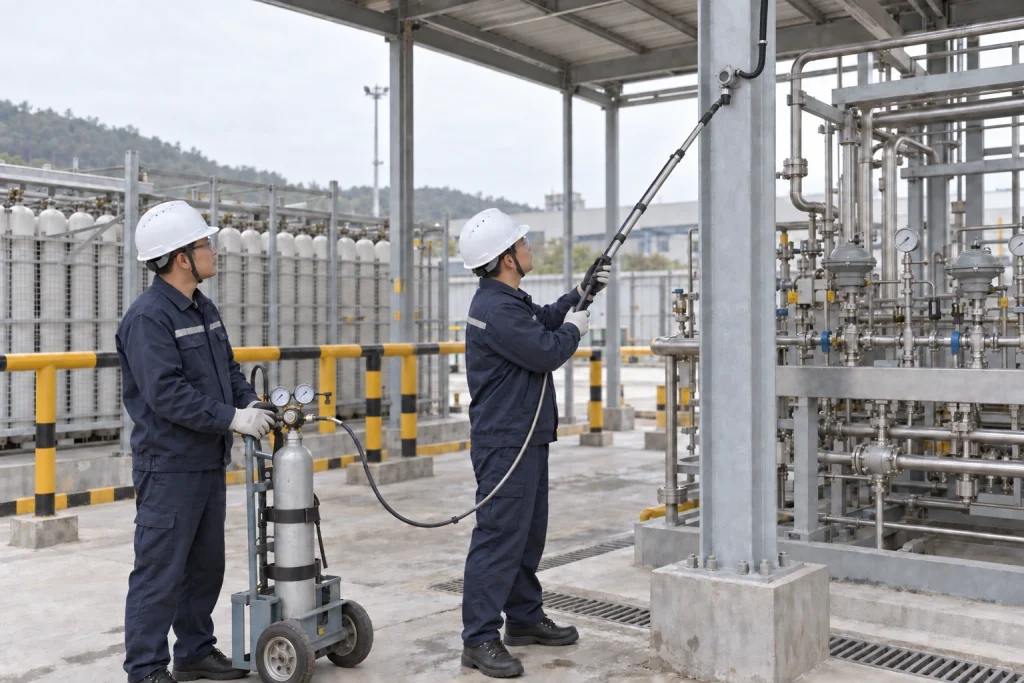
Commissioning should verify the installed sensing path and the intended downstream response under an approved test procedure. Record device identity, location, configuration, test results, and outstanding corrective actions. Establish inspection, functional testing, and calibration arrangements using the manufacturer’s instructions and site requirements. Review the detection design when equipment, ventilation, enclosure geometry, or operating conditions change, and control maintenance bypasses through the site’s procedures.
Why ASA
ASA’s product scope includes gas detectors, dust alarm detectors, and gas alarm controllers, giving industrial buyers a starting point for discussing monitoring requirements across a facility. For a hydrogen project, begin with the application details and request confirmation of a suitable offered configuration. Product selection should follow the documented need, including interfaces, installation conditions, maintenance access, and required supporting information.
To make the discussion useful, share the equipment layout, hydrogen release scenarios identified by your team, ventilation arrangement, and intended alarm actions. Contact ASA to discuss your monitoring requirements and request model-specific information for review by your project engineers.
Disclaimer: Product availability, specifications, measuring ranges, alarm configurations and certification coverage vary by model and region. The information in this article is provided for general reference only and does not constitute a performance guarantee, safety assurance or compliance statement. Always refer to the official product documentation and confirm suitability, certification status and local regulatory requirements with our team before selection, installation or use.