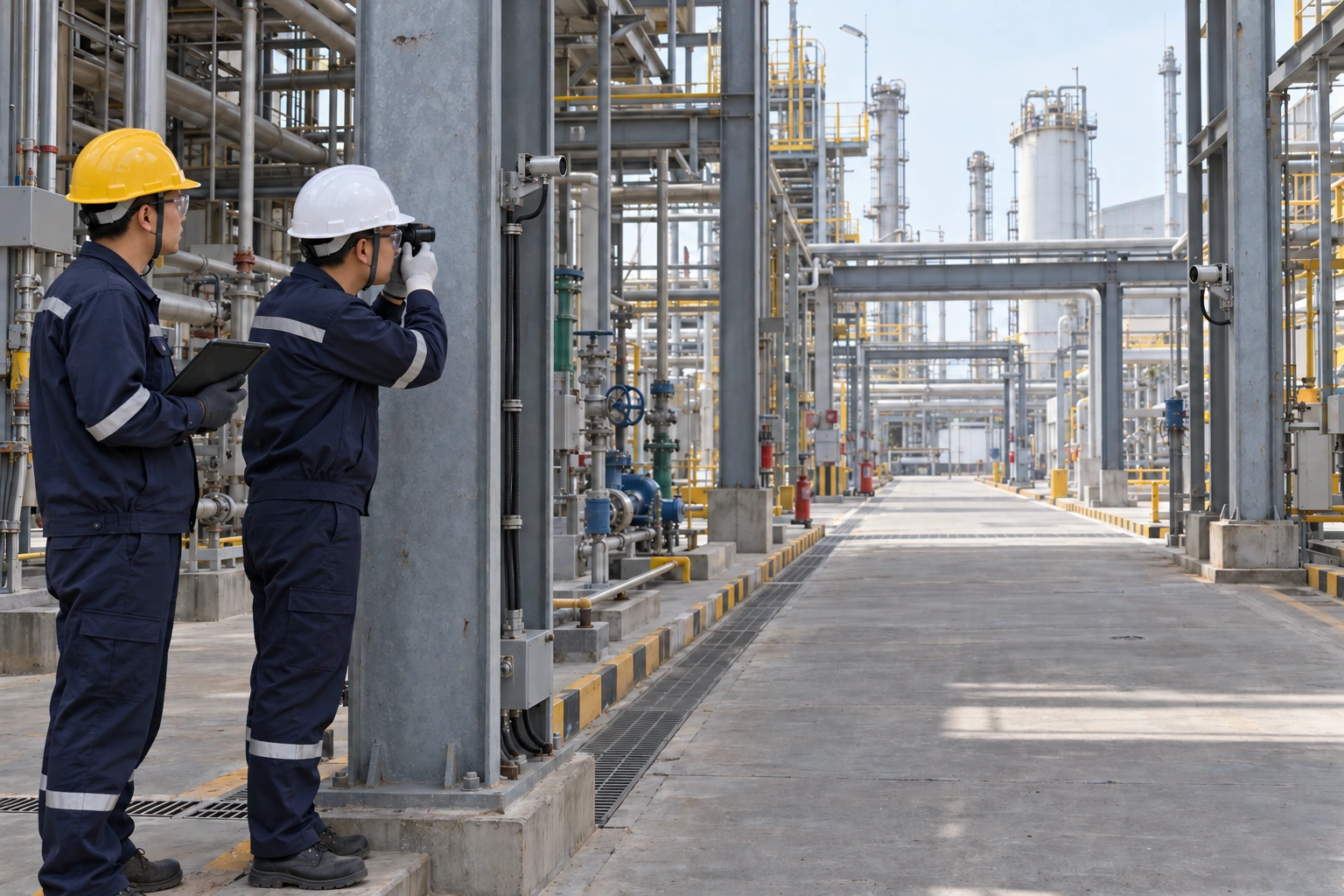
Effective mine methane monitoring connects gas readings with the way air moves through an underground mine. A heading needs information about conditions close to an advancing face, while a return airway provides information about gas carried away from a ventilated district. These locations answer different questions. For industrial safety buyers, the starting point is a monitoring specification built around the mine’s ventilation plan, operating procedures and equipment requirements. Buying detectors before defining those requirements can leave gaps that additional instruments alone will not resolve.
Headings and Return Airways Need Different Coverage
A heading is a developing underground passage, often with a working face at a blind end. Its ventilation arrangements must deliver air to the work area and remove contaminated air. As excavation advances, the relationship between the face, ventilation equipment and monitoring positions changes. A location that provided useful readings earlier in development may need reassessment as the layout evolves.
A return airway carries air away from working areas. Monitoring there can help operators follow district conditions and identify changes that warrant investigation. However, mixing and dilution mean a return reading cannot establish the concentration at every point upstream. A relatively low downstream reading should never be treated as evidence that every face or roof recess has the same conditions.
The procurement specification should therefore distinguish local monitoring from district monitoring. Each point needs a defined purpose, a responsible owner and an identified response when conditions change. The ventilation engineer should determine how fixed monitoring, machine monitoring and portable examinations work together under the applicable mine procedures.
Choose Monitoring Positions Around Actual Airflow
Methane is lighter than air, but detector positioning requires more than a rule about mounting height. Air movement, passage geometry and the position of mining machinery can affect where gas travels. NIOSH research on mining fires and explosions describes how airflow around a continuous mining machine influences methane concentrations. This supports evaluating monitoring positions against the actual ventilation arrangement.
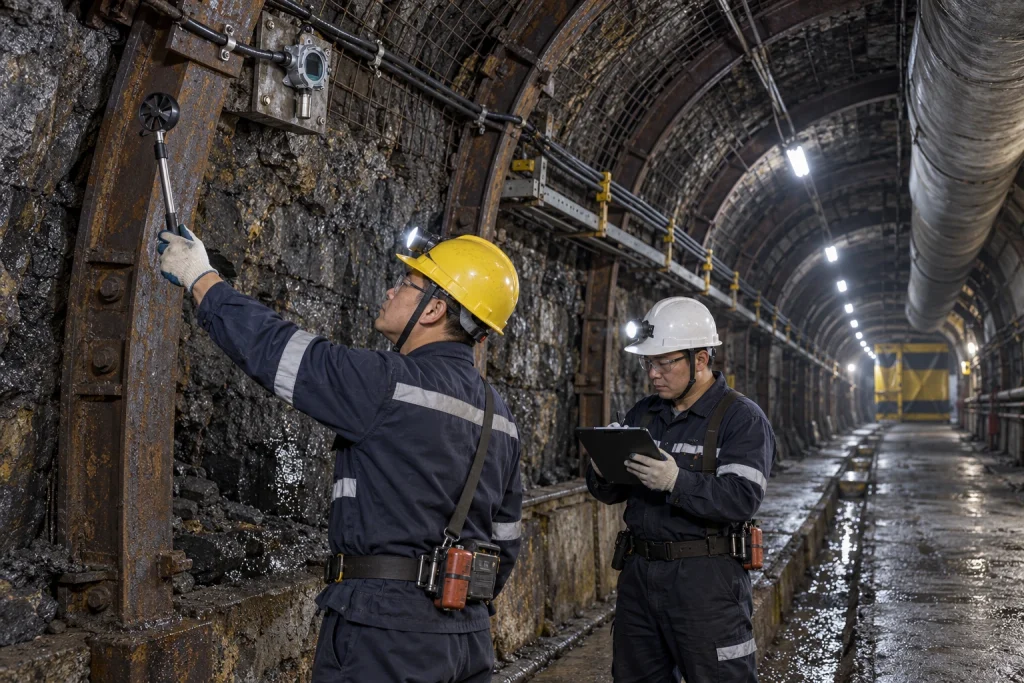
At headings, the review should consider the face position, ventilation duct or curtain arrangement, equipment movement and locations where measurements could become unrepresentative. Keep sensing openings accessible for inspection and testing. Protective arrangements should follow the equipment documentation: an improvised cover intended to prevent damage may obstruct gas access.
For return airways, specify which branch or district each instrument represents. Record junctions and mixing points on the monitoring drawing so an operator can interpret a change in concentration. Review placement after ventilation alterations, new connections or changes in production areas. A monitoring plan should evolve with the mine rather than remain tied to its original drawing.
Commissioning should document the installed location, the reason for selecting it and any limits on interpretation. This information gives later maintenance and operations teams a basis for deciding when relocation or further assessment is needed.
Define Alarm Actions Before Selecting Hardware
An alarm has value when people know what action it requires. Establish alarm settings and any equipment shutdown functions through the mine’s approved procedures and applicable local requirements. A project in Europe and one in the Middle East may have different approval routes and operating obligations. A generic industrial alarm setting is not a substitute for that review.
The specification should distinguish a methane alarm from an instrument fault, interrupted power or lost communications. A missing or invalid signal must not appear to operators as a confirmed low gas reading. Define who receives each condition, how its location is identified and how acknowledgement is recorded. Include the control room display, local warning arrangements and any required interfaces in the review.
Ventilation interruptions also require explicit procedures. The HSE safety alert on ventilation of blind ends describes an incident involving accumulated gas and an uncontrolled fan restart. Its relevance to procurement is the need to coordinate monitoring, isolation and operating responsibilities. Restoring an electrical supply or receiving a fresh reading does not by itself authorize restarting work or ventilation equipment.
Test the agreed alarm and fault responses during commissioning using authorized procedures. Record the expected result and the observed result, including the information visible to the person responsible for taking action.
Build Verification and Maintenance Into the Purchase
For underground service, request documentation confirming that the proposed equipment and complete installation are suitable for the particular mine environment. Assess the sensing device together with its power supply, cabling, communications and connected equipment. A product description stating that an instrument detects methane does not establish underground mining suitability.
Ask suppliers to identify the maintenance requirements, approved accessories, test gas requirements and procedures for checking response. Functional testing and calibration have different purposes; the maintenance plan should state when each is required under the manufacturer’s instructions and mine procedures. Include access for technicians and a documented response when equipment is removed from service.
Keep a point register that connects each instrument identifier with its location, service history and associated alarm actions. Record tests, adjustments, replacements and unresolved defects. Where data recording is provided, confirm that timestamps and point names allow readings to be compared meaningfully with ventilation and operating records.
Before accepting a quotation, check that the supplier has addressed the documented application rather than only the number of sensing points. Installation constraints, inspection access and responsibility for commissioning can materially affect whether the proposed system meets the purchasing specification.
Why ASA
ASA’s product range covers gas detectors, dust alarm detectors and gas alarm controllers, providing a starting point for industrial monitoring discussions. Buyers reviewing the methane gas detector product information should treat it as an initial product reference. Underground mine suitability must be confirmed separately for the exact equipment and installation; this article does not establish that suitability.
Share the monitoring point schedule, environmental conditions and interface requirements with ASA to support a focused technical review. For a project discussion and confirmation of available documentation, contact the ASA team before selecting equipment.
Disclaimer: Product availability, specifications, measuring ranges, alarm configurations and certification coverage vary by model and region. The information in this article is provided for general reference only and does not constitute a performance guarantee, safety assurance or compliance statement. Always refer to the official product documentation and confirm suitability, certification status and local regulatory requirements with our team before selection, installation or use.