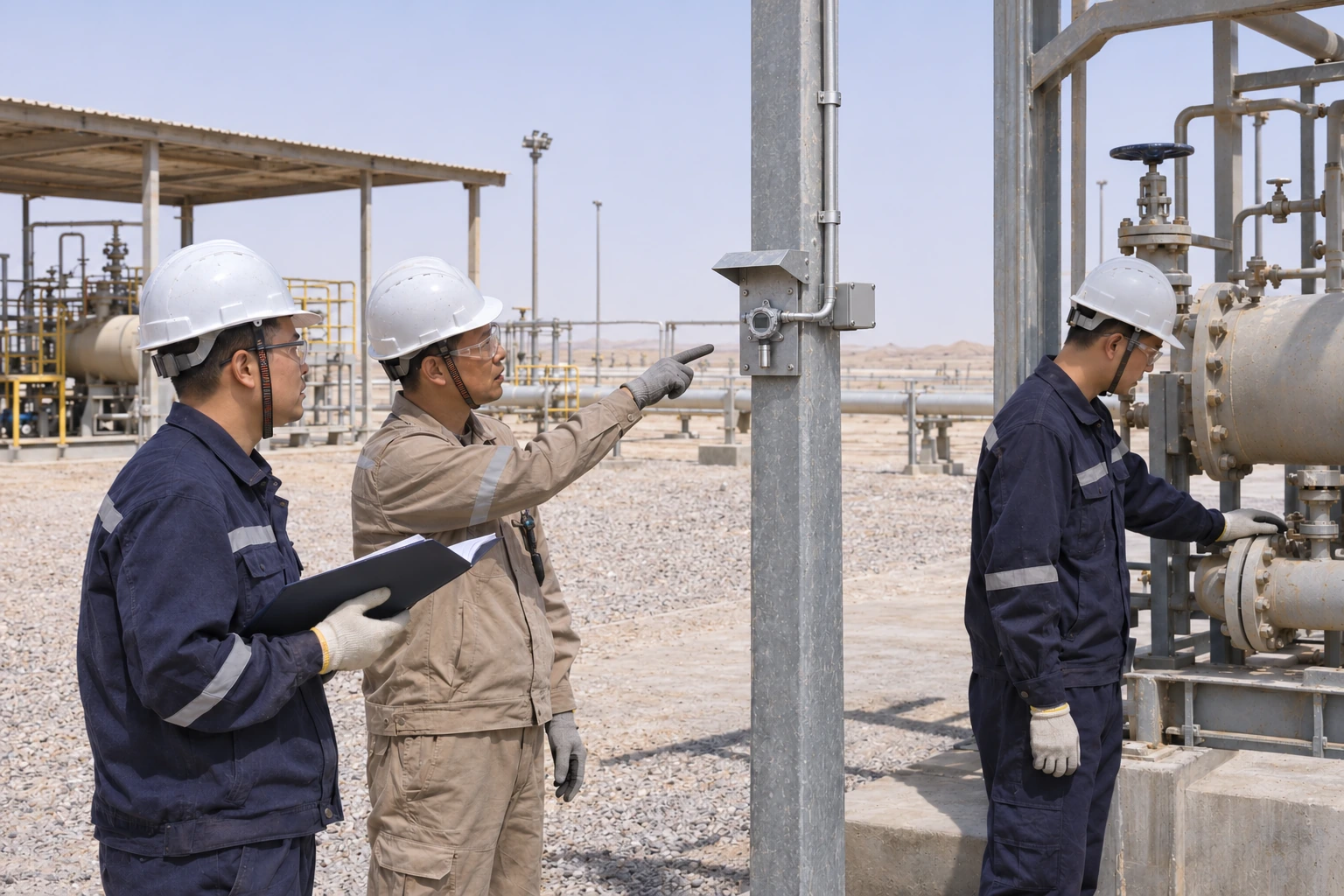
For industrial buyers, catalytic sensor poisoning is a maintenance and selection issue that deserves attention before a combustible gas detector is specified. A detector can remain powered while its sensing element loses sensitivity. Silicones, lead-containing compounds and sulfur compounds are therefore relevant to discussions about process chemicals, maintenance materials and verification procedures. Understanding these exposure risks helps procurement and engineering teams ask better questions without assuming that every catalytic sensor behaves identically.
How Contamination Changes a Catalytic Bead Response
A catalytic bead sensor uses a heated active element where combustible gas oxidizes, producing a measurable change in electrical resistance. Its response depends on gas reaching an effective catalyst and on adequate oxygen being present. Contamination can interfere with that process, reducing the signal produced by a gas concentration that would previously have generated a stronger response.
Poisoning generally describes lasting damage to catalytic activity. Inhibition describes a reduction that may be reversible under manufacturer-defined conditions. The distinction matters, but an operator cannot establish recovery simply by waiting for a normal display. The chemical involved, exposure conditions and sensor construction all affect the outcome. A low reading after suspected contamination must not be treated as evidence that the surrounding atmosphere is safe.
Other conditions can also produce an inadequate response, including restricted gas access and insufficient oxygen. Investigation should therefore examine the complete sensing arrangement. The MSA Gas Detection Handbook provides background on catalytic sensing principles; individual detector instructions remain necessary for operating limitations and service decisions.
Where Silicones, Lead and Sulfur Enter the Assessment
Silicone exposure can originate outside the production process. Sealants, lubricants, release agents and other maintenance products may introduce relevant compounds near a sensing head. Product composition and the possibility of airborne exposure matter more than a generic material name. Before approving a new maintenance chemical, review its documentation and ask the detector manufacturer whether its use could affect the installed sensor.
Lead-containing compounds also belong in the compatibility review where process materials or residues could expose the sensor. Their presence should be established from the site’s actual chemical inventory. It would be misleading to assume that every paint, fuel or lubricant contains lead, or that every installation has the same exposure risk.
Sulfur compounds require similar care. Their effect cannot be reduced to a universal rule that exposure is always temporary or always recoverable. Industrial Scientific identifies silicones, lead and sulfur compounds among relevant contaminants in its guidance on sensor poisons and inhibitors. Buyers should obtain guidance for the proposed sensing element instead of applying another instrument’s exposure limits.
A practical review should cover normal operation, shutdown cleaning and nearby contractor work. A maintenance activity may introduce chemicals absent from the routine process description. Recording the product used, location and timing gives the service team useful evidence if a later response check shows deterioration.
Verify Response After Suspected Exposure
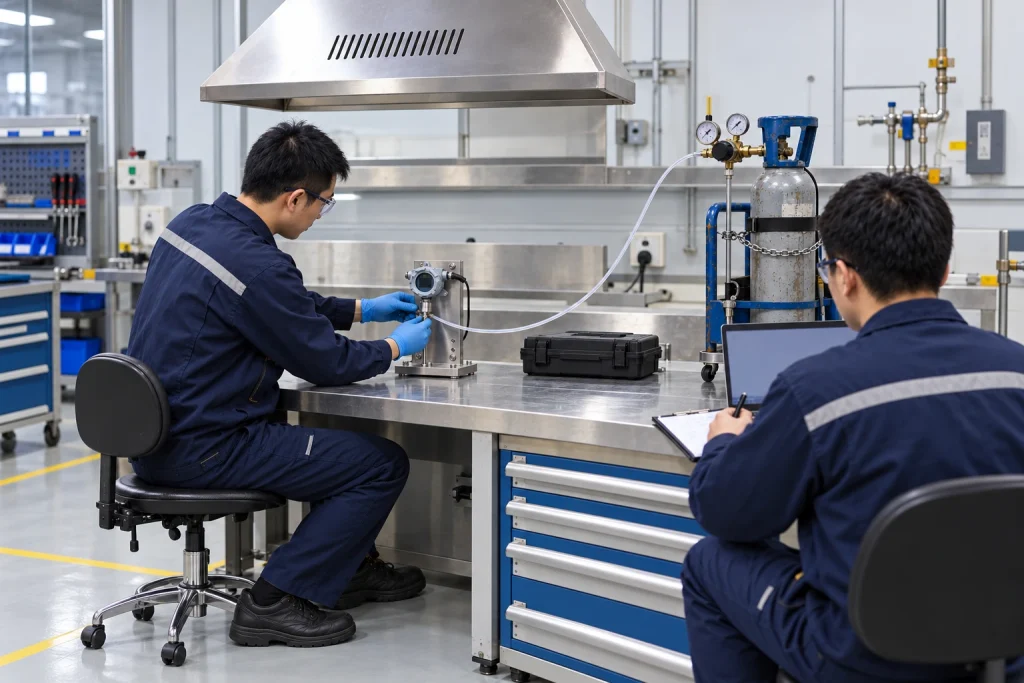
A powered display or normal zero reading does not demonstrate sensitivity to combustible gas. Verification requires an appropriate gas challenge under the manufacturer’s procedure. A functional response check and a calibration serve different purposes: one checks whether the instrument responds as intended, while the other checks and, where permitted, adjusts its measurement response. The required method and acceptance criteria depend on the equipment.
Following suspected contamination, use the site’s impaired-detector procedure and arrange qualified assessment. Any temporary precautions should follow the site’s risk assessment. Do not improvise cleaning, heating or solvent treatment of the sensing element. Such intervention may damage the detector or leave its response uncertain.
The review should confirm that the test gas, delivery accessories and test conditions are appropriate, then examine any filters, sampling components and gas entry paths according to the manual. An unsuccessful check should not automatically be attributed to poisoning, but it should not be dismissed as a calibration inconvenience either.
If the sensor cannot meet the manufacturer’s acceptance criteria, follow its replacement or service instructions before returning the detector to duty. MSA’s passive sensor replacement guidance identifies inadequate gas response and failed calibration as reasons for replacement. Retain the findings so repeated failures can prompt a review of the exposure source.
Turn Exposure Risks Into Purchasing Questions
Start a purchasing specification with the target combustible gases, credible release conditions and potential contaminants. Add the expected atmosphere, installation arrangement and access needed for maintenance. Ask the supplier to explain the sensing technology, chemical compatibility, verification procedure and replacement requirements for the exact proposed model.
When reviewing the ASA combustible gas detector, request confirmation of these points for the intended application. A product name alone does not establish the sensing element’s tolerance to silicones or sulfur compounds. Avoid transferring performance assumptions from another detector or from a general description of catalytic technology.
Consider the operational cost of verification alongside the purchase price. Questions about test access, service arrangements, replacement availability and records are useful even when no contamination has yet occurred. Where exposure cannot reasonably be controlled, ask an application specialist to evaluate suitable sensing options against the actual gases and conditions. Selection should follow documented suitability rather than a general claim of poison resistance.
Why ASA
ASA offers gas detectors, dust alarm equipment and gas alarm controllers for industrial monitoring projects. Buyers can discuss the application and documentation needed to evaluate a proposed configuration. Providing the target gases, chemical inventory and maintenance constraints helps make that discussion specific and actionable.
Contact ASA to discuss your gas detection requirements and request model-specific information, engineering support options and an expected response schedule for your enquiry.
Disclaimer: Product availability, specifications, measuring ranges, alarm configurations and certification coverage vary by model and region. The information in this article is provided for general reference only and does not constitute a performance guarantee, safety assurance or compliance statement. Always refer to the official product documentation and confirm suitability, certification status and local regulatory requirements with our team before selection, installation or use.