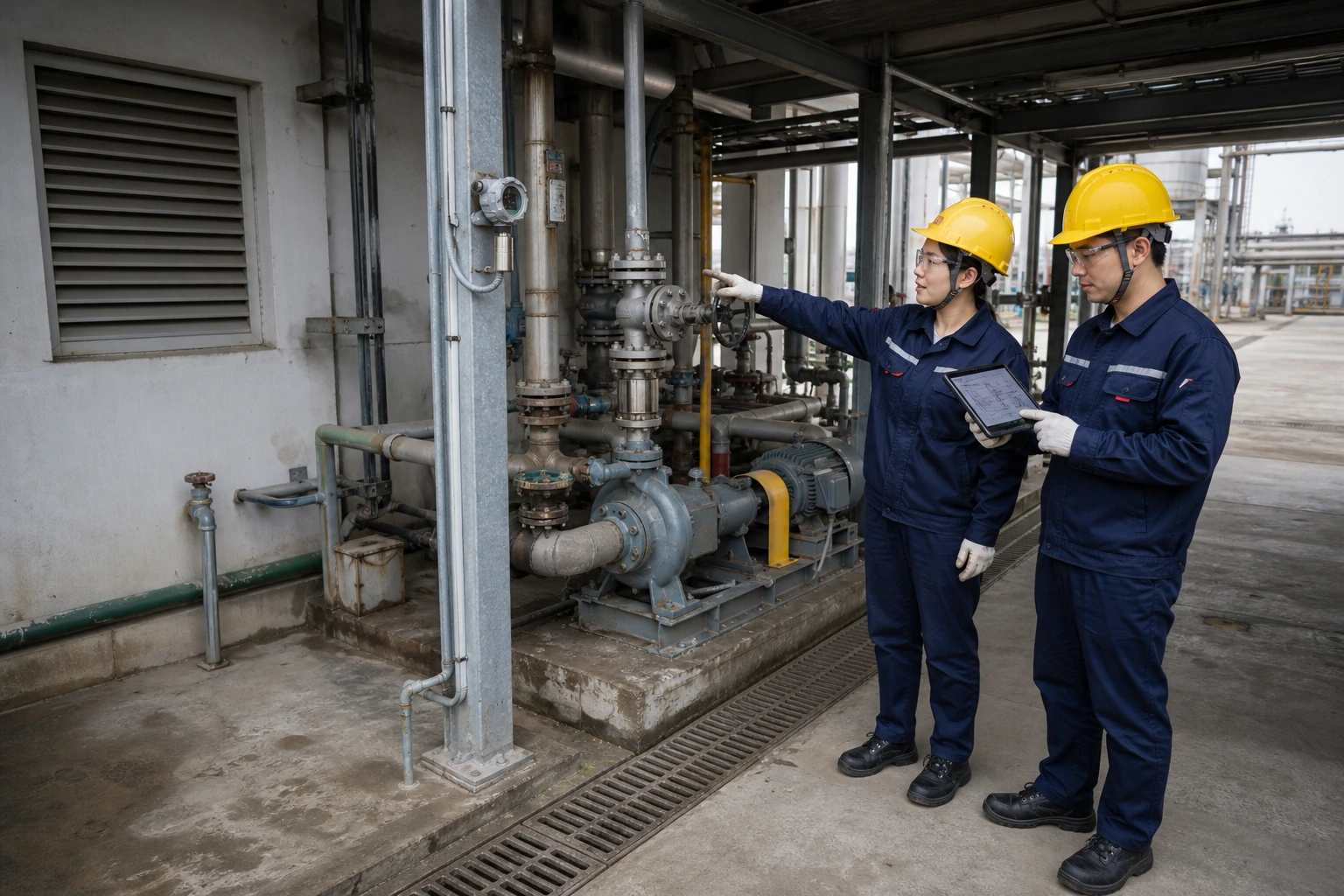
Cold storage warehouses, food processing plants and industrial refrigeration systems rely heavily on anhydrous ammonia (NH3, refrigerant R-717) because of its thermodynamic efficiency and low direct global warming potential. The same substance, however, is toxic at low concentrations and flammable at high ones, so leak monitoring sits at the center of every refrigeration safety plan. Choosing a dependable ammonia gas detector cold storage operators can build their alarm strategy around, and placing it in the right locations, is often the single most effective step a facility can take to protect workers, product and equipment. This article looks at where ammonia risks arise in cold chain facilities, which alarm levels are commonly used, and what to consider when specifying fixed NH3 detection equipment.
Why Ammonia Leaks Are a Core Risk in Refrigeration Plants
Ammonia refrigeration circuits contain compressors, condensers, evaporators, pressure vessels and long runs of piping with valves and flanged joints. Any of these points can develop a leak through seal wear, vibration, corrosion or mechanical damage. Small leaks in machinery rooms may go unnoticed by staff who have become desensitized to the odor, while leaks inside cold rooms can accumulate because air exchange is deliberately kept low to save energy.
Ammonia is both a health hazard and a fire hazard. It is corrosive to the eyes, skin and respiratory tract, and exposure to high concentrations can be life threatening. As a flammable gas, ammonia has a lower explosive limit (LEL) of about 15 percent by volume and an upper explosive limit (UEL) of about 28 percent by volume in air. Although these concentrations are far above toxic levels, they can be reached locally in enclosed machinery rooms during a major release, which is why both toxic range (ppm) and, in some designs, LEL range monitoring may be evaluated for the same plant.
Exposure Limits and Common Alarm Setpoints for NH3
Most workers can smell ammonia at concentrations as low as roughly 5 ppm, but odor is not a reliable safeguard because sensitivity varies and fades with continued exposure. Occupational exposure limits are therefore the usual reference for alarm planning. Widely recognized values include an 8 hour time weighted average (TWA) of 20 ppm with a short term limit of 50 ppm under the EU indicative occupational exposure limit values, and a TWA of 25 ppm with a 35 ppm short term exposure limit published by ACGIH. Individual countries may apply different figures, so local regulations should always be confirmed.
In practice, fixed ammonia detection systems in cold storage facilities are commonly configured with a low alarm in the region of the applicable TWA and a high alarm near or above the short term limit, triggering emergency ventilation and evacuation procedures. Safety standards for refrigerating systems, such as the EN 378 series used across Europe, generally call for gas detection in ammonia machinery rooms with alarm functions linked to ventilation. Alarm philosophy should be defined by the plant’s own risk assessment, and the setpoints given here are reference points rather than a compliance recommendation.
Where to Install Ammonia Detectors in Cold Storage Facilities
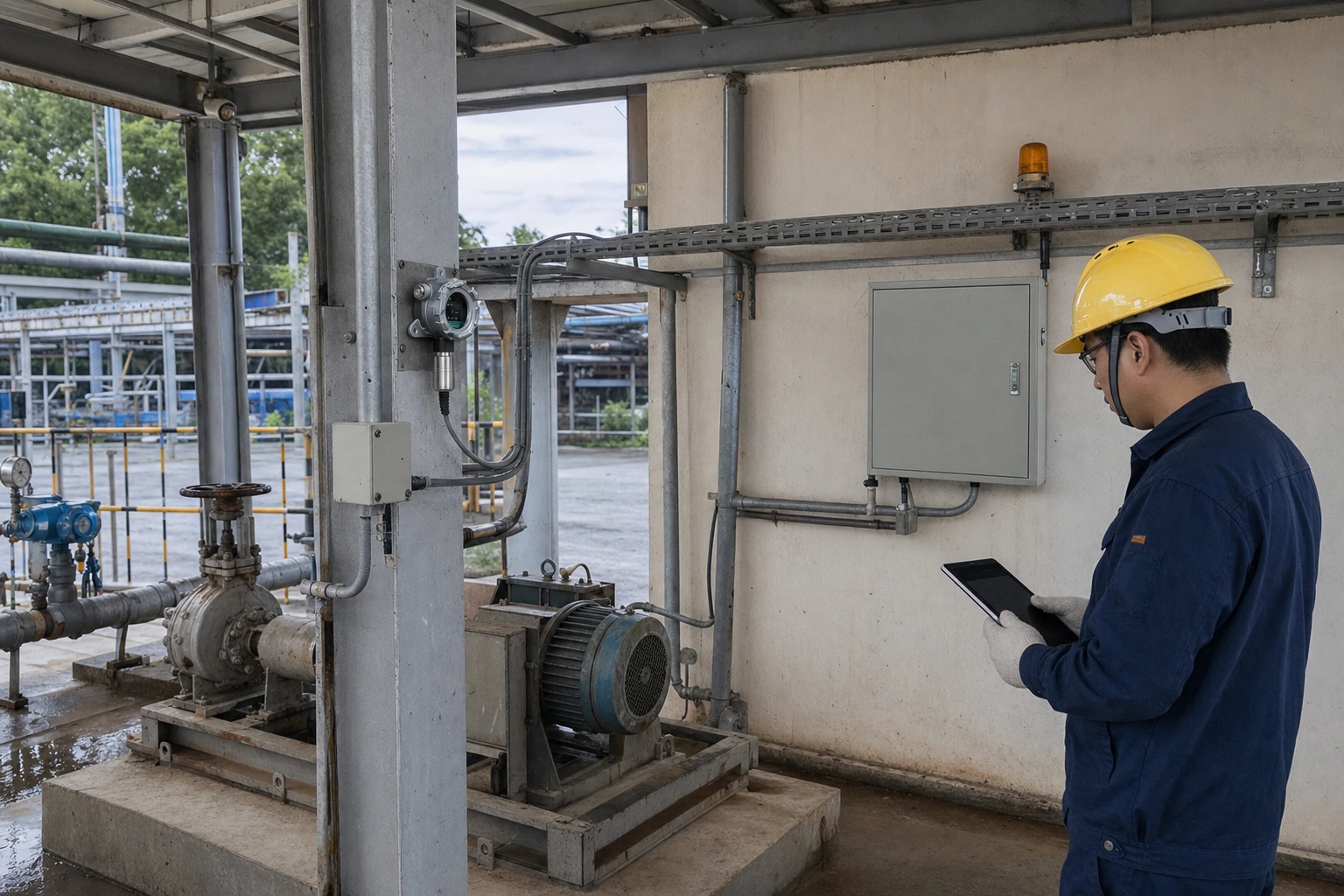
Ammonia vapor is lighter than air at room temperature, so it tends to rise toward the ceiling in a machinery room. In cold rooms the picture is more complex: cold, dense air layers and forced circulation from evaporator fans can carry the gas in unexpected directions. Placement is therefore driven by both gas behavior and leak sources. Locations that are commonly considered include:
- Above compressors, pump packages and pressure vessels in the machinery room, where most leaks originate.
- Near ceiling level in machinery rooms and above suspended ceilings that could trap rising gas.
- Inside cold rooms and freezers close to evaporator coils, which are frequent leak points.
- In air handling and ventilation intakes, so that a release is detected before it spreads to occupied areas.
- Along pipe racks and at valve stations in loading and processing areas.
Sensor coverage, mounting height and airflow patterns should be reviewed room by room, and detector positions can be refined after commissioning based on smoke tests or airflow studies.
Detector Selection: Sensor Type, Environment and Ex Protection
Electrochemical sensors are the usual choice for ppm level ammonia monitoring because they offer good selectivity and low power consumption, while catalytic or infrared technologies may be evaluated where percent LEL measurement is required. Cold storage brings additional constraints: detectors installed inside freezers must operate reliably at low temperatures and tolerate humidity, frost and washdown cleaning, so housing protection ratings and the manufacturer’s stated operating conditions should be checked against each installation point.
Where a risk assessment classifies part of the plant as a hazardous area, explosion protected equipment is required. A fixed ammonia gas detector such as the ASA AN-NH3-D is designed for continuous NH3 monitoring in industrial environments; the ASA AN-NH3-D carries China Ex Certificate EETI24.0463X (Ex db IIC T6 Gb, IP65), valid to Jan 2030. Certification requirements differ by region, so buyers in Europe and the Middle East should confirm which approvals their project specification demands before ordering.
Connecting Detectors to Alarms and Ventilation Control
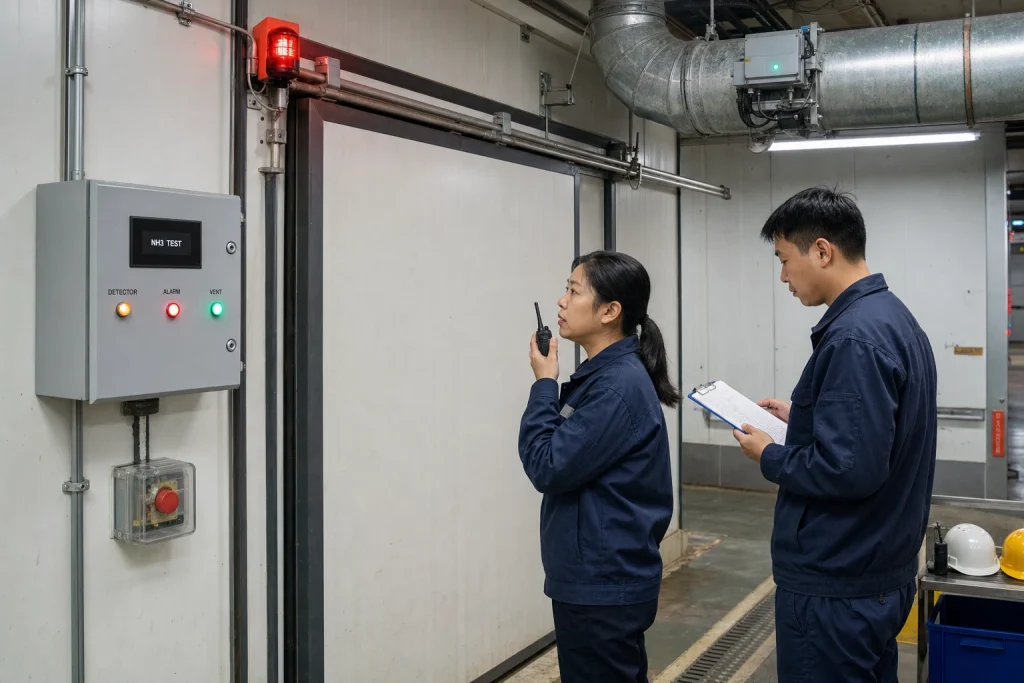
Individual detectors are most effective when they report to a central system. Transmitters with 4-20 mA or RS485 outputs can be wired to a gas detection controller installed in a non-hazardous (safe) area such as a control room, where alarm levels, relay outputs and audible visual annunciation are managed in one place. Relay contacts are commonly used to start emergency ventilation fans, shut down selected equipment and trigger external beacons and sounders when a high alarm is reached. Routine maintenance, including bump testing and periodic calibration with certified ammonia test gas, keeps the system trustworthy over its service life.
Why ASA
ASA supplies fixed gas detectors, dust monitors and alarm controllers covering oxygen, toxic and combustible gas applications, giving cold chain and refrigeration buyers a single source for detection hardware. Our engineering team supports detector selection, alarm level planning and system layout for projects across Europe and the Middle East, and responds quickly to technical and commercial inquiries. If you are planning ammonia detection for a cold storage or refrigeration plant, contact our team to discuss your requirements.
Disclaimer: Product availability, specifications, measuring ranges, alarm configurations and certification coverage vary by model and region. The information in this article is provided for general reference only and does not constitute a performance guarantee, safety assurance or compliance statement. Always refer to the official product documentation and confirm suitability, certification status and local regulatory requirements with our team before selection, installation or use.