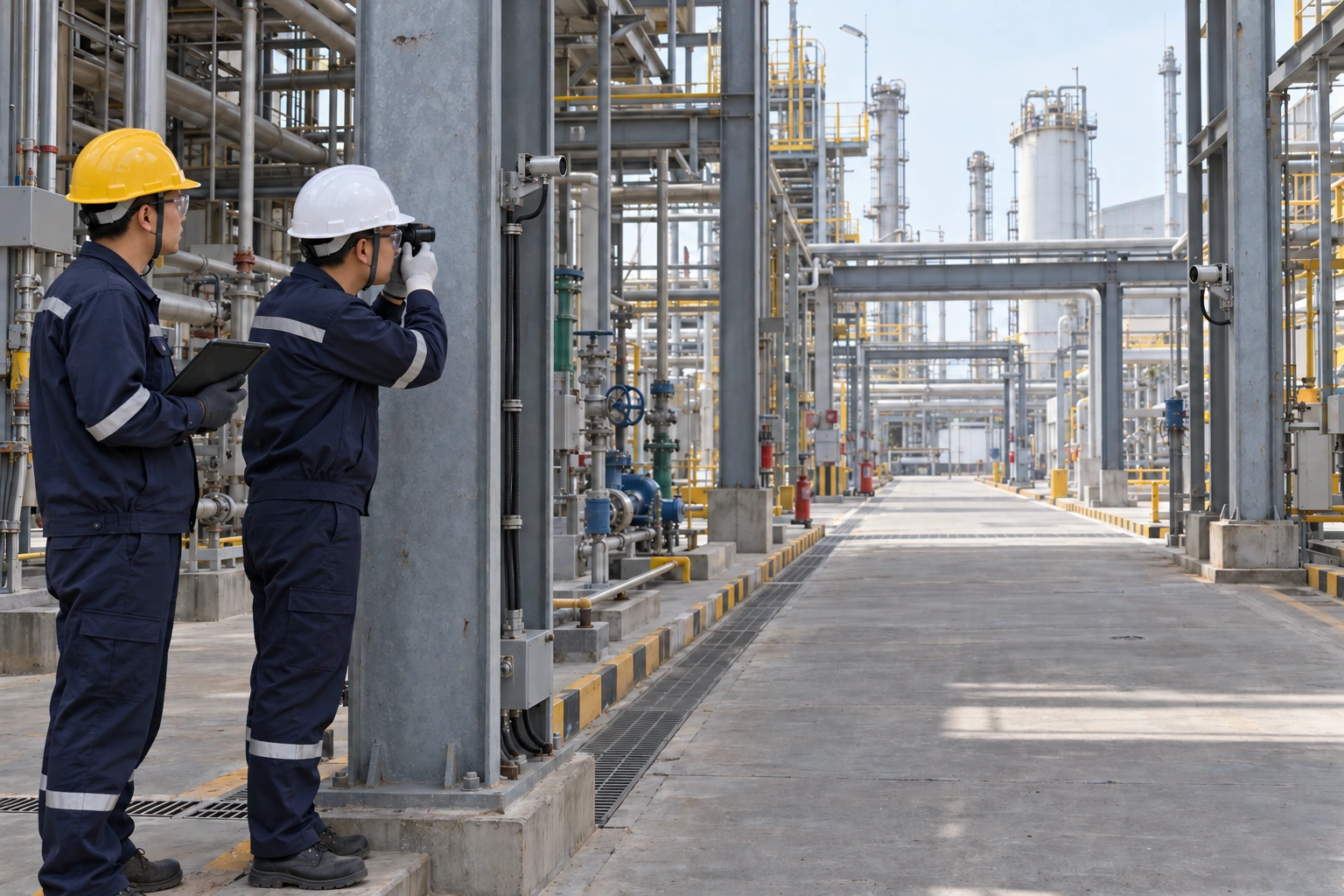
Reliable industrial temperature monitoring is one of the most direct ways to protect people, equipment and stored goods from thermal hazards. Overheating bearings, exothermic reactions, blocked ventilation and electrical faults all announce themselves first as a rising temperature reading. A well-designed monitoring setup catches that rise early, triggers a clear alarm and hands the event to a controller or plant system that can act on it. This article walks through the main building blocks of such a system: the sensing technologies available, how alarm thresholds are typically set, and how temperature alarms can be integrated with gas detection controllers and wider plant automation.
Why Temperature Deserves Continuous Monitoring
Temperature is a universal process variable. Unlike many gas hazards, which are specific to certain industries, almost every facility has assets that can overheat: motors, transformers, compressors, battery rooms, cable trays, dryers, ovens and storage areas for heat-sensitive materials. In many incidents, a slow temperature drift precedes visible smoke or fire by a considerable margin, which is exactly the window a monitoring system is designed to exploit.
Continuous monitoring also supports quality and compliance goals. Cold stores, food processing lines, pharmaceutical warehouses and server rooms often need documented evidence that temperature stayed within a defined band. A fixed monitoring point with an alarm output can serve both the safety case and the record-keeping case at the same time, which is why temperature channels are commonly specified alongside gas detection channels in plant safety projects.
Common Temperature Sensing Technologies
Most fixed industrial installations rely on a small set of proven sensing principles:
- Thermocouples generate a small voltage from the junction of two dissimilar metals. They cover very wide temperature ranges and tolerate harsh conditions, which makes them a common choice for furnaces, ovens and exhaust streams.
- Resistance temperature detectors (RTDs), typically Pt100 or Pt1000 platinum elements, change resistance predictably with temperature. They are valued for stability and repeatability in process measurement.
- Thermistors offer high sensitivity over narrower ranges and are frequently found in equipment protection and HVAC applications.
- Infrared (non-contact) sensors read surface temperature from a distance, which is useful for rotating machinery or targets that cannot be touched.
The right choice depends on the temperature range of interest, the required accuracy, the environment at the measuring point and how quickly the reading needs to respond. For room-level or area-level supervision, a dedicated fixed device such as the AN-TEM-D temperature alarm can be considered, since it combines the sensing element and the alarm function in a single wall-mounted unit rather than requiring a separate transmitter and alarm relay.
Setting Alarm Thresholds That Operators Trust
An alarm strategy is only useful if operators trust it. Thresholds set too close to normal operating temperature produce nuisance alarms; thresholds set too far away delay the response. A common approach is a two-stage scheme: a low-level warning that prompts an inspection, and a high-level alarm that demands immediate action such as shutting down a heater or starting emergency ventilation.
When defining thresholds, it helps to review seasonal variation, normal process cycles and the thermal behaviour of the specific area. A packaging hall in summer behaves very differently from a cold store, so thresholds should be based on observed baseline data where possible rather than copied from another site. Alarm settings, like the rest of the safety configuration, should be documented and revisited whenever the process or the building changes.
From Standalone Alarm to Integrated System
A standalone temperature alarm with a local sounder already adds protection, but most industrial projects gain far more value from integration. Fixed detectors and alarms commonly provide relay contacts, 4-20mA analog outputs or RS485 communication, and these signals can be wired into a central unit that supervises many points at once.
In facilities that already run fixed gas detection, it is often practical to bring temperature channels into the same monitoring architecture. A multi-channel unit such as the AN-3100H gas detection controller, intended for installation in non-hazardous (safe) areas such as a control room, can display channel readings, manage alarm states and drive external devices like beacons, sounders or ventilation contactors. Centralising alarms this way gives operators one place to look during an event and simplifies the wiring of shared outputs.
Beyond the local controller, signals may be forwarded to a PLC, SCADA or building management system, where temperature trends can be logged, compared across areas and used for predictive maintenance. Facilities planning a wider safety upgrade can review the options on the ASA gas alarm controllers page to see which controller formats suit their channel count.
Installation and Maintenance Considerations
Placement matters as much as the sensor itself. A monitoring point should represent the area or asset it protects: near the expected heat source, away from direct sunlight, cold drafts or ventilation outlets that would bias the reading. Mounting height and distance from the target should follow the manufacturer’s installation guidance for the specific device.
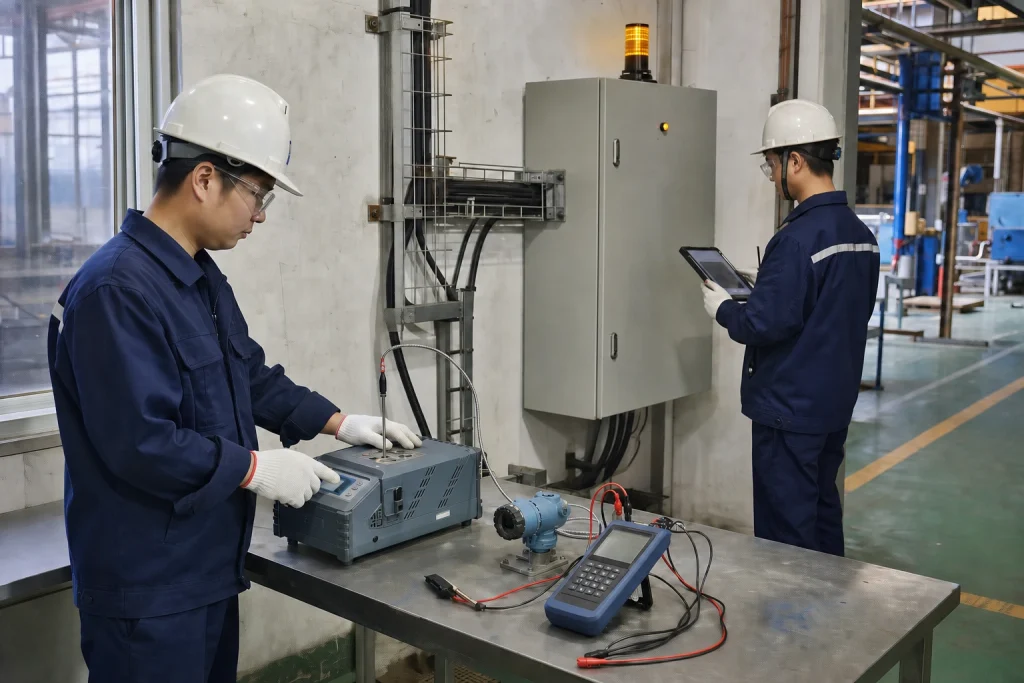
Once installed, the system needs a simple maintenance routine. Periodic functional checks confirm that the alarm output, sounder and any connected relays actually operate. Readings can be compared against a calibrated reference thermometer at intervals defined by the site’s quality or safety procedures. Keeping a log of checks, alarm events and configuration changes makes audits straightforward and helps identify sensors that are drifting before they fail.
Why ASA
ASA supplies fixed gas detectors, dust monitoring devices, temperature alarms and multi-channel alarm controllers from a single product line, which makes it easier to build a consistent monitoring architecture instead of mixing incompatible brands. Our engineering team supports customers in Europe and the Middle East with product selection, signal wiring questions and configuration advice, and responds quickly to technical enquiries during project planning and after delivery. If you are specifying temperature monitoring for a new facility or adding channels to an existing gas detection system, contact our team to discuss your requirements.
Disclaimer: Product availability, specifications, measuring ranges, alarm configurations and certification coverage vary by model and region. The information in this article is provided for general reference only and does not constitute a performance guarantee, safety assurance or compliance statement. Always refer to the official product documentation and confirm suitability, certification status and local regulatory requirements with our team before selection, installation or use.