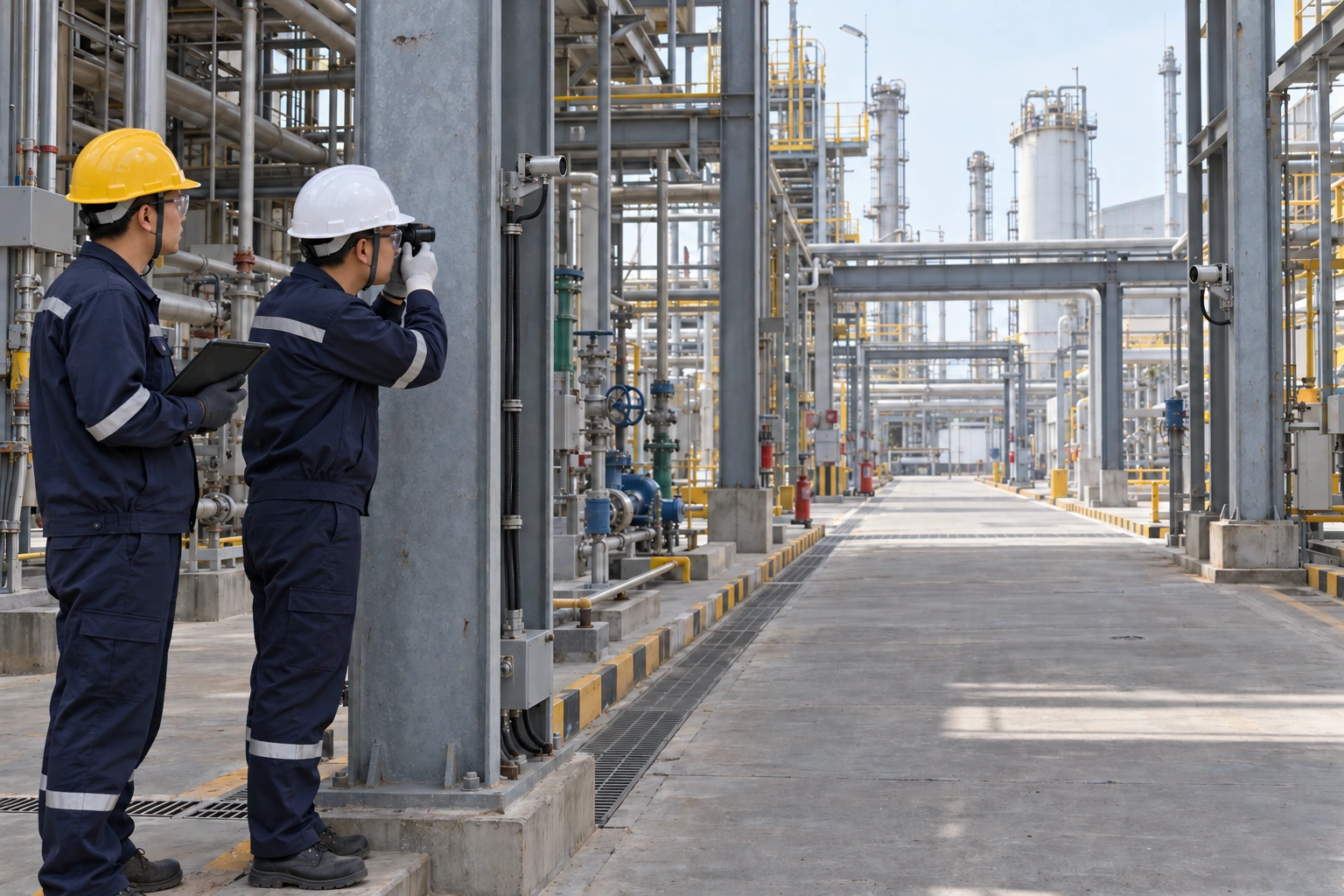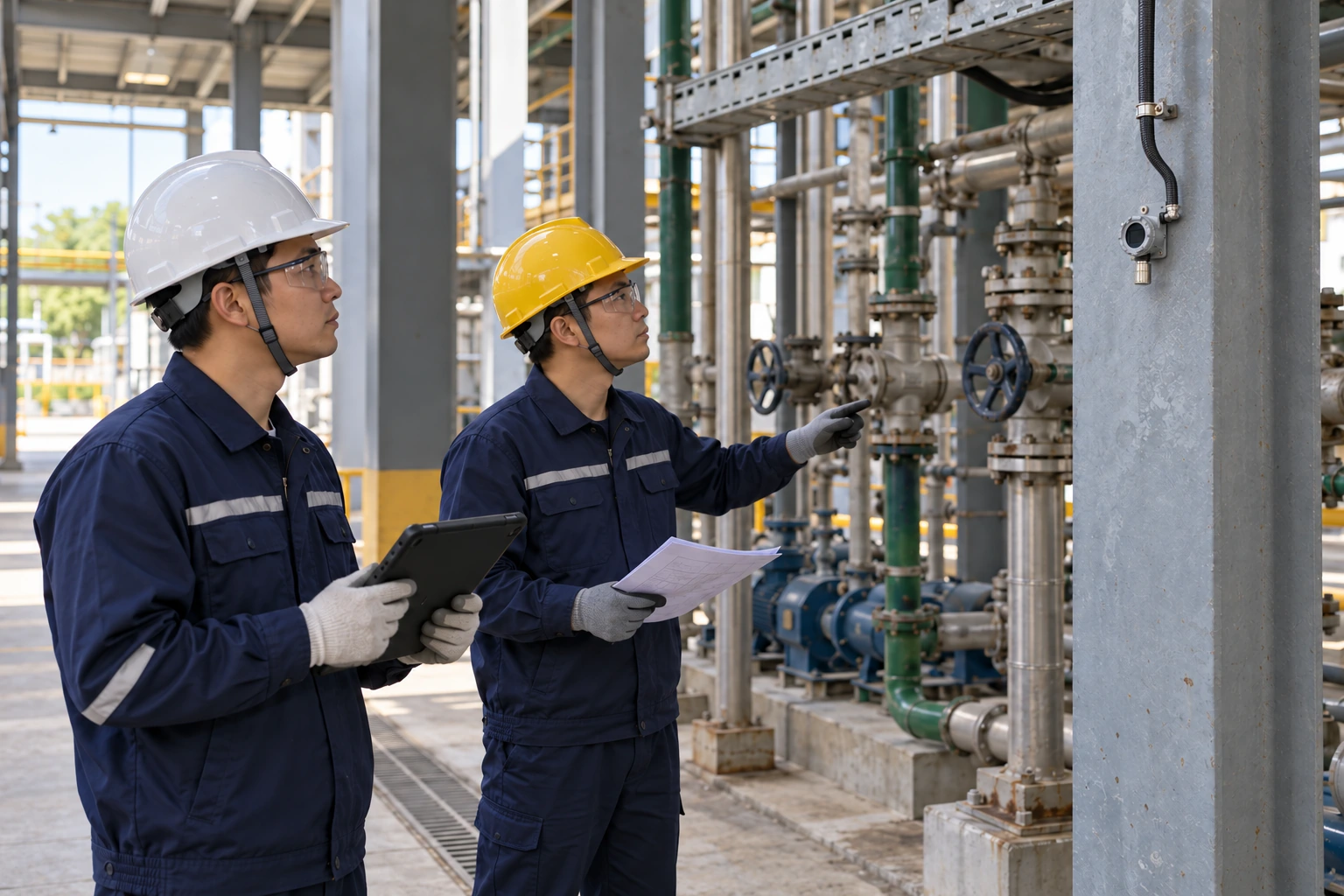
Underground construction concentrates many of the classic confined space hazards into one continuously changing workplace. Fresh air must be pushed hundreds or thousands of meters to the working face, ground conditions can release gases that displace breathable air, and escape routes are long and narrow. For these reasons, tunnel oxygen monitoring is commonly treated as a core element of the ventilation and safety plan rather than an optional extra. This article looks at where oxygen levels tend to drift underground, how fixed oxygen detection can be applied at shafts, around tunnel boring machines (TBMs) and in refuge areas, and what a practical monitoring layout may look like for a tunnel project.
Why Oxygen Levels Shift Underground
Normal air contains about 20.9 percent oxygen by volume. In tunnel environments, several mechanisms can pull that figure down. Oxidation of exposed rock, timber or steel consumes oxygen slowly but continuously in poorly ventilated headings. Ground strata can release carbon dioxide, methane or nitrogen that dilutes and displaces oxygen. Combustion sources such as diesel plant, hot works and blasting consume oxygen while adding carbon monoxide and other fumes. Inert gases used for fire suppression or shield interventions can also create locally oxygen deficient zones.
Many occupational safety frameworks treat atmospheres below 19.5 percent oxygen as oxygen deficient and atmospheres above 23.5 percent as oxygen enriched. Deficiency impairs judgment and physical performance well before it causes collapse, which is exactly why instrument based monitoring matters: workers generally cannot sense falling oxygen until they are already affected. Enrichment is less common in tunnels but can occur near stored or leaking oxygen supplies, and it sharply increases fire risk. A monitoring plan should therefore alarm on both low and high oxygen conditions.
Monitoring Shafts and Vertical Access Points
Shafts are frequently the first excavated element of a tunnel project and among the most hazardous. They behave like deep confined spaces: heavier than air gases such as carbon dioxide can pool at the bottom, while ventilation at depth depends entirely on mechanical systems. Access shafts, ventilation shafts and pump sumps all deserve attention.
Fixed oxygen detection can be considered at the shaft bottom and at intermediate landings, with alarm outputs relayed to the surface so that a deteriorating atmosphere is visible before anyone descends. A fixed oxygen gas detector mounted near the working level, supplemented by portable instruments carried during entry, is a common arrangement. Where the geology or the works suggest methane risk, combustible gas monitoring is typically added alongside oxygen measurement; methane has a lower explosive limit of about 5 percent by volume and an upper explosive limit of about 15 percent by volume, and a methane gas alarm detector may be evaluated for shaft bottoms and headings where gas inflow is credible. For duty in classified zones, detector models such as the AN-O2-D and AN-LEL-D carry China Ex Certificate EETI24.0463X (Ex db IIC T6 Gb, IP65), valid to Jan 2030.
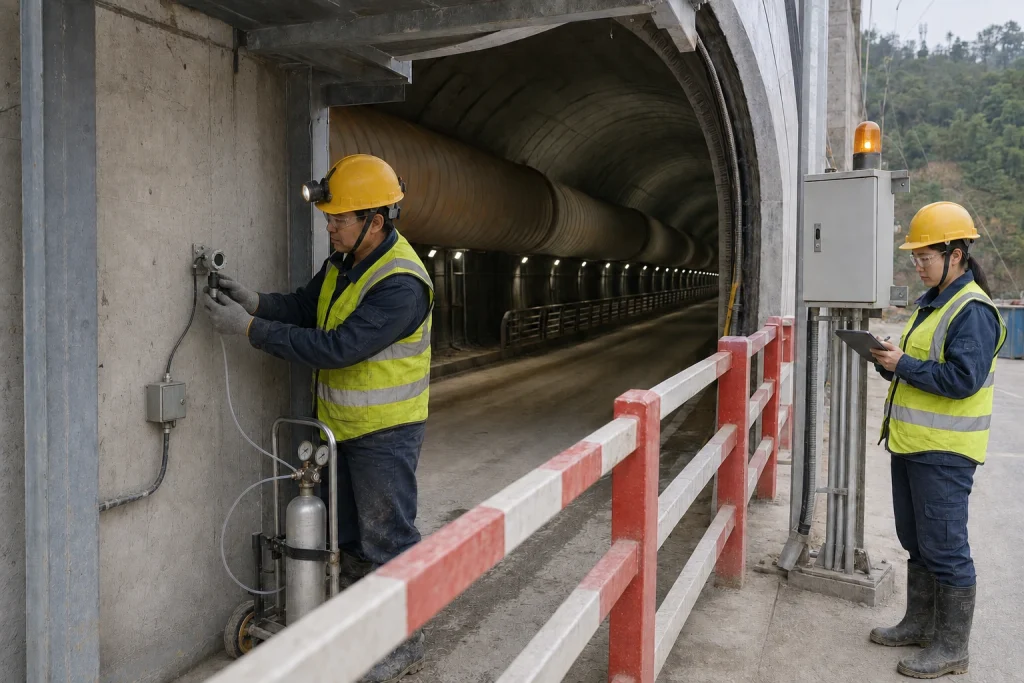
Oxygen Monitoring Around TBMs
A tunnel boring machine is effectively a moving factory at the end of a long dead end passage. The atmosphere around it is shaped by the ventilation duct that follows the machine, by gases released from freshly cut ground, and by the machine’s own hydraulics, welding activities and maintenance works. Several locations along a TBM are commonly considered for gas measurement points: the cutterhead and excavation chamber area where ground gases first appear, the shield and erector zone where personnel work, and the backup gantries where ventilation air arrives last.
Compressed air interventions in the excavation chamber add a further dimension, since atmosphere composition inside the chamber must be verified before and during man entry. Continuous oxygen readings, displayed both at the machine operator’s position and at the surface control room, help supervisors confirm that ventilation is keeping pace with advance rates. Data logging is valuable here: gradual downward trends in oxygen at the face can flag duct leakage or fan degradation before any alarm threshold is crossed.
Refuge Chambers and Emergency Readiness
Refuge chambers give tunnel crews a survivable atmosphere when fire, gas inflow or ventilation failure blocks the escape route. Their entire purpose depends on maintaining breathable air inside while conditions outside deteriorate, so monitoring is central to their operation. Oxygen levels inside a sealed chamber fall as occupants breathe, while carbon dioxide rises; both parameters are commonly monitored so that scrubbing and oxygen supply systems can be managed. Many operators also monitor the atmosphere immediately outside the chamber, which supports the decision of when it is safe to leave.
Because refuge chambers are used rarely but must work on demand, routine functional checks of their sensors, alarms and displays are as important as the initial installation. Calibration intervals, sensor life tracking and documented test routines can be considered part of the chamber maintenance regime rather than a separate instrumentation task.
Building a Practical Monitoring Strategy
A workable tunnel monitoring layout usually combines three layers. Fixed detectors provide continuous coverage of known risk points such as shaft bottoms, the TBM face area and refuge chambers. Portable instruments protect workers during entries, inspections and tasks in less trafficked areas. A central controller or control room display ties the fixed points together, so that alarms, trends and fault states are visible in one place; multi channel gas alarm controllers are commonly used for this role, installed in surface control rooms or other non-hazardous areas. Alarm setpoints, detector positions and response procedures should be defined in the project’s ventilation and emergency plans and reviewed as the tunnel advances, since the risk picture on a drive changes month by month.
Why ASA
ASA supplies fixed gas detection equipment for industrial and underground applications, covering oxygen, combustible and toxic gas measurement along with multi channel alarm controllers. Our range allows shaft, TBM and refuge area monitoring points to be built from one coordinated product family, and our engineering team can support detector selection, placement review and system configuration for tunnel projects. With responsive pre sales and after sales support for buyers across Europe and the Middle East, ASA aims to make specifying underground gas monitoring straightforward. Contact our team to discuss oxygen monitoring for your tunnel project.
Disclaimer: Product availability, specifications, measuring ranges, alarm configurations and certification coverage vary by model and region. The information in this article is provided for general reference only and does not constitute a performance guarantee, safety assurance or compliance statement. Always refer to the official product documentation and confirm suitability, certification status and local regulatory requirements with our team before selection, installation or use.