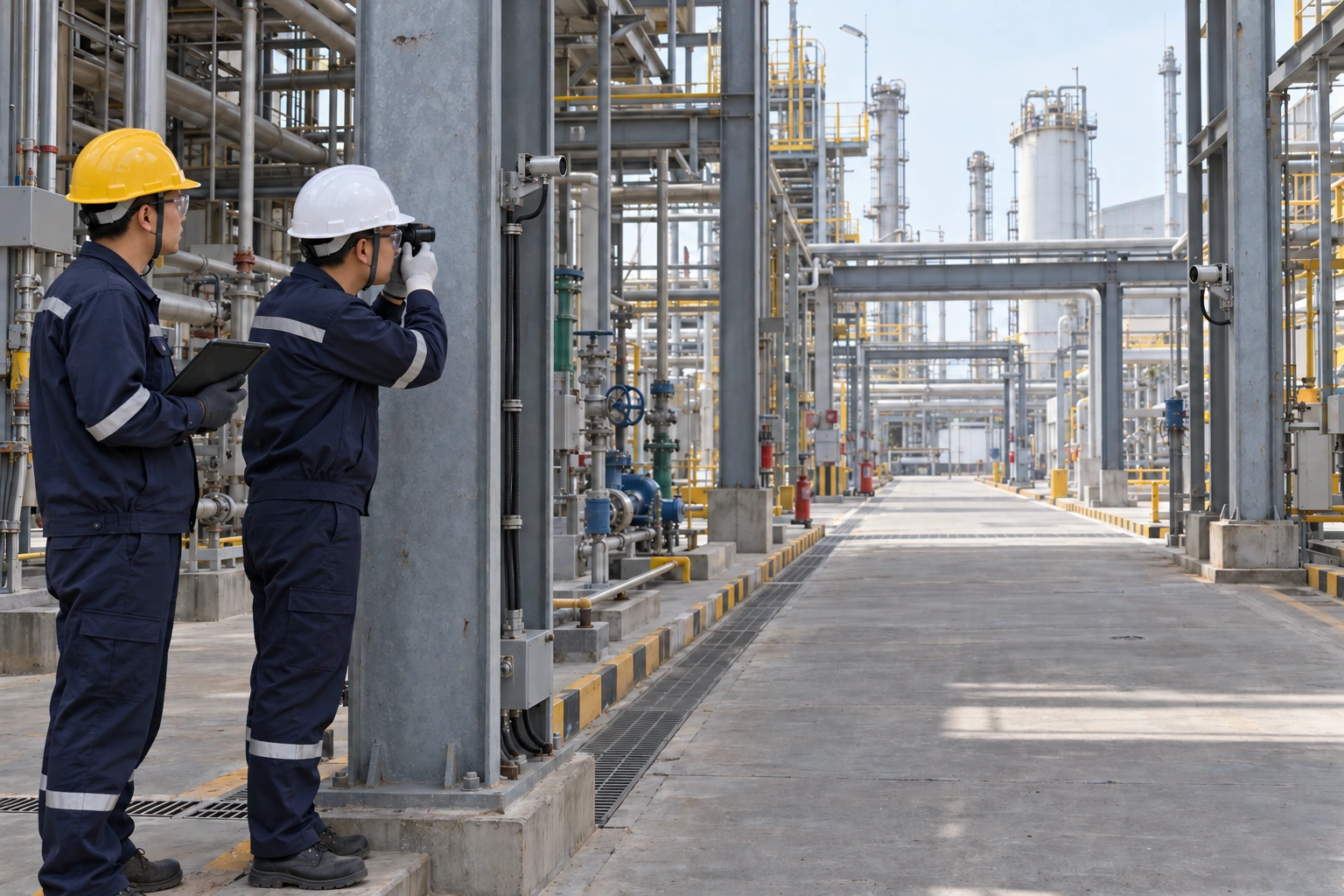
Writing a clear h2s detector specification is one of the most effective ways to avoid costly mistakes in an industrial gas detection project. Hydrogen sulfide is a fast-acting toxic gas found in wastewater treatment, oil and gas operations, pulp and paper mills, biogas plants and many other facilities, and a fixed detector that is poorly matched to the site can leave workers exposed or generate constant nuisance alarms. This checklist walks procurement and EHS teams through the key items to define before requesting quotations: the measuring range and alarm setpoints, the housing and ingress protection, the signal outputs, and the practical questions around installation and maintenance that are often left out of tender documents.
Understand the Hazard Before You Specify
Hydrogen sulfide (H2S) is a colorless gas with a characteristic rotten-egg odor at low concentrations. Smell is not a reliable warning: at higher concentrations H2S rapidly fatigues the sense of smell, so workers may stop noticing the gas precisely when the danger is greatest. This is the core reason continuous fixed monitoring is commonly used wherever H2S may accumulate.
Two reference points matter for a specification. First, H2S is toxic at low ppm levels. The EU indicative occupational exposure limit values are 5 ppm as an 8-hour time-weighted average and 10 ppm as a 15-minute short-term limit, while the ACGIH TLV is stricter at 1 ppm TWA and 5 ppm STEL. Second, H2S is also flammable, with a lower explosive limit of approximately 4.3 percent by volume, although in most occupational settings the toxic risk becomes critical long before flammable concentrations are reached. H2S is denser than air and tends to collect in pits, sumps, trenches and other low-lying or poorly ventilated spaces, which directly affects where detectors should be mounted. A short review of typical industrial gas detection applications can help you map where these conditions exist on your own site.
Measuring Range and Alarm Setpoints
For toxic monitoring, fixed H2S detectors are typically specified with ppm-level ranges such as 0-50 ppm, 0-100 ppm or 0-200 ppm, with electrochemical sensors being the common choice for this duty. The right range depends on where your alarm setpoints need to sit. As a general rule, alarm thresholds should fall well inside the measuring range rather than at its extremes, so that the detector operates in the most dependable part of its span.
A two-stage alarm strategy is widely used: a low alarm that prompts investigation and increased ventilation, and a high alarm that triggers evacuation or shutdown actions. Many sites align these setpoints with the applicable occupational exposure limits and their own risk assessments. Your specification should state the required range, the number of alarm stages and the intended setpoints explicitly, because these determine whether a given model can be configured to match your safety plan. When comparing candidate instruments such as a fixed hydrogen sulfide H2S gas detector, confirm the available range options and alarm configurations against the official product documentation rather than assuming defaults.
Housing, Ingress Protection and Mounting Location
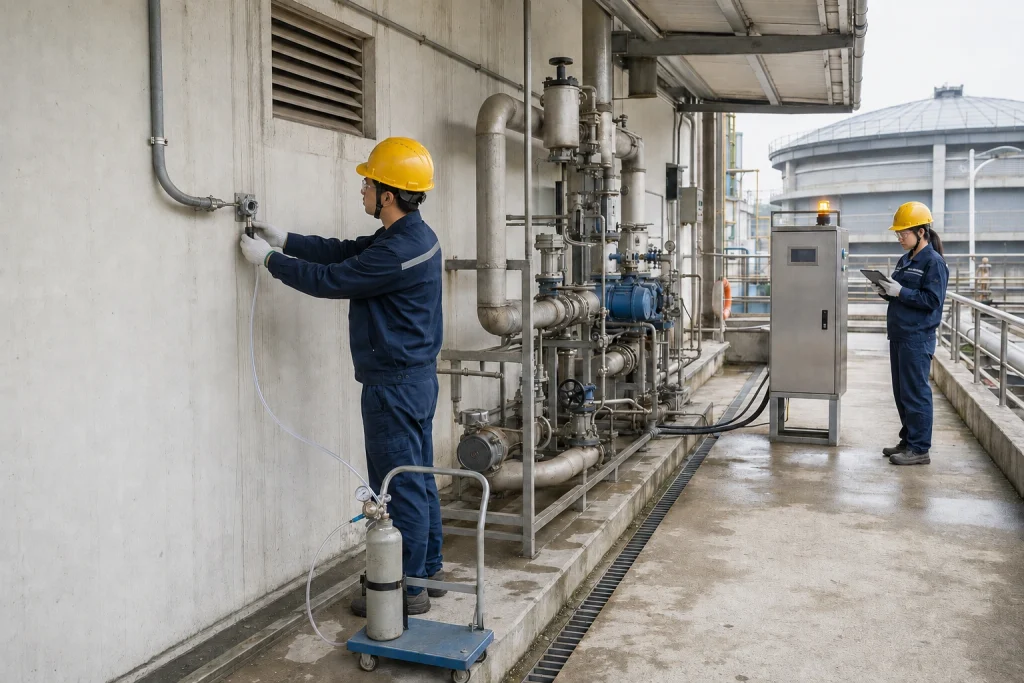
The housing section of an h2s detector specification should cover three things: ingress protection, materials, and mounting arrangements. For industrial fixed detectors, an IP65 or higher ingress protection rating is commonly specified so the instrument can tolerate dust and water jets in washdown or outdoor conditions. In hot outdoor climates, such as many Middle East installations, a sunshade and attention to the rated operating temperature can be considered to protect sensor life.
Materials matter more with H2S than with many other gases, because hydrogen sulfide is corrosive to copper and silver and can degrade unprotected electronics over time. Robust housings such as die-cast aluminum or stainless steel, along with well-sealed sensor assemblies, are commonly used in H2S service; for highly corrosive locations such as sewage headworks, additional protective measures may be evaluated with the supplier.
Because H2S is heavier than air, detectors are generally mounted at low level, close to potential leak sources and likely accumulation points, rather than at ceiling height. At the same time, the mounting position must remain accessible for routine calibration and sensor replacement, so avoid locations that require scaffolding or confined space entry for a simple service visit. Where the installation environment carries additional classification or regulatory requirements, confirm the suitability and documentation of the selected model with the supplier and your local authority before ordering.
Outputs, Wiring and Controller Integration
A fixed detector is only useful if its signal reaches the people and systems that act on it. The industry-standard analog output for fixed gas detectors is 4-20 mA, which is simple to wire and widely accepted by PLCs and dedicated gas detection controllers. Digital communication such as RS-485 is commonly offered as an alternative or supplement, and onboard relays can drive local sounders, beacons or fans directly. Your specification should state which outputs are required, how many detectors will be networked, and the expected cable distances, since long runs influence wiring design.
For multi-point systems, a dedicated controller provides centralized display, alarm management and relay control for the connected detectors. A unit such as the AN-3100H gas detection controller is intended for installation in non-hazardous (safe) areas, typically a control room or utility room, with the field detectors wired back to it. Define early whether you need local display at each detection point, remote indication at the controller, or both, and how alarm events should be recorded and escalated on your site.
Finally, plan for the ongoing duties that keep the system trustworthy: periodic bump testing and calibration with certified H2S test gas, documented sensor replacement intervals, and spare parts availability. A specification that includes calibration accessories and service expectations avoids surprises after commissioning.
Why ASA
ASA supplies fixed gas detectors, dust monitors and gas detection controllers to industrial buyers across Europe and the Middle East. Our range covers common toxic and combustible gas monitoring needs from a single source, which simplifies specification and spares management for multi-gas sites. Our engineering team can review your gas list, layout and output requirements and help you turn them into a workable detection design, and we respond quickly to technical queries during both the tendering and commissioning phases. If you are preparing an H2S monitoring specification, contact our team to discuss your project requirements.
Disclaimer: Product availability, specifications, measuring ranges, alarm configurations and certification coverage vary by model and region. The information in this article is provided for general reference only and does not constitute a performance guarantee, safety assurance or compliance statement. Always refer to the official product documentation and confirm suitability, certification status and local regulatory requirements with our team before selection, installation or use.