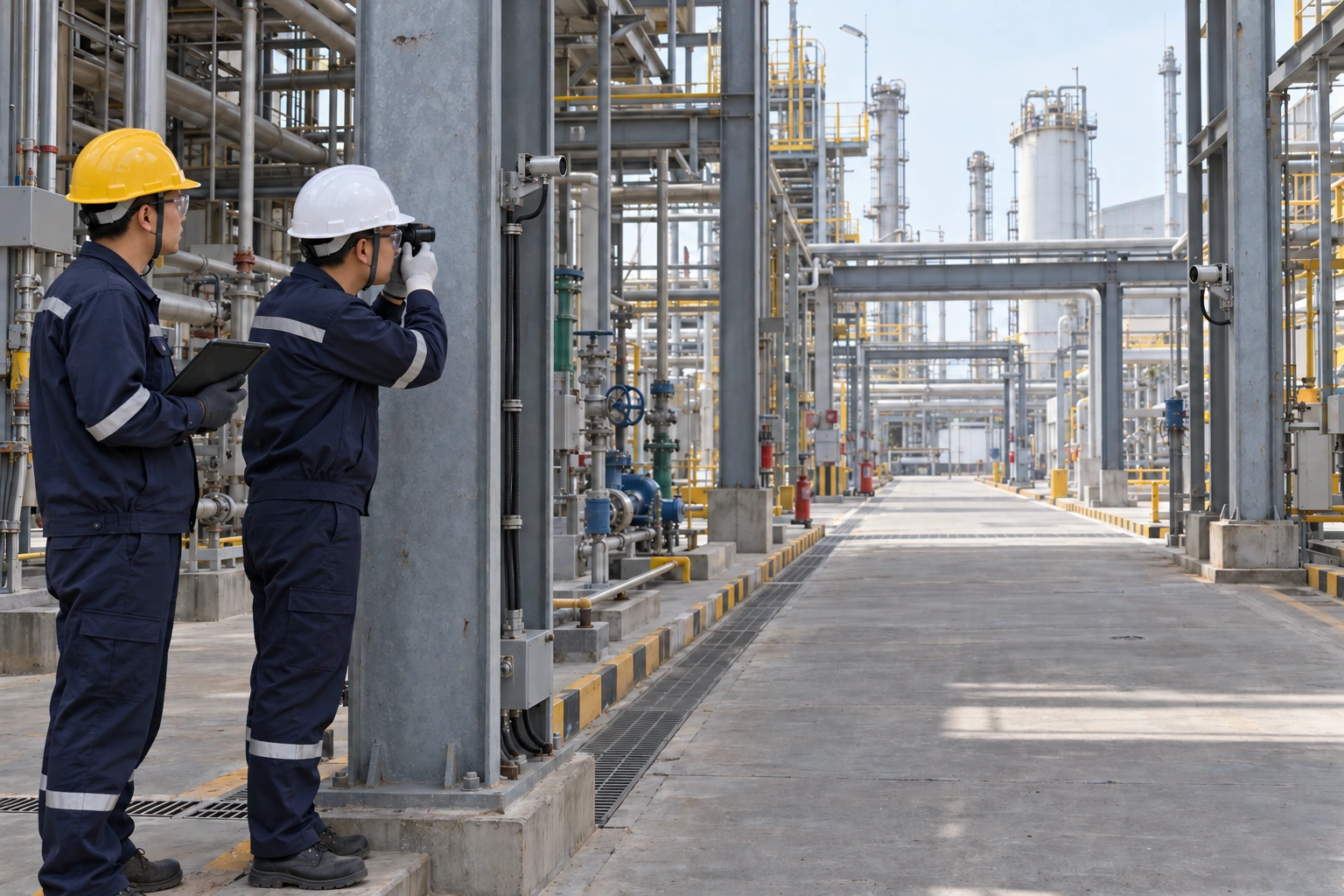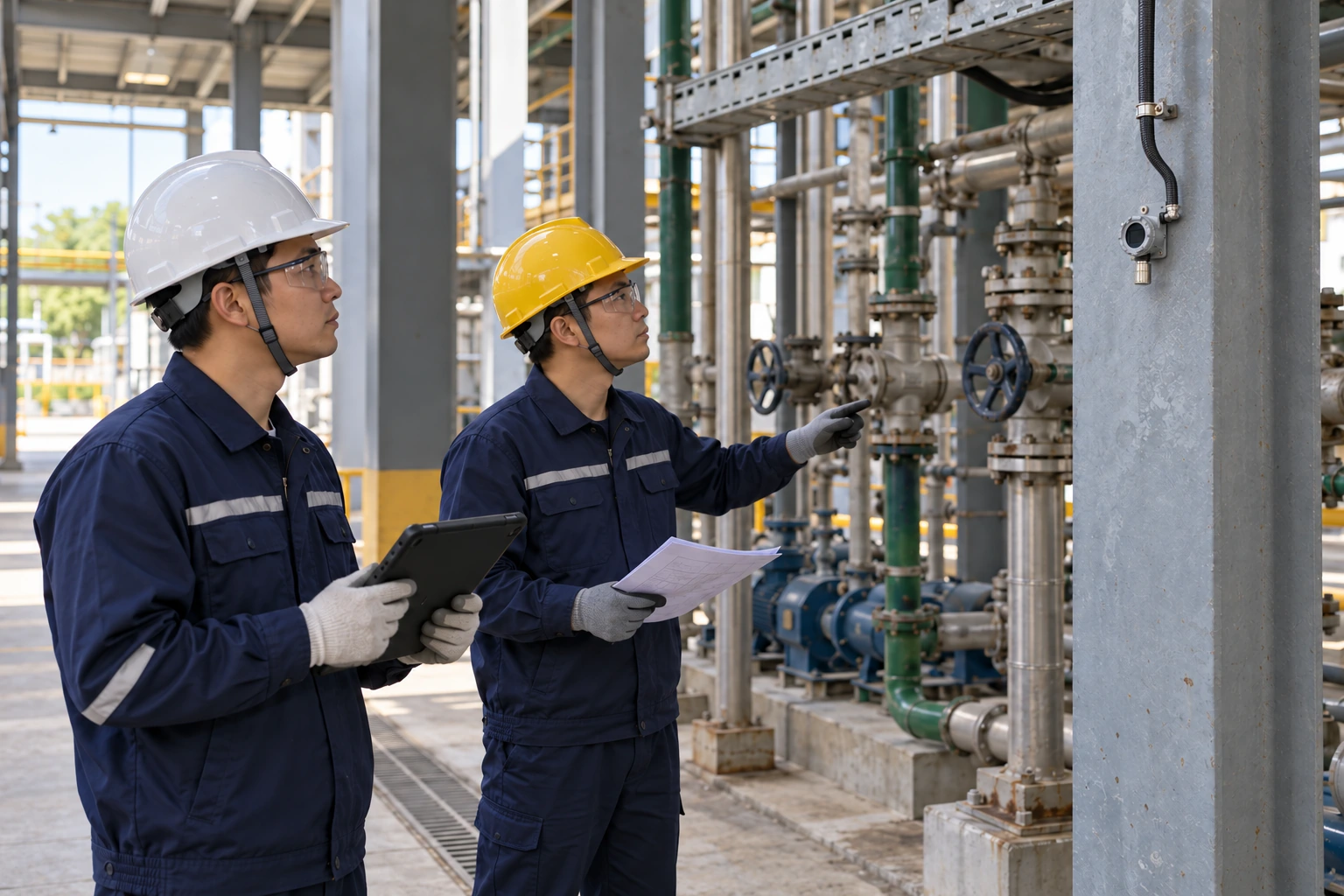
Biogas plants turn organic waste into valuable energy, but the same gas that generates revenue also creates a permanent fire, explosion and toxicity risk on site. Raw biogas is typically composed of roughly 50 to 70 percent methane (CH4) together with carbon dioxide (CO2) and trace contaminants such as hydrogen sulfide (H2S). A structured biogas methane monitoring program, built on fixed gas detectors and a central alarm controller, is therefore one of the most important layers of protection a plant operator can put in place. This article walks through the main process areas of a biogas facility, the gas hazards found in each, and the practical points to consider when planning a fixed detection system.
Why Methane Is the Defining Hazard in Biogas Facilities
Methane is a colorless and odorless flammable gas with a lower explosive limit (LEL) of about 5 percent by volume in air and an upper explosive limit (UEL) of about 15 percent by volume. Because raw biogas leaves the digester already rich in methane, even a modest leak from a flange, valve, membrane roof or condensate trap can create a flammable atmosphere in still air or enclosed spaces. Methane is lighter than air, so escaping gas tends to accumulate under roofs, in ceiling voids and at the high points of buildings and enclosures.
The characteristic odor around many biogas plants comes from hydrogen sulfide, not methane. That matters for safety planning: once biogas has been desulfurized or diluted, workers may not smell anything at all, even when a significant methane concentration is present. Continuous monitoring with fixed detectors, rather than reliance on human senses or occasional portable checks, is the approach commonly used to close this gap.
Digesters and Feedstock Handling Areas
The anaerobic digester is the heart of the plant and the largest single inventory of biogas on site. Points that may be evaluated for fixed monitoring include the digester roof area, agitator and sensor penetrations, pressure relief devices, and the rooms or enclosures that house pumps, heat exchangers and condensate handling equipment connected to the gas space.
Feedstock reception and pre-treatment areas bring their own risks. Pits, tanks and channels holding slurry or organic waste can release methane and hydrogen sulfide as material begins to break down, and H2S is heavier than air, so it collects in pits, sumps and low-lying enclosed spaces. H2S is highly toxic at low concentrations and can rapidly overwhelm the sense of smell, which makes fixed detection near grade level and at pit access points a common design choice. A dedicated fixed H2S gas detector can be considered for reception halls, pump rooms and desulfurization units where personnel routinely work.
Biogas Upgrading and CO2 Separation
Plants that upgrade biogas to biomethane remove CO2 and contaminants to raise the methane content, often above 95 percent. Upgrading skids, whether based on membranes, water scrubbing, amine washing or pressure swing adsorption, concentrate the flammability hazard: the product gas is closer in behavior to natural gas, and the equipment operates at elevated pressure, which increases potential leak rates.
Two monitoring aspects are commonly considered in upgrading areas. First, methane detection around compressors, valve stations and the upgrading unit itself, with sensors placed high where lighter-than-air gas will collect. Second, CO2 monitoring in enclosed rooms where the separated off-gas stream is handled or vented. CO2 is an asphyxiant that is heavier than air, and a widely referenced occupational exposure limit is 5000 ppm as an 8-hour time-weighted average in many jurisdictions. Enclosed spaces where CO2 could pool are therefore candidates for low-mounted CO2 sensors alongside the methane detection layer.
Gas Storage, Compression and CHP Rooms
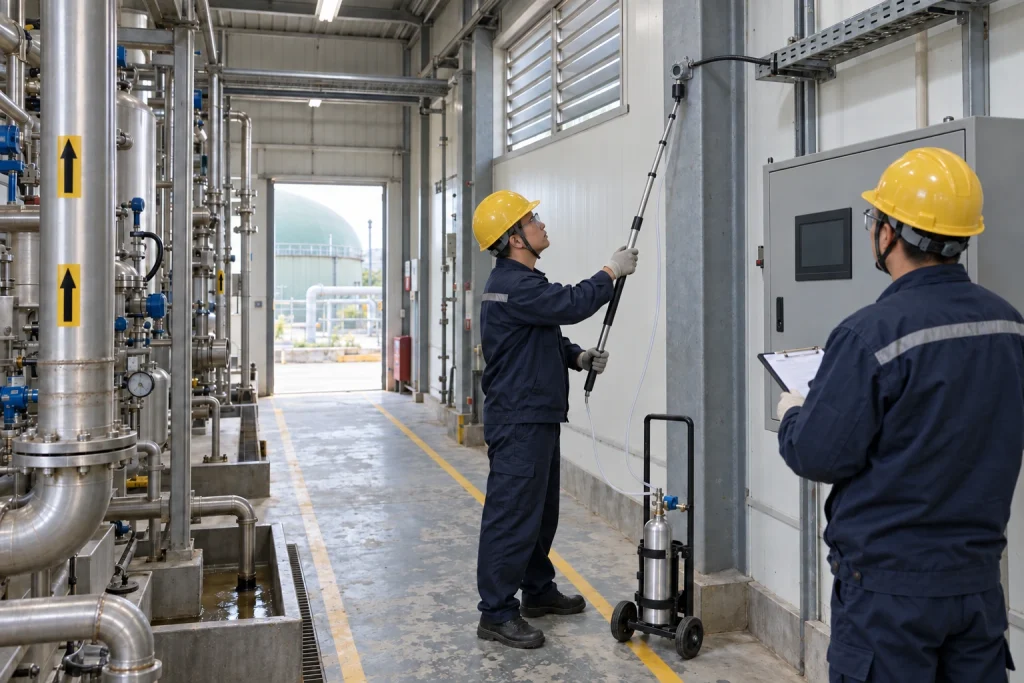
Gas holders, double-membrane storage domes, buffer vessels and compressor buildings all hold or move large volumes of biogas. Enclosed rooms containing gas-carrying equipment, such as compressor rooms, blower rooms and combined heat and power (CHP) engine rooms, deserve particular attention because a leak indoors has far less opportunity to dilute than one in open air. Detectors mounted near the ceiling, combined with monitored mechanical ventilation, are a typical arrangement in these rooms.
Many of these locations are classified as potentially explosive atmospheres, so the detection hardware itself must be suitable for the zone in which it is installed. For flammable gas duty in such areas, a fixed methane gas detector such as the ASA AN-LEL-D, which carries the China Ex Certificate EETI24.0463X (Ex db IIC T6 Gb, IP65), valid to Jan 2030, may be evaluated against the site’s zone classification and local regulatory requirements.
Building the Monitoring System: Placement, Alarms and Control
A few practical principles are commonly used when designing biogas gas detection:
- Match sensor height to gas density. Methane detectors are generally mounted high, near ceilings and roof peaks; H2S and CO2 detectors are generally mounted low, near breathing height or below, and at pit and sump openings.
- Cover leak sources, not just rooms. Flanges, compressors, valve stations, condensate traps and analyzer cabinets are typical release points and can be prioritized over open floor area.
- Use staged alarm levels. Flammable gas alarms are commonly set as fractions of the LEL, with a lower warning level prompting investigation and a higher level triggering ventilation, shutdown interlocks or evacuation according to site procedures.
- Centralize the signals. Routing detectors back to gas alarm controllers gives operators one point for alarm indication, relay outputs to ventilation and shutdown systems, and integration with the plant control room. An overview of suitable options is available in the ASA gas alarm controller range.
- Plan for maintenance from day one. Biogas is a wet, dirty gas stream, so sensor accessibility, regular bump testing and scheduled calibration should be built into the operating routine rather than added later.
Why ASA
ASA supplies a broad line of fixed gas detectors, dust monitors and gas alarm controllers used across biogas, wastewater, energy and general industrial applications. For biogas operators, that means methane, H2S, CO2 and oxygen detection can be sourced from one supplier and brought together on a common controller platform. Our engineering team supports customers from detector selection and placement review through to commissioning guidance, and our sales engineers respond quickly to inquiries from Europe, the Middle East and beyond. If you are planning or upgrading gas detection for a biogas plant, contact the ASA team to discuss your project requirements.
Disclaimer: Product availability, specifications, measuring ranges, alarm configurations and certification coverage vary by model and region. The information in this article is provided for general reference only and does not constitute a performance guarantee, safety assurance or compliance statement. Always refer to the official product documentation and confirm suitability, certification status and local regulatory requirements with our team before selection, installation or use.