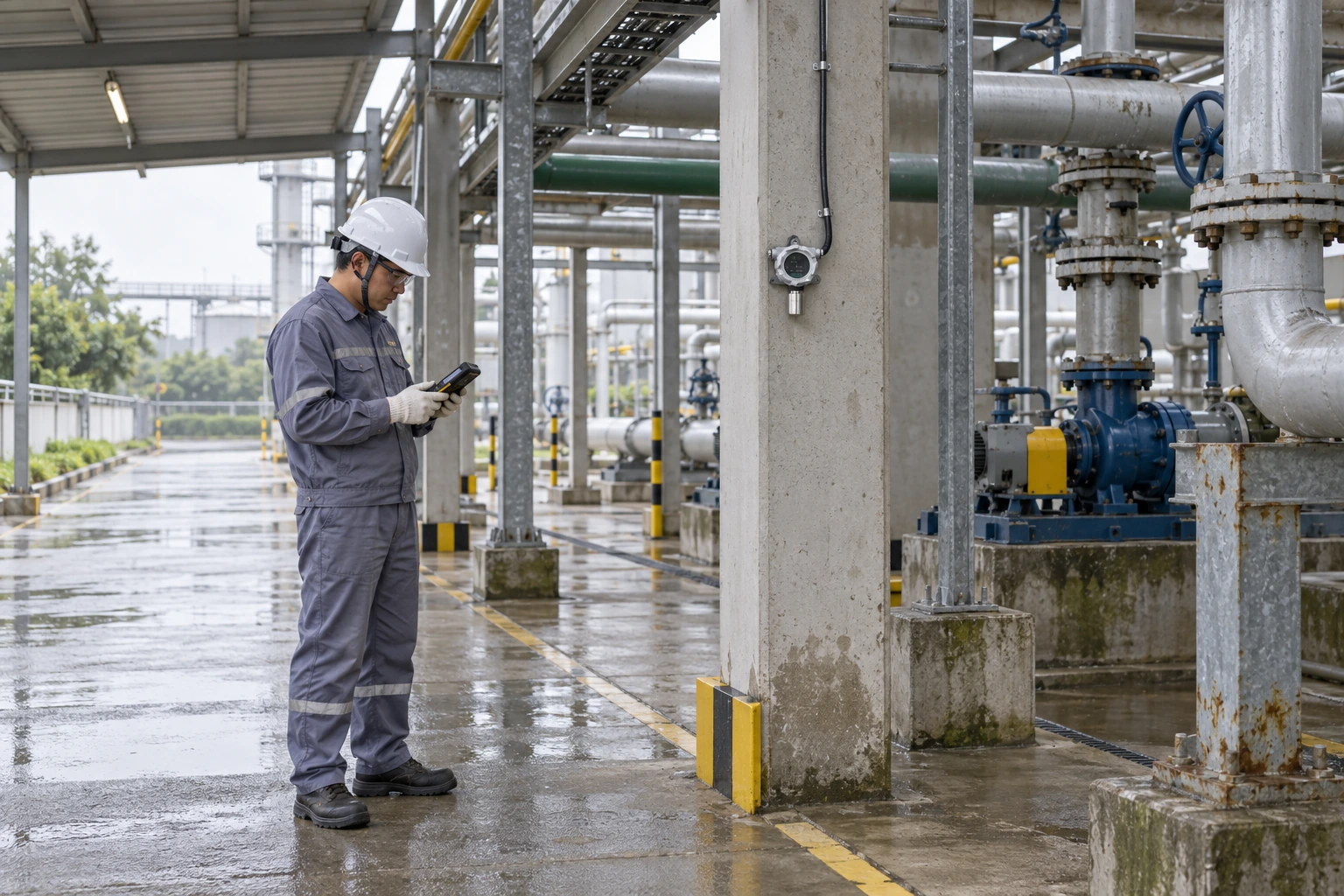
Choosing a hydrogen lel detector is not the same as specifying an instrument for a typical hydrocarbon vapor. Hydrogen behaves differently from most combustible gases: it is the lightest molecule, it disperses and rises quickly, it has a very wide flammable range, and it ignites with very little energy. These properties shape both where a detector should be mounted and, just as importantly, which sensing technology can actually respond to hydrogen at all. This article compares the main sensor types used for hydrogen flammability monitoring so that engineers and safety buyers can frame the trade-offs before selection.
Why hydrogen is a special case for LEL detection
The lower explosive limit (LEL) of hydrogen in air is commonly cited at about 4 percent by volume, and the upper explosive limit at roughly 75 percent by volume. That wide band, combined with a low minimum ignition energy, means even small persistent leaks deserve attention. Because hydrogen is far lighter than air, it collects at high points, under roofs and inside enclosures, so detector placement usually differs from the low mounting used for heavier vapors.
A point that is frequently overlooked is that infrared (NDIR) sensing cannot detect hydrogen. NDIR works by measuring how a gas absorbs specific infrared wavelengths, and hydrogen, as a symmetric diatomic molecule, does not absorb infrared in a way these sensors can use. This rules out one of the most popular technologies for other flammable gases and pushes hydrogen monitoring toward catalytic, thermal conductivity, electrochemical or semiconductor approaches, each with its own strengths and limits.

Catalytic bead (pellistor) sensors
Catalytic bead sensors, also called pellistors, are a long-established choice for flammable gas monitoring across the LEL range. They work by catalytically oxidizing combustible gas on a heated bead and measuring the resulting temperature change, which is read out as a percentage of LEL. For hydrogen service this technology can be considered because it responds to hydrogen and provides a familiar 0 to 100 percent LEL scale that maps directly to alarm thresholds.
The trade-offs are well documented in general industry practice. Catalytic beads require oxygen to function, so they may be unsuitable in inert or oxygen-deficient atmospheres. They can be degraded by catalyst poisons such as silicones and by some sulfur compounds, and exposure to very high combustible concentrations can damage the element. Where these risks are present, a maintenance and bump-test regime is commonly used to keep response reliable, and buyers may evaluate alternative technologies for the same location.
Thermal conductivity for higher concentrations
Thermal conductivity (TCD) sensing takes advantage of a physical fact that suits hydrogen especially well: hydrogen has a much higher thermal conductivity than air. A TCD sensor compares how quickly heat is carried away from a heated element in the sample versus a reference, which allows measurement without combustion and without consuming oxygen.
This makes thermal conductivity a useful option for concentrations at and above the flammable range, including measurement up to high percent-by-volume levels where catalytic beads are not appropriate. TCD is generally less selective and less sensitive at very low trace levels, so it is often applied where higher hydrogen concentrations are expected, or paired with another sensor to cover both the low-LEL warning band and higher ranges. For process streams and purge or inerting scenarios, this pairing can be considered during design.
Electrochemical and semiconductor options
Electrochemical hydrogen sensors are commonly used where lower-level detection and early leak warning are the priority, typically working in the parts-per-million region rather than across the full LEL scale. They can offer good selectivity and low power draw, though sensor life, temperature sensitivity and potential cross-response to other gases are factors that should be reviewed for the specific installation.
Semiconductor (metal oxide) sensors are another approach often used for leak detection because they can be very sensitive to small amounts of hydrogen. They tend to be less quantitative and more affected by humidity and temperature, so they are frequently chosen for indicative leak alarms rather than precise LEL measurement. In practice, the right answer depends on whether the goal is early leak alerting, LEL-band flammability monitoring, or high-range concentration measurement, and many sites use more than one technology to cover the full picture. A broader review of instrument options is available on our gas alarm detectors overview.
Why ASA
ASA supplies a focused line of fixed gas and dust detection equipment for industrial safety, including combustible gas monitoring. Our Methane CH4 Gas Alarm Detector (AN-LEL-D) is part of a range engineered for continuous industrial use, and AN-LEL-D carries China Ex Certificate EETI24.0463X (Ex db IIC T6 Gb, IP65). Beyond the hardware, buyers value practical engineering support in matching sensor technology to the gas, the expected concentration range and the site conditions, along with responsive lead times and application guidance. For hydrogen projects in particular, that pre-selection conversation helps avoid specifying a technology that is a poor fit for the environment. To discuss a requirement, contact our team.
Disclaimer: Product availability, specifications, measuring ranges, alarm configurations and certification coverage vary by model and region. The information in this article is provided for general reference only and does not constitute a performance guarantee, safety assurance or compliance statement. Always refer to the official product documentation and confirm suitability, certification status and local regulatory requirements with our team before selection, installation or use.