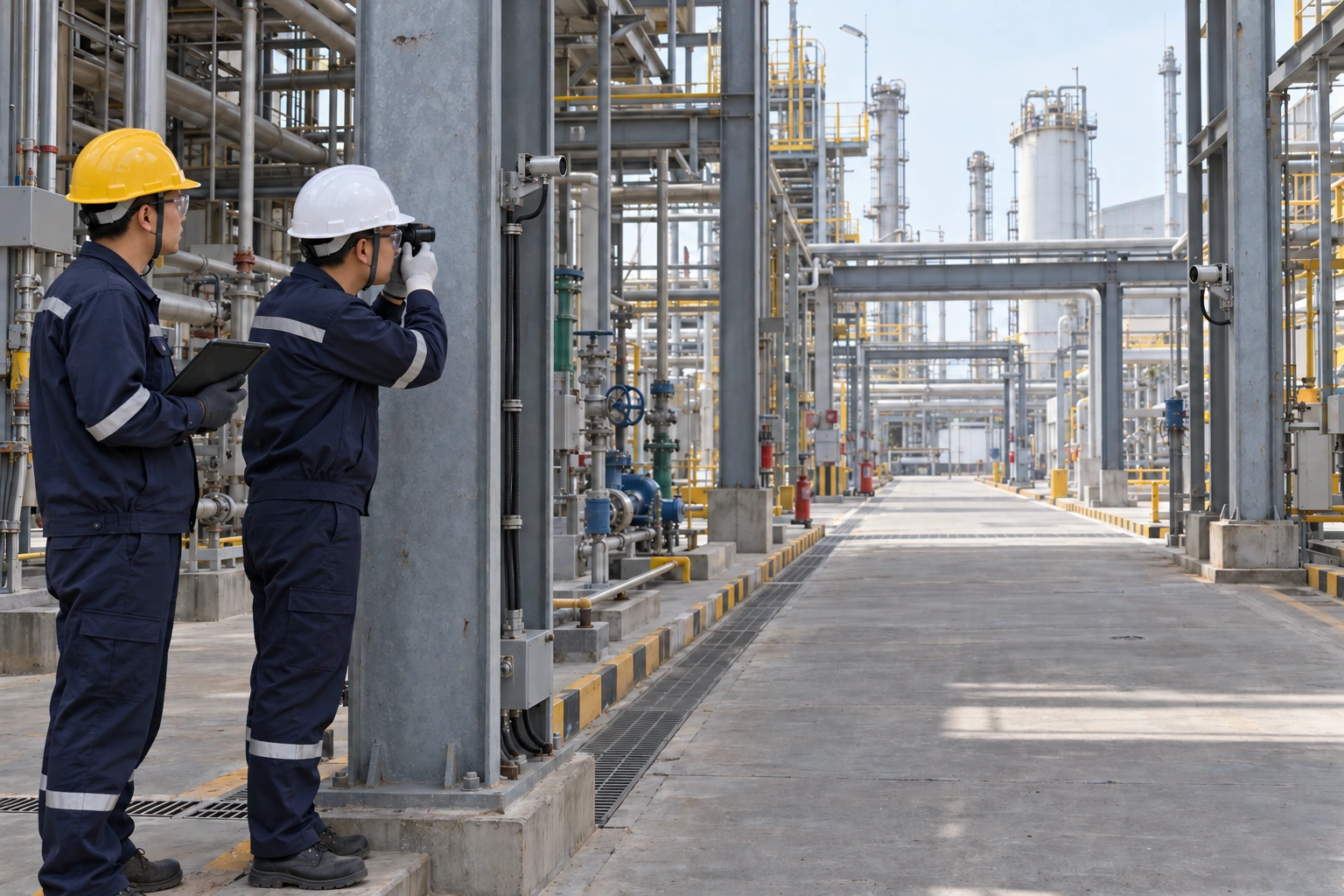
A gas detector is only as trustworthy as the reference it was last checked against. Understanding calibration gas basics – what is inside the cylinder, how the concentration was chosen, how long the mixture stays valid and how it should be handled – helps safety engineers and maintenance teams get consistent, defensible results from every calibration and bump test.
What Calibration Gas Is and Why It Matters
Calibration gas is a mixture containing a known concentration of a target gas, prepared and certified by the gas supplier. When it is applied to a detector, the reading is compared with the certified value and, during a full calibration, the detector’s span is adjusted so the output matches. A separate zero gas – typically clean synthetic air, or nitrogen for some sensor types – is used to set the baseline.
Two routines are commonly distinguished:
- Bump test (functional check): a brief exposure to test gas to confirm the sensor responds and the alarms activate. No adjustment is made.
- Calibration: a controlled zero and span adjustment against certified gas, documented with the cylinder details and the before and after readings.
Sensors drift over time because of ageing, contamination, poisoning or exposure to harsh conditions. A regular calibration schedule, set according to the manufacturer’s instructions and site risk assessment, is how that drift is detected and corrected before it compromises alarm performance.
Cylinder Types, Regulators and Accessories
Calibration gas for field use is usually supplied in small portable cylinders. The main choices are:
- Disposable (non-refillable) cylinders: lightweight, convenient for field technicians and common for standard mixtures. Once empty they are depressurised and disposed of according to local rules.
- Returnable or refillable cylinders: often used for larger volumes or custom mixtures, and may be more economical where consumption is high.
- Cylinder materials: reactive gases such as hydrogen sulfide, ammonia or chlorine are often supplied in cylinders with treated or passivated internal surfaces to reduce adsorption of the active component on the cylinder wall.
The regulator matters as much as the gas. Fixed-flow regulators deliver a set flow rate and are commonly used with calibration caps or flow adapters on fixed detectors. Demand-flow regulators release gas only when a pump draws it, and are typically matched to pumped instruments. Using the flow rate and adapter specified in the detector documentation is important, because too little flow can dilute the sample with ambient air and too much can create back pressure that distorts the reading.
Tubing should be short and made of a material compatible with the gas. Some tubing materials absorb reactive gases, which can make a reading come in low even with in-date gas.
Choosing the Right Concentration
The certified concentration should suit the detector’s range and alarm set points. Common practice is to choose a span concentration that sits within the measuring range, often near the middle of the scale or close to the alarm levels, so the calibration reflects the region where accuracy matters most. Following the manufacturer’s recommended value keeps results comparable over time.
A few points deserve attention:
- Combustible gases: mixtures are often specified as a percentage of LEL, for example 50% LEL methane. Because the published LEL of methane differs between references (4.4% vol under IEC 60079-20-1, and 5.0% vol in some older or non-IEC sources), the same “% LEL” label can correspond to different % vol concentrations. Confirm which LEL basis the detector is configured for and order gas on the same basis.
- Cross-calibration: catalytic and infrared combustible sensors respond differently to different hydrocarbons. Calibrating with a surrogate gas and applying a correction factor may be considered only where the manufacturer publishes that factor for the specific sensor.
- Balance gas: the remainder of the mixture is usually air or nitrogen. Some sensor technologies need oxygen to operate correctly, so the balance gas should match what the detector documentation specifies.
- Multi-gas mixtures: quad mixtures for combined sensors save time, but check that the components are chemically compatible and that each concentration suits each channel.
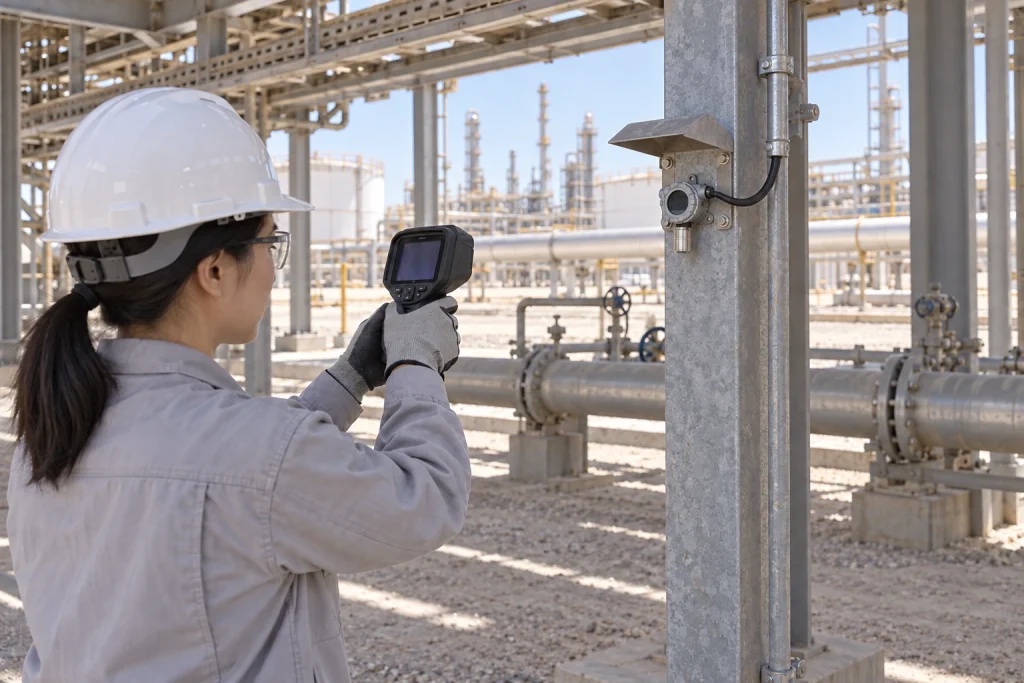
For toxic gas detectors such as a carbon monoxide gas detector, the span gas is usually a ppm-level mixture in air or nitrogen; for flammable gas channels like a methane gas alarm detector, it is usually a %LEL mixture.
Shelf Life, Storage and Certificates
Every calibration gas mixture has an expiry date, and the stability of the mixture depends largely on the gas involved:
- Stable mixtures such as methane, carbon dioxide, oxygen or carbon monoxide in a suitable balance gas generally have a long shelf life.
- Reactive mixtures such as hydrogen sulfide, ammonia, chlorine, nitrogen dioxide or sulfur dioxide tend to have a noticeably shorter shelf life, because the active component can react with or adsorb onto the cylinder surfaces and the concentration slowly falls.
The expiry date printed on the cylinder label and certificate of analysis is the reference to follow – not a rule of thumb. Expired gas should not be used for calibration, because once the actual concentration may differ from the certified value, the detector is no longer being adjusted against a known reference.
Good storage and documentation practice commonly includes:
- Storing cylinders upright, secured, away from heat sources and within the temperature range on the label.
- Keeping the certificate of analysis with the calibration records, noting the lot number, certified concentration, uncertainty and expiry date.
- Checking whether the supplier’s certification is traceable to recognised national or international standards where the site’s quality system requires it.
- Closing the valve and removing the regulator after use, and never using a cylinder that shows damage or corrosion.
Good practice on site: a typical sequence is to verify the cylinder is in date and correct for the detector, apply zero gas and confirm a stable baseline, apply span gas at the specified flow rate and wait for the reading to stabilise, then record the as-found and as-left values. If a sensor cannot be brought within tolerance, or responds slowly, it may be due for replacement rather than repeated adjustment.
For fixed systems, it also makes sense to confirm that alarm signals reach the gas alarm controller and that relays, sounders and beacons respond as designed. A calibration that only checks the sensor reading leaves the rest of the safety chain unverified.
Why ASA
ASA supplies fixed gas detectors, dust alarm detectors and gas alarm controllers for industrial users across Europe and the Middle East. Our engineering team can help you review detector selection, recommended calibration gas concentrations and maintenance routines for your application, and we aim to respond quickly to technical and commercial enquiries. To discuss your project or maintenance plan, contact the ASA team.
Disclaimer: Product availability, specifications, measuring ranges, alarm configurations and certification coverage vary by model and region. The information in this article is provided for general reference only and does not constitute a performance guarantee, safety assurance or compliance statement. Always refer to the official product documentation and confirm suitability, certification status and local regulatory requirements with our team before selection, installation or use.