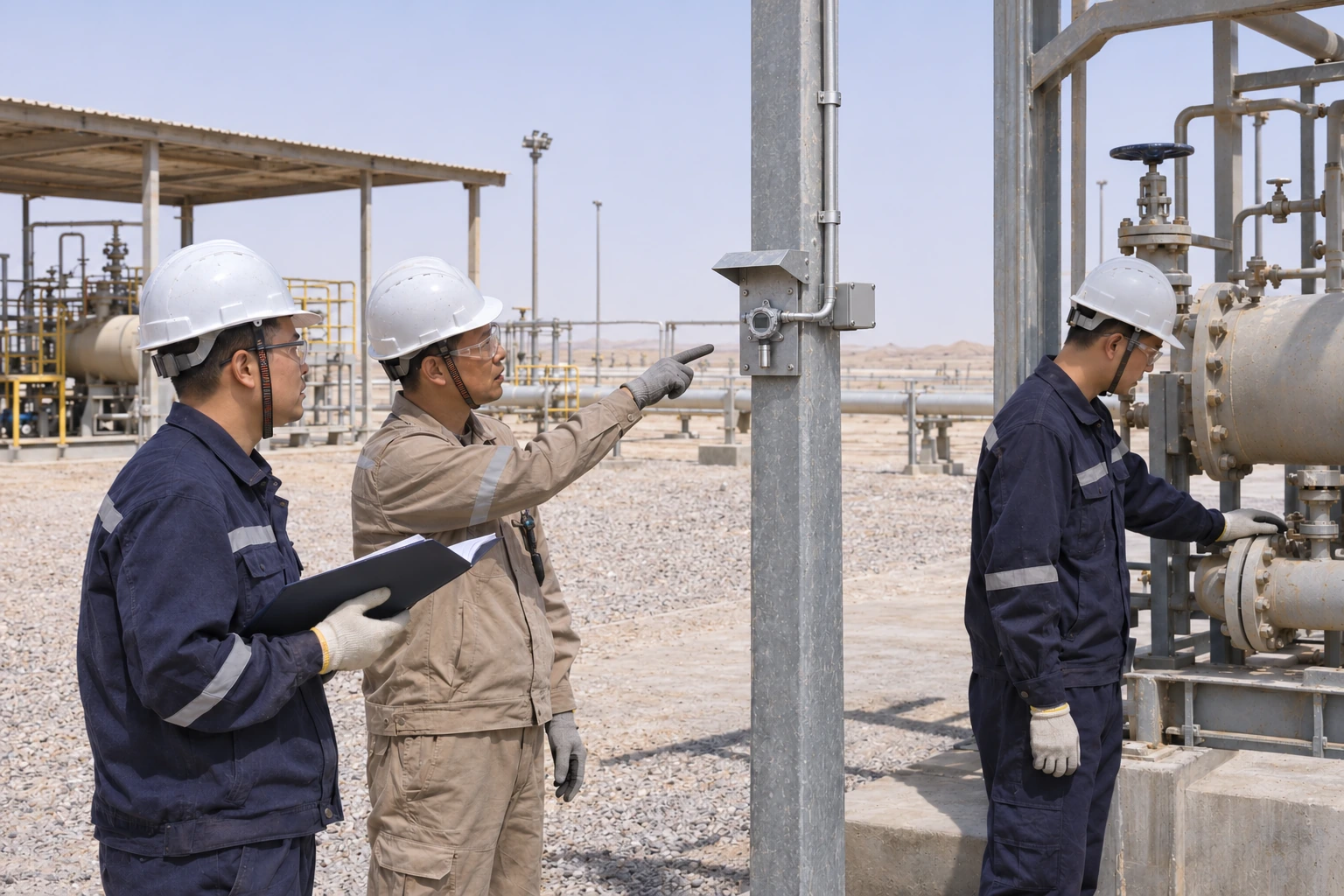
Understanding gas detector total cost means looking beyond the purchase price. For industrial buyers, a detector creates an ongoing requirement for inspection, calibration, replacement parts and maintenance planning. A lower initial quotation may offer little advantage if routine service requires difficult access or lengthy equipment returns. A useful purchasing comparison therefore follows the equipment through its expected operating life and makes the assumptions visible. This approach is particularly helpful when procurement, engineering and maintenance teams share responsibility for a fixed gas detection system.
Build the Cost Comparison Around the Same Scope
Start by defining what each quotation includes. A detector price alone is difficult to compare with a package containing mounting accessories, field wiring, commissioning and operator training. For a fixed installation, ask the project team to identify power supplies, alarm indication, controller interfaces and any supporting work. Record excluded items alongside the quoted price so that an apparently inexpensive offer does not gain an artificial advantage.
Use the same evaluation period for every option. A practical cost worksheet can separate initial equipment and installation, scheduled maintenance, anticipated replacements, service logistics and operational disruption. These are budgeting categories, not predictions of a particular product’s performance. Where future costs are unknown, request supplier quotations and show an allowance explicitly instead of presenting an unsupported figure as a fact.
Separate the number of installed detection points from the number of spare units. Also distinguish one-time engineering work from recurring site visits. If several departments contribute estimates, assign an owner to each cost line. This reduces double counting, such as including technician travel in both a maintenance contract and a separate service allowance.
Budget for Sensors and Replaceable Components
A sensor is a service item whose replacement needs depend on its technology, operating conditions and manufacturer instructions. Do not assume that every sensor in a fleet will need replacement at the same age. Ask suppliers to explain the expected maintenance approach for the proposed model, including how service needs are identified and which tasks require a workshop or an authorized service provider.
The relevant comparison is the cost of restoring a detection point to service. A replacement sensor price may exclude installation labor, calibration, freight and subsequent checks. A complete replacement detector has a different cost profile. Ask whether the proposed replacement procedure involves changing a component at the site or returning equipment, and include the associated activities in the estimate.
Check parts availability, ordering references and replacement compatibility before committing to a large installed base. A spare that cannot be used with the installed version provides little operational value. For projects with multiple locations, record where spares will be stored and who will maintain that stock. Use confirmed supplier lead times for planning, while recognizing that future deliveries can change.
Account for the Full Calibration Workload
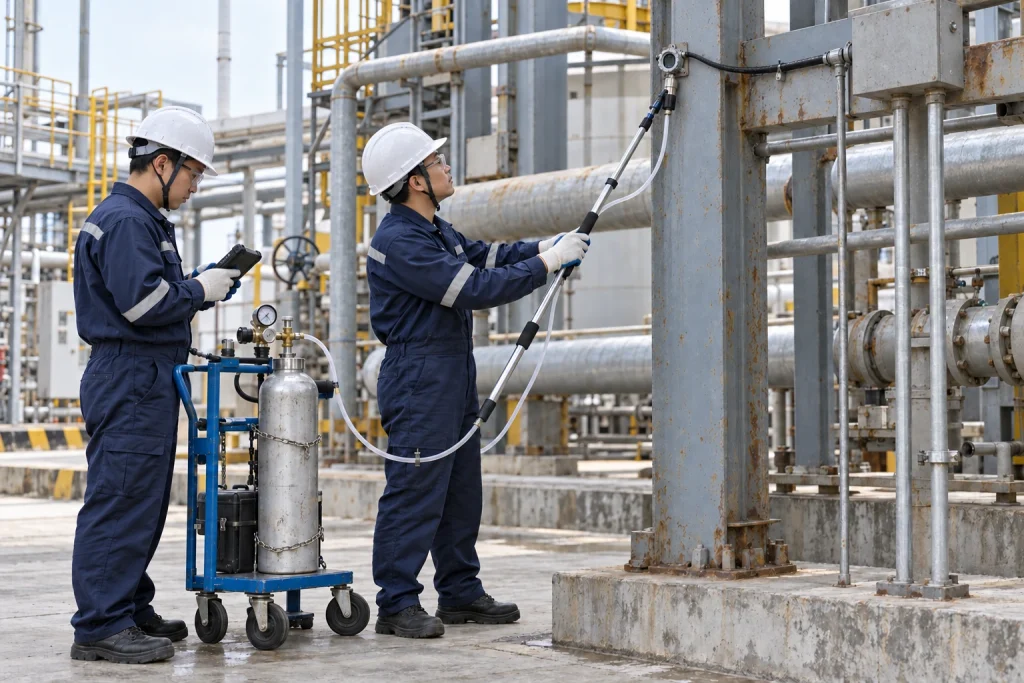
Calibration costs include more than a cylinder of test gas. Depending on the equipment and approved procedure, the work may require regulators, adapters, tubing, service tools and trained personnel. Budget for the applicable consumables, storage arrangements and gas replacement needs. Industrial Scientific’s gas detection guidance identifies testing and calibration as ongoing maintenance activities; the procedure and schedule for a particular fixed installation must come from its own documentation and site requirements.
Technician time should cover the complete visit. Access arrangements, work permits, preparation, maintenance records and returning the system to its normal operating state can all affect the workload. Equipment positioned where access requires additional arrangements may cost more to service. Location decisions must still follow the detection design and risk assessment; maintenance convenience alone should not determine placement.
Ask bidders to state the maintenance assumptions behind their estimates. A quotation based on equipment already accessible to a technician is different from one that includes travel and site access coordination. Compare like-for-like service scopes, and identify responsibilities for documenting work and addressing failed checks. Do not reduce required maintenance simply to improve a financial comparison.
Make Downtime Assumptions Visible
Operational disruption is often the least certain part of the calculation. A detector awaiting repair may require an approved temporary arrangement, a change to work activities or a shutdown, depending on the site’s procedures and risk assessment. Procurement teams should ask operations personnel to define the relevant consequences. The purchasing worksheet should not assume that an unavailable detection point can simply remain out of service.
Distinguish planned maintenance from unplanned faults. Planned work may be coordinated with an existing maintenance window, while an unexpected failure can require separate attendance and urgent shipping. Estimate these situations separately, using site experience where available. Avoid assigning a universal downtime cost or claiming that a particular detector will prevent production losses.
Build a sensitivity comparison around a few uncertain inputs: service labor, component replacement needs and repair turnaround. Show how the purchasing result changes when these assumptions change. Label each assumption as a supplier quotation, a site estimate or an unresolved item. This makes the decision easier to review and highlights which questions deserve answers before ordering.
Why ASA
ASA’s product lines include gas detectors, dust alarm detectors and gas alarm controllers. Buyers reviewing gas detection equipment options can use a common cost worksheet to organize discussions about selection and ongoing maintenance. Different projects have different service constraints, so evaluation should address the proposed configuration and the intended installation.
For a useful engineering discussion, provide the target hazard, operating environment, number of detection points and maintenance access constraints. Ask the ASA team to clarify available documentation, replacement arrangements and support scope for the models under consideration. Request confirmation of response expectations and delivery arrangements rather than assuming a standard turnaround. Contact ASA to discuss your project requirements and the information needed for a practical ownership cost comparison.
Disclaimer: Product availability, specifications, measuring ranges, alarm configurations and certification coverage vary by model and region. The information in this article is provided for general reference only and does not constitute a performance guarantee, safety assurance or compliance statement. Always refer to the official product documentation and confirm suitability, certification status and local regulatory requirements with our team before selection, installation or use.