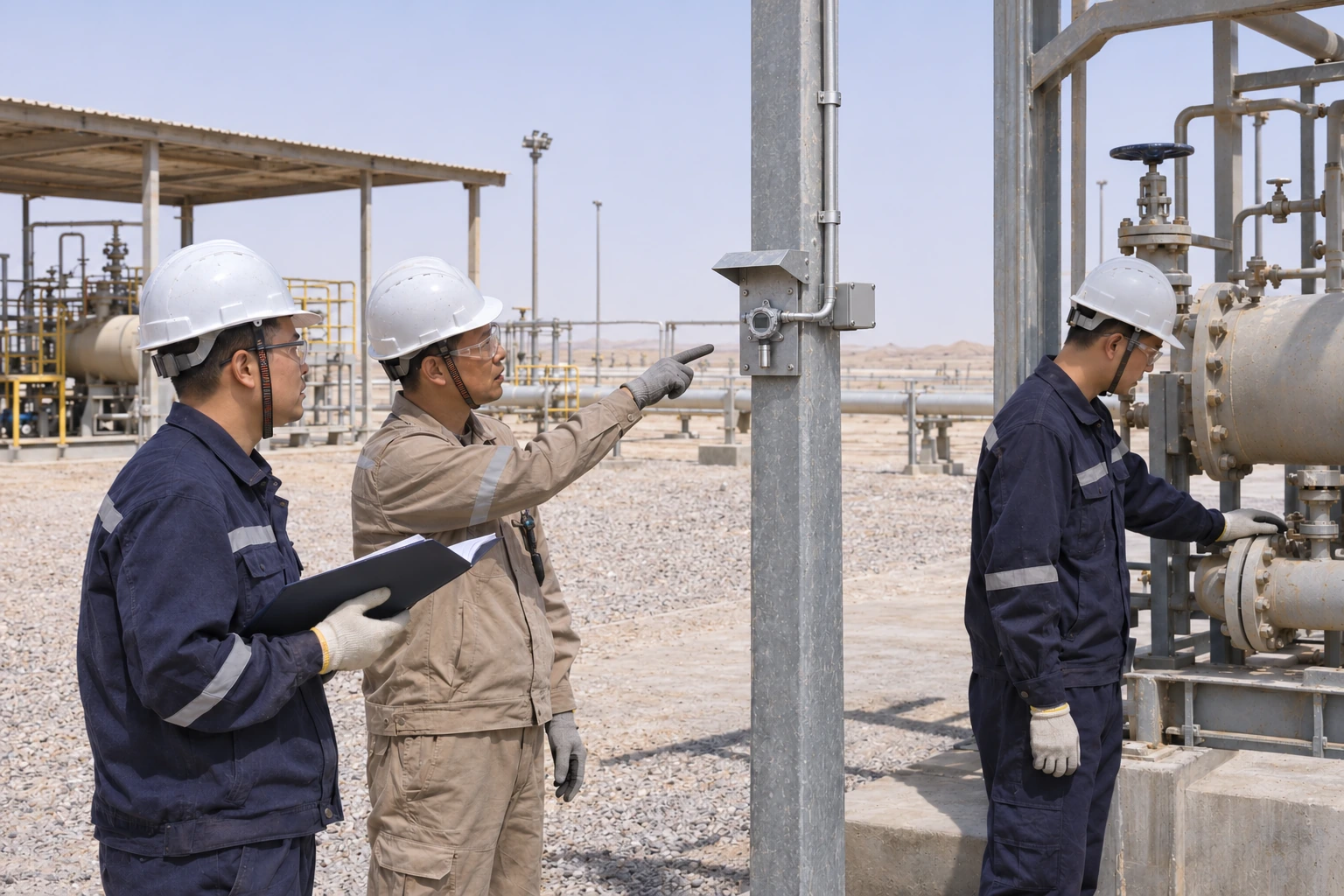
Understanding ex d vs ex ia helps industrial buyers evaluate how a gas detector addresses ignition hazards in a potentially explosive atmosphere. These protection concepts influence equipment construction, wiring and maintenance, but they do not establish which gas a detector measures or how well it measures it. A useful purchasing decision therefore combines the site classification with the complete equipment documentation, the proposed installation and the detection duty. Comparing the two labels alone leaves important questions unanswered.
Ex d: Protection Through a Flameproof Enclosure
Flameproof protection uses an enclosure designed to withstand an internal explosion and prevent it from igniting the surrounding explosive atmosphere. Carefully engineered joints, often called flamepaths, cool escaping combustion gases. The concept does not depend on keeping every trace of flammable gas outside the enclosure. Eaton explains this pressure containment and cooling principle in its overview of enclosure protection.
For a detector, this makes the enclosure and its approved interfaces part of the protection system. Covers, fasteners, cable entries and sensor connections need to remain consistent with the documented construction. A substantial metal housing, a weather seal or a familiar thread size is insufficient evidence of flameproof suitability. Buyers should request documentation for the complete detector configuration offered.
Maintenance planning matters as much as initial selection. Before opening equipment, technicians need to follow the manufacturer’s isolation instructions and the site’s permit procedures. Damaged joints, missing fasteners or unauthorized modifications require assessment by competent personnel. Purchasing should establish who can inspect and service the assembly, and which replacement parts are permitted, before the equipment reaches site.
Ex ia: Protection Through Energy Limitation
Intrinsic safety limits electrical and thermal energy so that the circuit cannot ignite the specified explosive atmosphere under the conditions covered by its assessment. The ia level includes assessment under normal operation and specified combinations of up to two countable faults. It is not simply another name for low voltage. The principle and fault considerations are described in the Pepperl+Fuchs intrinsic safety guide.
The assessment extends beyond the field instrument. Associated apparatus, connecting cable and the instrument must form a compatible circuit. Depending on the approved arrangement, barriers or isolators limit the energy that can reach the hazardous area. Cable capacitance and inductance also matter because they store energy. An ordinary detector does not become intrinsically safe merely because a barrier is added to its supply.
For procurement, request the proposed loop documentation alongside the detector quotation. Ask the designer to identify the associated apparatus, cable assumptions and any conditions affecting maintenance. Intrinsic safety can support practical servicing arrangements, but it is not blanket permission to connect arbitrary test equipment or work live. Approved instructions and site controls still determine the permitted work.
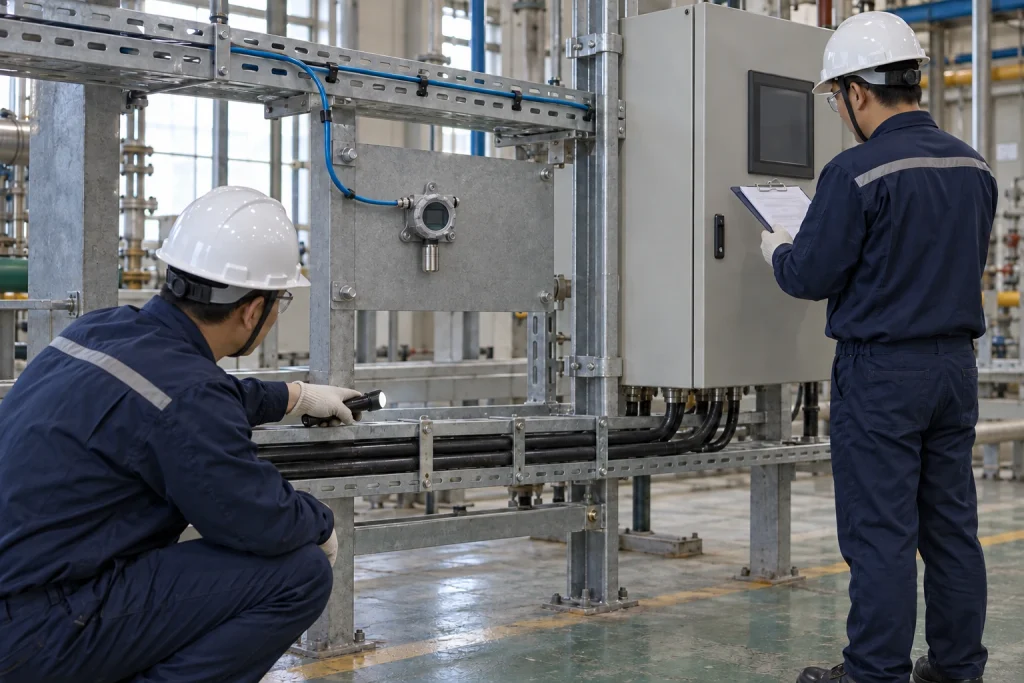
Compare the Complete Installation and Detection Duty
Begin with the hazardous-area information supplied by the site. The equipment protection level, relevant gas group, temperature classification and ambient conditions need to match the intended location. The full marking and its supporting documents establish the scope; a shortened label in a quotation does not. Gas atmosphere suitability also does not establish suitability for combustible dust. HSE’s guidance on area classification and ignition sources explains why equipment selection follows the assessed hazard.
Then separate ignition protection from the measurement requirement. Define the target substance, expected operating conditions, likely interferents and required alarm actions. Review detector positioning, access for calibration and the consequences of a sensor fault. Neither Ex d nor Ex ia, by itself, demonstrates measurement accuracy, detection coverage or suitability for a particular process.
When reviewing fixed gas detection options, prepare a common comparison sheet for suppliers. Include the exact model, installation documents, maintenance requirements and the evidence requested for the destination market. This keeps competing proposals tied to the same engineering brief without assuming every detector in a product family has identical protection.
Installed cost also includes more than the detector price. Compare cable infrastructure, interface equipment, installation labor, inspection access and spare parts. Consider how a replacement will be checked against the original design. A lower purchase price may offer little advantage if the site lacks the documentation or maintenance resources needed to support the selected arrangement.
Questions to Resolve Before Ordering
A practical review should connect each requirement to a document or an identified engineering decision. Avoid accepting a general statement that equipment is suitable for hazardous areas when the actual installation has not been defined.
- Does the quotation identify the exact assembly and the documents covering that configuration?
- Have the site classification, environmental conditions and destination requirements been checked against those documents?
- For flameproof equipment, are cable entries, accessories and maintenance instructions clearly specified?
- For intrinsic safety, has a competent designer verified the complete loop, including associated apparatus and cable?
- Are commissioning, calibration, fault response and replacement responsibilities assigned?
Record unresolved points before issuing the purchase order. If a supplier proposes a substitution, repeat the relevant technical checks instead of relying on matching connectors or enclosure dimensions. Preserve the accepted documentation with the site equipment records so that future maintenance teams can understand the basis of selection.
Why ASA
ASA offers gas detectors, dust alarms and gas alarm controllers for industrial monitoring projects. Buyers can bring a defined application brief to the team to discuss product selection, available documentation and engineering questions. This gives procurement and site personnel a common starting point for reviewing model suitability and integration needs.
Send the target substance, site classification, installation environment and intended alarm functions when you contact ASA about your project. Ask the team to confirm the offered configuration, relevant documentation and support arrangements before selection. Product availability and protection coverage should always be established for the specific model and destination.
Disclaimer: Product availability, specifications, measuring ranges, alarm configurations and certification coverage vary by model and region. The information in this article is provided for general reference only and does not constitute a performance guarantee, safety assurance or compliance statement. Always refer to the official product documentation and confirm suitability, certification status and local regulatory requirements with our team before selection, installation or use.