Effective offshore platform gas detection starts with three connected questions: where could gas escape, how could it move, and what should happen when it is detected? Wellheads, process modules and HVAC inlets present different monitoring challenges. Applying the same detector arrangement everywhere can leave important scenarios insufficiently considered. For procurement teams in Europe and the Middle East, a useful specification connects the platform hazard assessment with detector selection, installation conditions, alarm handling and maintenance access before equipment is ordered.
Wellheads: Start with Credible Release Scenarios
At a wellhead, the monitoring brief should identify potential release locations such as valve assemblies, connections and associated piping. The process composition matters as much as the physical layout. Hydrocarbon releases create a flammable gas concern, while hydrogen sulfide may also require attention where the well fluids contain it. A combustible gas reading does not establish whether a toxic gas exposure hazard is absent.
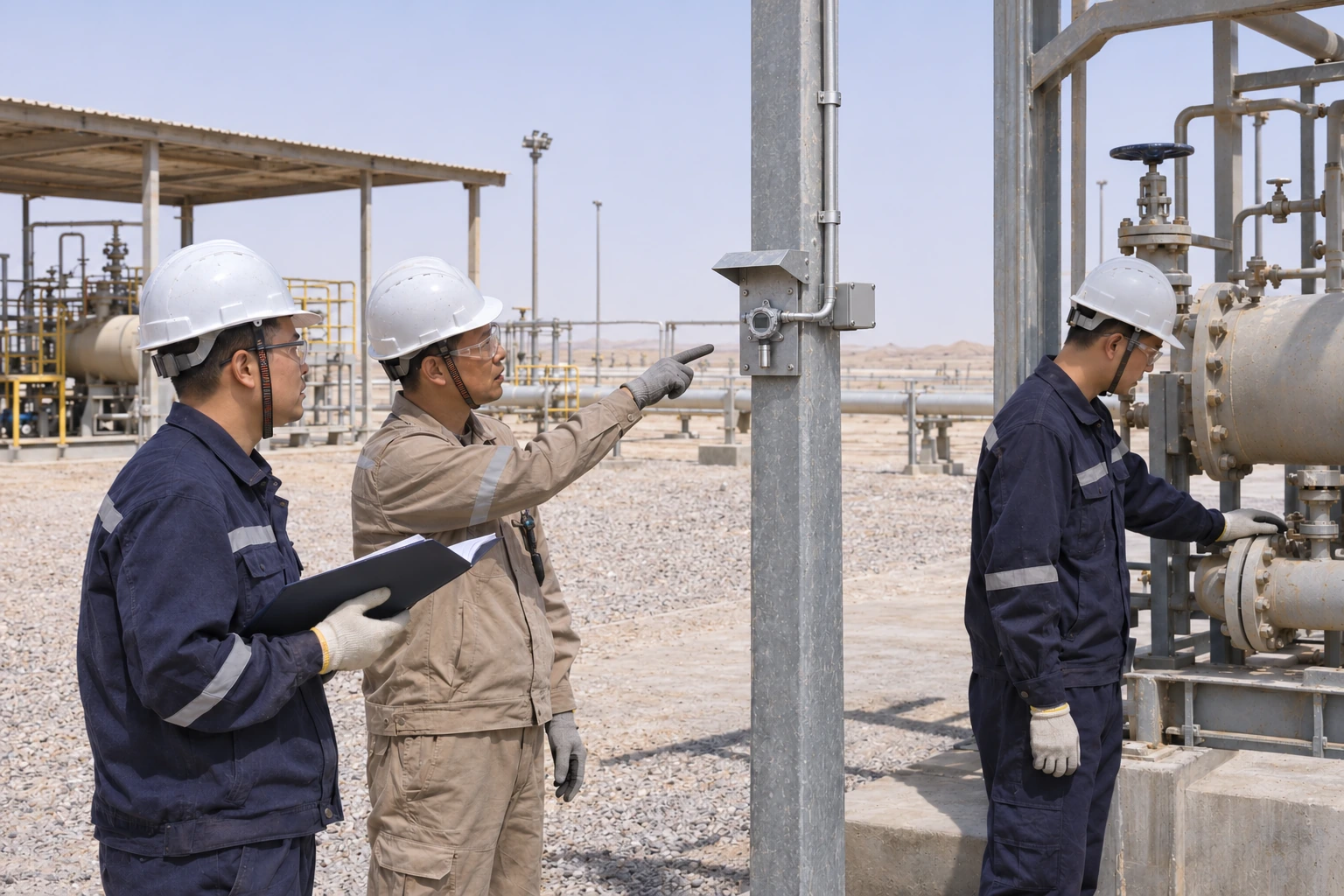
Detector positions should follow the release assessment and expected gas movement. Open decks can experience changing winds, while nearby equipment and structural members can create sheltered spaces. Gas density alone is therefore an incomplete placement rule. Release direction, pressure, temperature, obstructions and ventilation all influence whether a gas cloud reaches a sensing location.
Access deserves attention during the layout review. A proposed location may appear attractive on a drawing but become difficult to inspect or calibrate once piping, guards and walkways are installed. The design team should review mounting arrangements and maintenance tasks together. Procurement documents should also distinguish permanent area monitoring from portable instruments used during specific work activities.
Process Modules: Match Detection to the Hazard and Layout
Separators, compressors, pumps and associated piping create a different combination of release sources and obstructions. Module walls, equipment spacing and ventilation arrangements can influence gas distribution. Detector coverage should be assessed against credible scenarios, including operating conditions that differ from normal production. Maintenance configurations and temporary equipment can also change airflow or access.
Point detectors monitor gas at their sensing locations. Other detection approaches may be evaluated where the hazard assessment identifies a need for different coverage. Choosing a technology should involve the target gas, likely release behavior, environmental conditions and maintenance capability. Adding instruments without reviewing their purpose does not by itself demonstrate adequate coverage.
The UK Health and Safety Executive discusses installation-specific hazard scenarios, ventilation and detector location in its offshore fire and explosion guidance. These considerations support a practical purchasing question: what evidence explains the proposed coverage for this particular module? A generic equipment list cannot answer that question on its own.
When comparing product options, buyers may include the ASA methane gas alarm detector in an initial document review for methane monitoring requirements. Where hydrogen sulfide is an identified hazard, the hydrogen sulfide gas detector provides a separate product reference. Neither reference establishes suitability for an offshore location; that requires a project-specific technical review.
HVAC Inlets: Assess the Route into Occupied Spaces
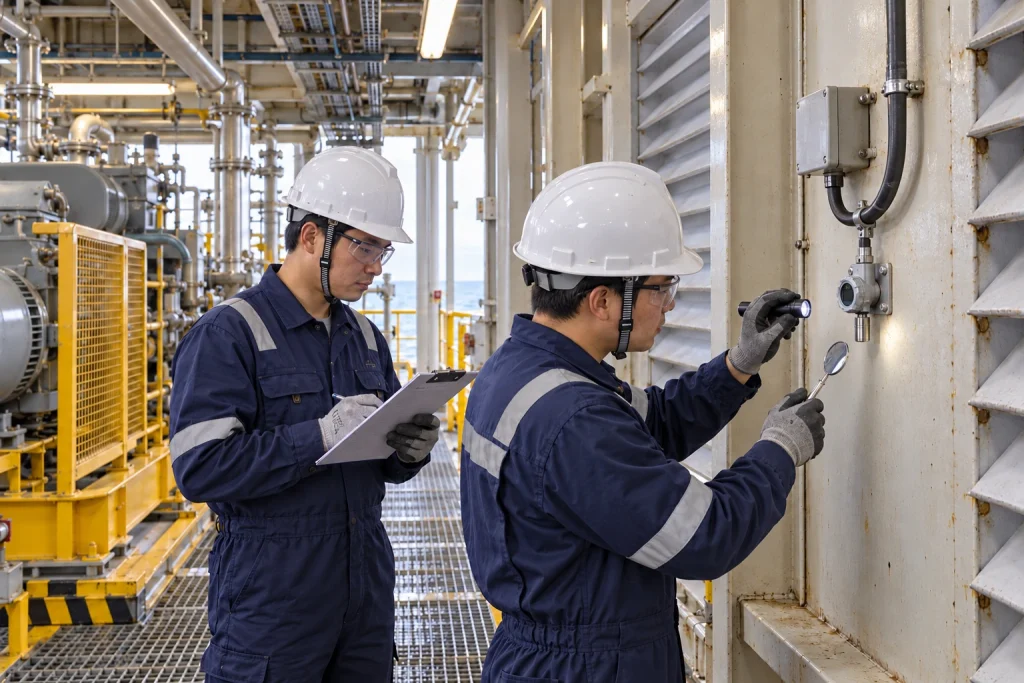
An HVAC inlet can draw outside air toward accommodation, control rooms or other enclosed spaces. Its monitoring objective therefore differs from detecting a release close to process equipment. The assessment should consider credible external gas sources, prevailing and changing winds, inlet geometry and the ventilation system’s operating modes.
A detector near an inlet should not automatically be treated as representative of the entire incoming airstream. Gas can be distributed unevenly, and a sensing location may encounter a different concentration from another part of the opening. The engineering review should explain the proposed position and coverage, including whether the arrangement remains appropriate as airflow changes.
Detection and protective action must be considered together. The approved cause-and-effect documentation should define how alarms interact with fans, dampers and operator actions. There is no single ventilation response suitable for every space and release scenario. Any automatic action should follow the installation’s engineered strategy, with its consequences reviewed before commissioning.
Functional checks should address the complete intended response, including indication at the operator interface and operation of relevant equipment. A successful detector check alone does not demonstrate that the ventilation system performs its assigned action. Responsibility for these integrated checks should be clear between the equipment supplier, system integrator and platform operator.
Specify Environmental Conditions, Interfaces and Maintenance
Offshore procurement should describe the actual service conditions rather than simply request an offshore detector. Salt exposure, humidity, rain, washdown, vibration and ambient temperature can affect equipment selection and installation details. Buyers should request supporting documentation for the proposed model and configuration, including enclosure materials, cable entries, mounting requirements and any protective accessories.
The technical inquiry should identify the target gases, intended measurement basis, required interfaces and the receiving system. Alarm thresholds and delays need project engineering review; they should not be copied from an unrelated installation. The system design should distinguish a gas alarm from instrument faults, lost communications and maintenance inhibition so operators understand what each indication means.
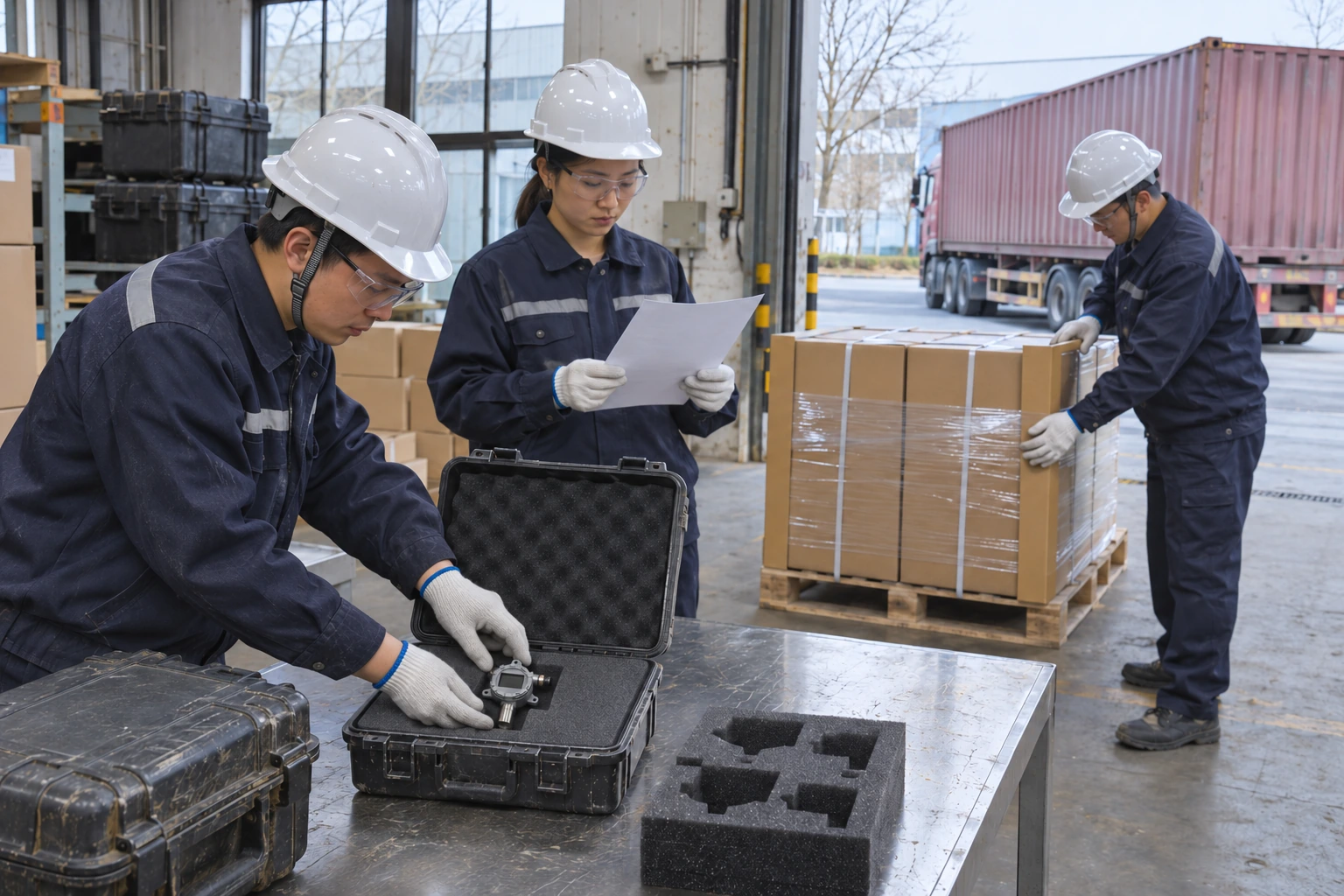
For commissioning and ongoing maintenance, agree who supplies test equipment, suitable calibration gas, procedures and records. Confirm access requirements and how impairments will be controlled while a detector is unavailable. Inspection and calibration intervals should follow the applicable documentation and operating conditions. Changes to process composition, equipment layout or ventilation should trigger a review of the monitoring assumptions.
Why ASA
ASA offers gas detectors, dust alarm detectors and gas alarm controllers, giving industrial buyers a starting point for discussing different monitoring requirements. For an offshore inquiry, share the target gases, area drawings, environmental conditions and system interfaces with the team. Use that information to request model-specific documentation and clarify the scope of engineering support, response expectations and supply arrangements before selection.
Contact ASA to discuss your gas detection requirements and identify which product information is needed for your project’s technical evaluation.
Disclaimer: Product availability, specifications, measuring ranges, alarm configurations and certification coverage vary by model and region. The information in this article is provided for general reference only and does not constitute a performance guarantee, safety assurance or compliance statement. Always refer to the official product documentation and confirm suitability, certification status and local regulatory requirements with our team before selection, installation or use.