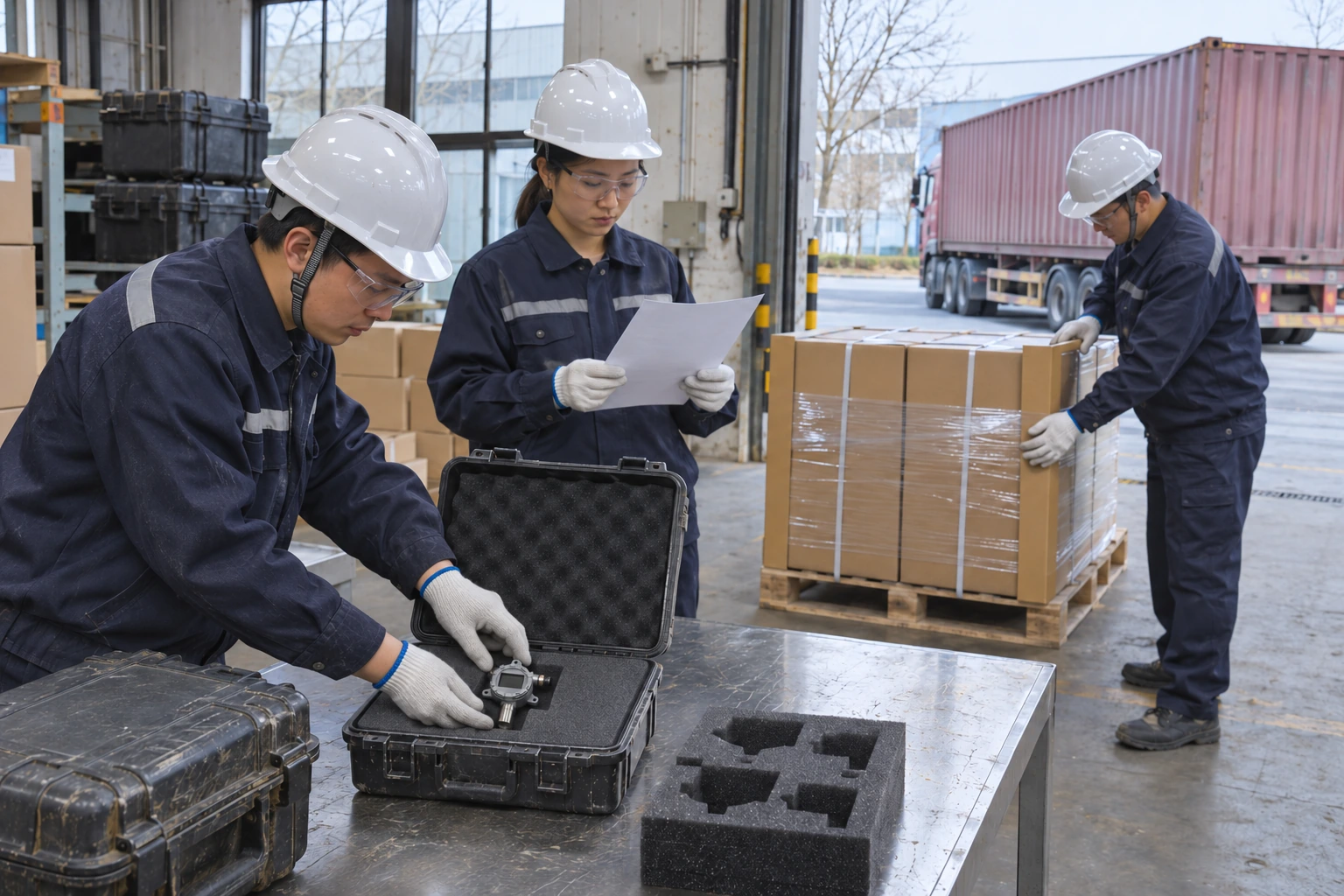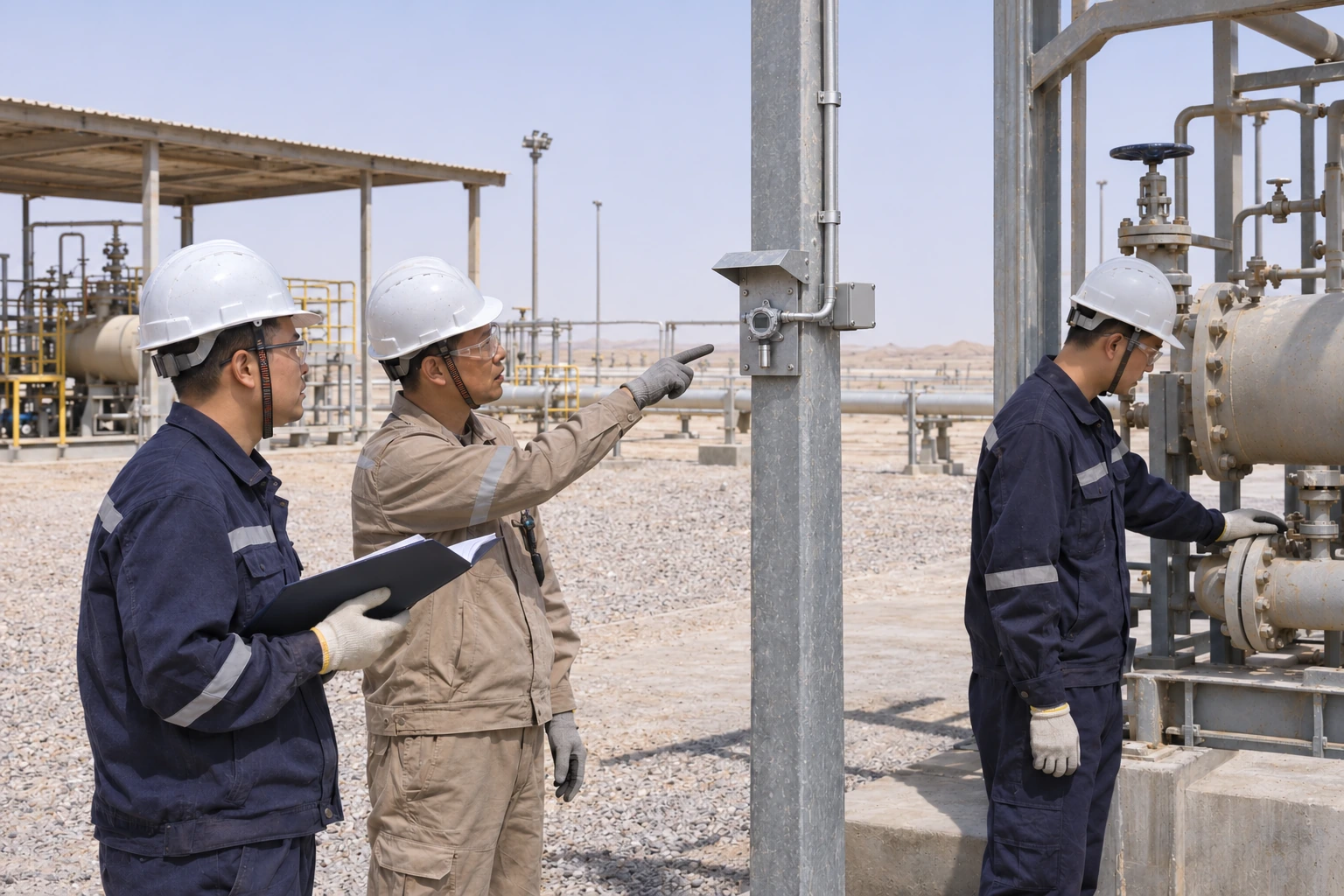
For procurement teams planning kazakhstan gas detection projects, sour gas and extreme cold should be evaluated together. A detector selected for the target gas may still be unsuitable for its installation environment, while winter protection can interfere with gas reaching the sensor. At oil and gas facilities where hydrogen sulfide is present, the specification should connect process hazards, environmental conditions, detector placement and operator response. The objective is a monitoring arrangement that can be evaluated against documented site conditions, with clear responsibilities for commissioning, maintenance and emergency actions.
Start with the Sour Gas Hazard and Work Activities
Sour gas contains hydrogen sulfide, commonly written as H2S. Its presence and concentration must be established from the facility’s process information and hazard assessment, rather than assumed from a field’s location. Review well fluids, separation equipment, treatment systems, drains and maintenance activities that could release gas. Opening equipment, collecting samples or disturbing trapped liquids can create exposure scenarios different from normal production.
Do not rely on odor to identify an H2S release. OSHA’s hydrogen sulfide release guidance explains that smell is an unreliable warning. A monitoring plan should address both occupied work areas and tasks that bring people close to potential release points. Fixed monitoring and personal monitoring serve different purposes; neither should be treated as a substitute for the other without a documented assessment.
Hydrocarbon releases also require separate consideration. A combustible gas reading does not establish that H2S exposure is acceptable, and an H2S reading does not describe the complete flammable gas hazard. Oxygen monitoring may also be relevant where the assessment identifies displacement or confined space hazards. Define each measurement objective separately, including who receives the alarm and what action follows.
Specify the Complete System for Extreme Cold
Use the actual site’s environmental design basis, including the expected minimum ambient temperature, storage conditions and conditions during shutdown. Regional averages are insufficient for selecting equipment installed outdoors. Ask for documented operating limits for the complete detector assembly and its accessories, including the sensing element, electronics, cable entries and any sampling equipment. A suitable enclosure alone does not demonstrate that the measurement remains suitable in cold conditions.
Temperature and humidity can influence sensor performance. OSHA discusses these effects in its guidance on testing portable gas monitors; fixed equipment also needs its own manufacturer-specific environmental review. Procurement should request evidence relevant to the proposed model and application, rather than extend a portable monitor recommendation to a different device.
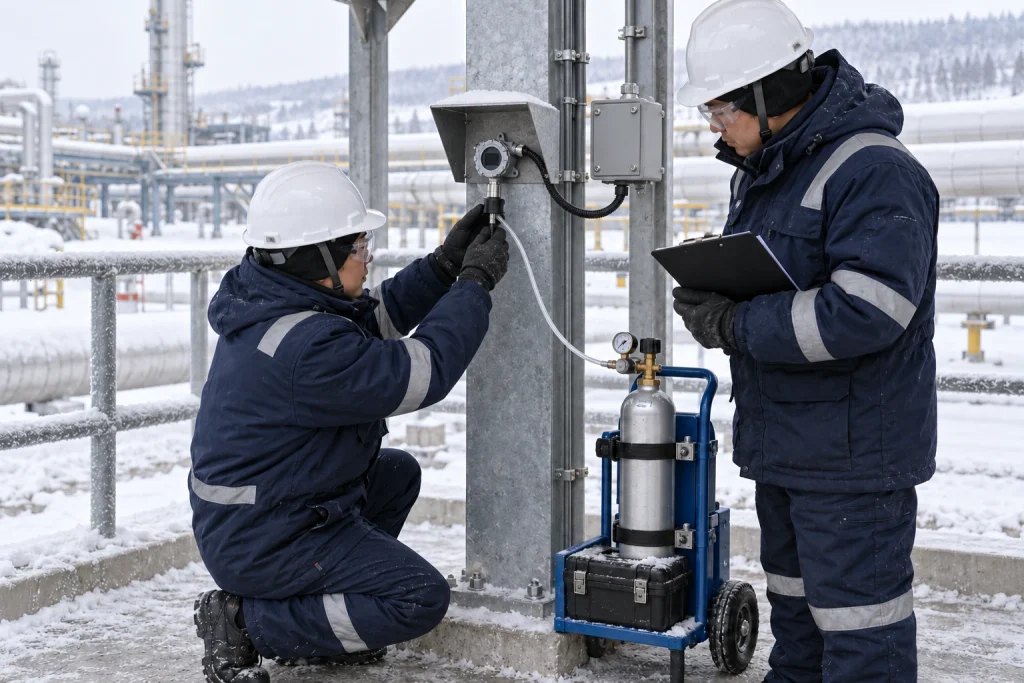
Consider how snow, ice and condensation could obstruct gas access or affect equipment after temperature changes. Protective covers, heated arrangements and weather shields should be manufacturer-supported and assessed for their effect on detection. Avoid improvised wrapping or sealed boxes around diffusion sensors. For sampled systems, review the complete sample path, including flow supervision, moisture management and transport delay. Any proposed conditioning arrangement needs confirmation that it will not compromise the gas measurement.
Place Detectors Around Credible Release Scenarios
Detector positions should follow the release assessment and site layout. Start with potential leak sources, occupied locations, access routes and ventilation patterns. Compressor shelters, enclosed process areas and sampling locations may warrant particular review where the identified hazards apply. Outdoors, changes in wind direction can move a release away from a detector, so a convenient mounting point should not become the default coverage decision.
Gas density is useful background information but is insufficient as a placement rule. Release pressure, temperature, structures and air movement influence where gas travels. HSE’s leak and gas detection guidance identifies sensor position and weather conditions as factors in missed detection. A competent engineering review should document the scenarios each detector is intended to address and the limitations that remain.
For H2S measurement, an ASA fixed hydrogen sulfide detector may be evaluated against the project requirements. Where methane is a specified target, the ASA methane gas alarm detector can be considered for technical review. These are product selection starting points; suitability for sour gas service and the proposed winter conditions must be confirmed for the exact configuration.
Plan Alarm Response and Winter Maintenance Together
An alarm is useful only when its meaning and required response are understood. Document gas alarms separately from instrument faults, loss of power and communication failures. Select alarm settings through the site’s risk assessment and applicable local requirements, with competent review. Do not copy thresholds from another project simply because the gas name is the same. Define escalation, evacuation and restart responsibilities before commissioning.
Winter clothing, equipment noise and remote working can affect how personnel notice and respond to warnings. Review alarm visibility and audibility under representative conditions, and establish how signals reach the responsible operators. Any automatic actions need a documented cause-and-effect review and appropriate validation. Detection does not replace ventilation, isolation, safe work procedures or a trained emergency response arrangement.
Maintenance access deserves equal attention. Technicians should be able to inspect gas inlets, apply test gas and service equipment without avoidable exposure. Follow the manufacturer’s instructions for functional checks and calibration, using appropriate gas and accessories. Record results, investigate failed checks and define interim controls when a monitoring point is unavailable. Include seasonal inspections for obstruction or damage and review settings and coverage whenever the process or enclosure layout changes.
Why ASA
ASA’s gas detector and controller product lines give procurement teams a starting point for discussing different monitoring duties. A useful inquiry should include the target gases, process conditions, site temperature limits, proposed installation locations and required alarm interfaces. This helps focus engineering discussions on the documents and configuration details needed for selection. Ask the team to confirm model suitability, maintenance requirements, available support and delivery timing for the project. To discuss your Kazakhstan oil and gas monitoring requirements, contact ASA with your project specification.
Disclaimer: Product availability, specifications, measuring ranges, alarm configurations and certification coverage vary by model and region. The information in this article is provided for general reference only and does not constitute a performance guarantee, safety assurance or compliance statement. Always refer to the official product documentation and confirm suitability, certification status and local regulatory requirements with our team before selection, installation or use.