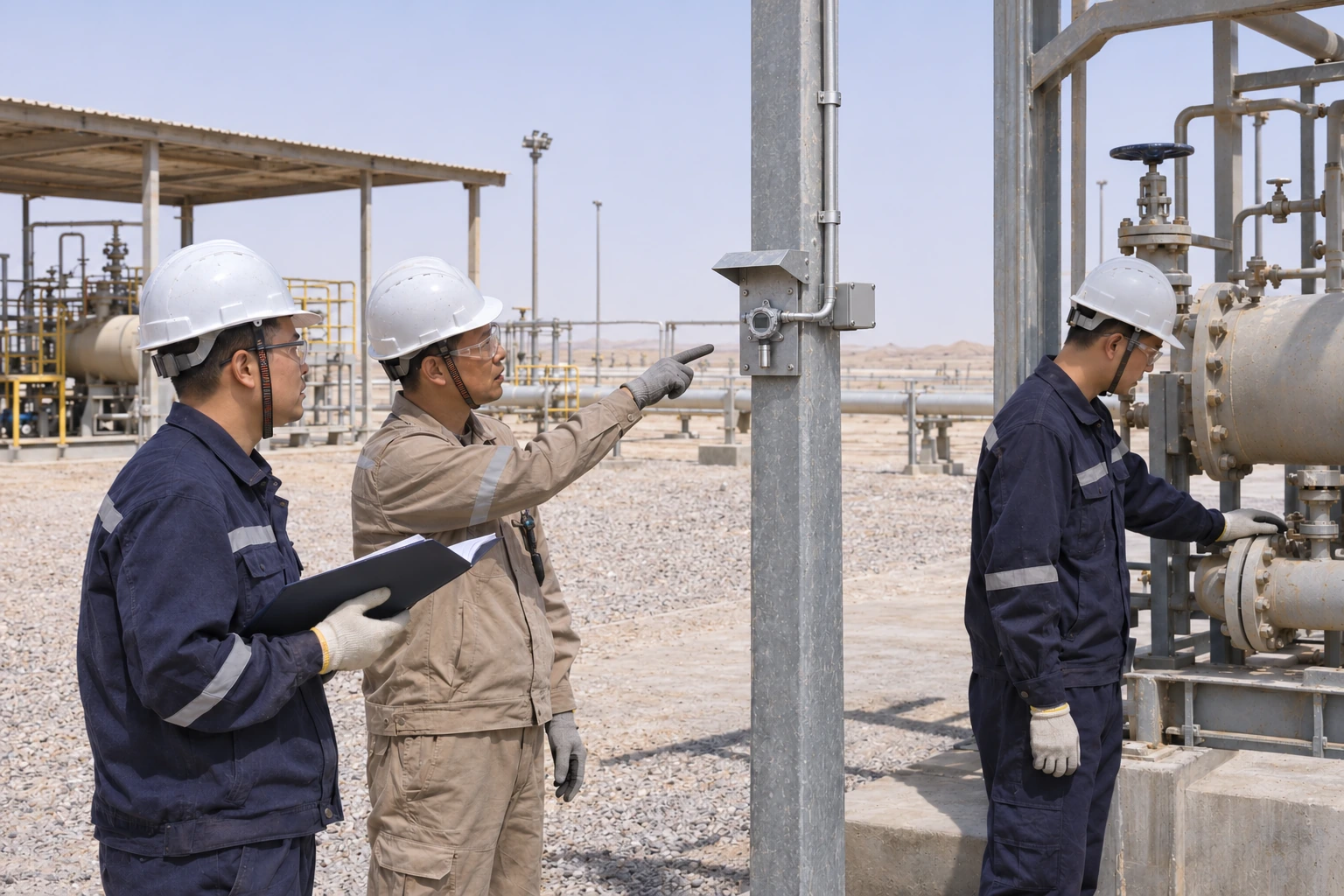
Searching for an aramco gas detector standard is often the first step in preparing a fixed gas detection quotation. The practical challenge is identifying which controlled engineering documents, purchase specifications and project requirements govern the equipment being offered. For industrial buyers and vendors, a useful submission connects each requirement to verifiable evidence for the proposed model. This guide explains how to prepare that submission without assuming that a general-purpose detector, a supplier registration or a previous quotation establishes project acceptance.
Start with the Project’s Controlled Requirements
Saudi Aramco Engineering Standards, commonly abbreviated as SAES, should be addressed through the documents applicable to the actual inquiry. Request the relevant document numbers, revisions, project specifications, instrument datasheets and purchase requisition attachments from the buyer or engineering contractor. An uncontrolled copy found online may help identify a question, but it should not determine the final technical offer.
This article does not reproduce a verified current SAES specification or establish mandatory detector settings. Required performance, installation details and acceptance criteria must be checked against the controlled project package. If documents appear to conflict, request a written clarification and confirmation of the applicable order of precedence before finalizing the selection.
Build a requirement register early. For each entry, record the source document, revision, clause, requested feature, proposed response and supporting evidence. Mark unresolved items explicitly. This makes the review more useful than a blanket statement that equipment meets all Aramco requirements, especially when the scope includes detectors, junction boxes, controllers, accessories and commissioning services.
Separate Supplier Qualification from Equipment Acceptance
Aramco states that companies supplying goods and services must be registered, with registration and qualification processes varying by supplier location and type. It also explains that registration and qualification do not guarantee future business. Vendors should follow the appropriate route described on Aramco’s official supplier registration page and confirm their role in the procurement chain.
For a detector quotation, identify the manufacturer, manufacturing location, selling entity and party responsible for technical support. Ask the buyer what qualification evidence applies to the proposed supply arrangement and equipment category. A distributor’s company information alone does not describe the technical suitability of the detector being offered.
Aramco’s official supplier resources also identify an Engineering Requirements for Technical and Quality Approval handbook for local manufacturers of engineering commodities. Its applicability should be checked for the supplier and scope concerned. Keep commercial registration documents, manufacturer qualification records and model-specific technical evidence organized separately so reviewers can evaluate each issue clearly.

Define the Detection Duty Before Choosing Hardware
A fixed gas detector should be evaluated against a defined hazard and operating environment. Begin with the target gas or gas mixture, credible release sources, normal operating conditions and the purpose of detection. Flammable gas monitoring, toxic gas monitoring and oxygen monitoring address different hazards; a device selected for one duty should not be assumed suitable for another.
Ask the engineering team to define the measurement units, intended measuring range and alarm philosophy. Require model-specific documentation for the proposed sensing method, environmental limits, interfering substances and maintenance needs. Avoid choosing a range simply because it appears on a standard catalog page. The intended alarm decisions and expected exposure conditions should inform the review.
Detector placement also needs engineering input. Release location, ventilation, obstructions, access and gas movement can influence where monitoring is useful. Gas density alone is an incomplete placement method. Vendors can provide installation constraints, while the responsible project team evaluates the layout and coverage assumptions.
For Saudi industrial sites, review the actual temperature conditions, dust exposure, moisture, potential corrosion and mounting arrangements. Confirm the area’s installation classification and request whatever supporting documentation the project specifies. Document coverage must match the offered configuration. General descriptions such as industrial grade do not resolve a technical requirement.
Prepare an Evidence-Based Technical Submission
A structured offer helps buyers distinguish documented capability from open questions. The following items are practical submission checks, rather than a claim that every Aramco project requires the same package:
- Provide the exact model and configuration, with dated technical documentation and a clear list of included accessories.
- Map applicable requirements to supporting documents, identifying exceptions and unanswered questions instead of leaving ambiguous compliance statements.
- Describe the proposed power supply and signal interfaces using manufacturer documentation, including how normal operation, alarms and faults are represented.
- Supply installation and maintenance information covering access, calibration arrangements, consumables and replacement components.
- Propose inspection and test activities for buyer review, identifying responsibilities, records and acceptance criteria that still need agreement.
Review the complete signal path with the system integrator. Detector outputs, receiving equipment, annunciation and any intended automatic actions should be compatible with the project’s design. Clarify how maintenance inhibition, communication failure and restoration to service will be handled. Do not infer that connecting a detector to a controller establishes a complete protective function.
Agree on testing before shipment and installation wherever the contract calls for it. Factory checks and site checks serve different purposes, and neither should be described as completed without records. For commissioning, determine who supplies test equipment, who witnesses checks and who accepts the results. Record proposed deviations before purchase so the buyer can resolve them through the applicable project process.
Why ASA
ASA offers gas detectors, dust alarm equipment and gas alarm controllers for industrial monitoring discussions. Buyers preparing a project inquiry can review the gas alarm detector product range as a starting point, then request documentation for the specific equipment under consideration. Selection remains subject to the project’s technical review.
To make engineering discussions efficient, send ASA the target gases, installation conditions, required interfaces and controlled procurement documents together. Include the requested response date and identify any unresolved requirements. This gives the team a clearer basis for discussing available options, documentation and support scope. No Aramco approval or project acceptance is claimed here. Contact ASA with your project requirements to discuss equipment that may be evaluated for the application.
Disclaimer: Product availability, specifications, measuring ranges, alarm configurations and certification coverage vary by model and region. The information in this article is provided for general reference only and does not constitute a performance guarantee, safety assurance or compliance statement. Always refer to the official product documentation and confirm suitability, certification status and local regulatory requirements with our team before selection, installation or use.